The EU delays methane checks until 2029
AI Daily Synthesis
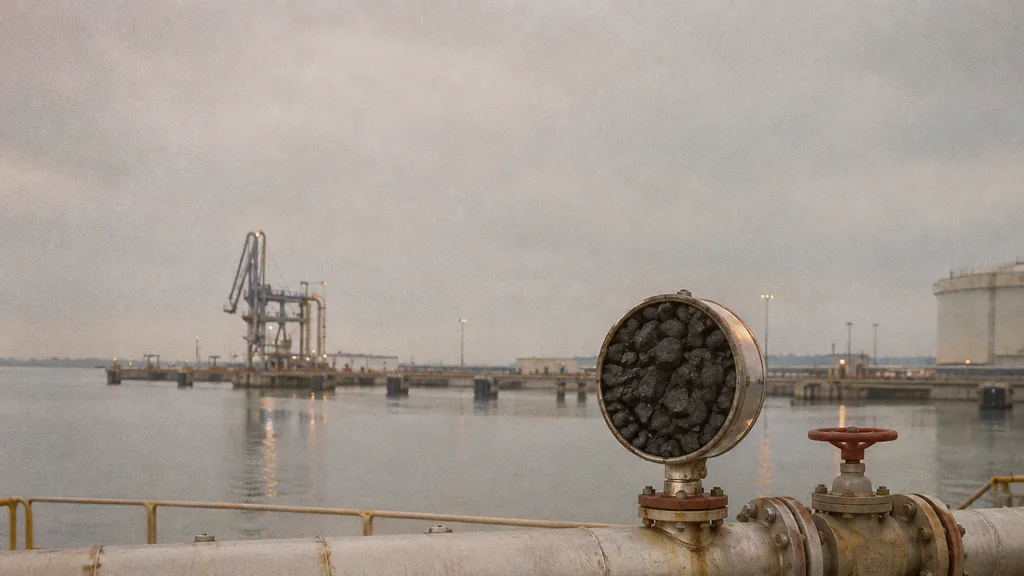
Image composition · tobriefFrom 1 January 2027, anyone bringing oil, natural gas or coal into Europe was supposed to prove that its producer measures and monitors methane emissions under rules equivalent to the EU’s (EUR-Lex). On 19 November, negotiators from the European Parliament and the Council of the EU agreed to move that obligation to 1 January 2029 (Council of the EU). They cited security of supply and prices, but did not identify a single shipment that would have been lost because of the rule.
What the rules required and what is changing
The 2024 methane regulation requires importers to have a monitoring, reporting and verification system: producers measure emissions, submit the data to authorities, and an independent verifier confirms them. The obligation covers contracts signed or renewed from 4 August 2024. For older contracts, “reasonable efforts” to comply are enough (Commission guidance).
The reason for the rule is straightforward. Methane escapes during oil and gas production and transport through leaks and venting. Over its first 20 years in the atmosphere, each kilogram warms the planet about 80 times more than a kilogram of carbon dioxide (IPCC). Citing the International Energy Agency, the European Commission estimates that leaks, venting and flaring at facilities waste more than 200 billion cubic metres of gas worldwide each year, about two-thirds of the EU’s annual consumption (European Commission).
The agreement also moves a second deadline: annual reporting of “methane intensity”, meaning emissions relative to the amount of fuel produced. The current regulation requires EU importers and producers to report it from 5 August 2028 (EUR-Lex). The new deadline is 5 August 2030 (European Parliament). Other requirements remain: annual reporting of basic information about where fuels come from, first due in May 2025, continues as scheduled (EUR-Lex).
Who asked for the delay and who benefits
The Commission and EU governments had proposed a one-year delay, while Parliament wanted three years. They settled on two (Euronews). French President Emmanuel Macron had asked for a one-year delay in a letter to European Commission President Ursula von der Leyen on 18 September, according to Parliament’s research service (EPRS). Washington also pressed for a delay: US ambassador Andrew Puzder said the day before the agreement that he hoped for a three-year extension, citing the risk of penalties for American oil companies (Reuters).
Two MEPs from the European People’s Party (EPP), the centre-right group in the European Parliament, presented the agreement. Greek MEP Dimitris Tsiodras spoke of energy security, affordable energy and competitiveness, arguing that the regulation was being given deadlines that could be met in practice rather than being suspended. Polish MEP Borys Budka spoke of financial stability for citizens (European Parliament).
Oil, gas and coal importers benefit: they have two more years before they must prove what their suppliers measure. The benefit is time and deferred spending; no estimate for any individual company has been published. In Greece, METLEN, a Greek energy and metals company, has a five-year agreement with Shell for about six shipments of liquefied natural gas a year from 2027, mainly from Shell’s US portfolio. It is exactly the kind of contract the rule would cover (Yahoo Finance/Proactive). There is no evidence that the contract changed because of the rule.
The argument and the evidence
The pressure on the market is real. ACER, the EU energy regulators’ agency, recorded EU gas storage at 28% at the end of last winter and liquefied natural gas imports 14% lower in summer 2026 than the previous summer (ACER). Industry associations FuelsEurope and IOGP warned that up to 43% of gas would not meet the requirements in 2027. That figure comes from a model, not an observed shortage (Euronews).
Environmental Defense Fund Europe, an environmental group, called the delay unnecessary (RFI). An analysis by Rystad for the group found that gas with emissions reports meeting the relevant standard amounted to more than three times EU imports. In a separate estimate, the same company put the cost of the rules at less than one cent per euro of the gas price (EUobserver). Those figures also come from models, as do the industry associations’ figures. One point is clear: the 2027 obligation required measurements and proof. It did not ban imports or require an immediate cut in emissions. The evidence shows a tight market, but does not show that the methane rule would have disrupted it.
The agreement does not yet have legal force. Parliament’s Environment and Industry committees vote on 23 November, and the full Parliament votes the same week. The Council must then approve it, with no date set, before it is published in the Official Journal (European Commission). The Commission has already recommended that member states refrain from imposing certain penalties for importers’ breaches of the 2027 rules until 2029, unless the breach is intentional (EUR-Lex). Formally, the 1 January 2027 deadline still stands. In practice, the Commission has already asked governments not to penalise those who miss it.
Details about this article
- Model:
- claude-opus-5-5
- Generated:
- 11/20/2026, 4:23:48 AM
- Pipeline run:
- incremental_20261120_033010
- Watermark:
- SynthID (Google's invisible watermark)
- Human review:
- None before publication