El Hierro’s 3,431 arrivals outpace transfers
El Hierro makes room for arrivals while Madrid controls departures.
Image composition · tobrief3,431 people landed on El Hierro, the smallest of Spain's Canary Islands, between Friday 13 and Sunday 15 November, according to a reconstruction by EFE. Spain has documented only one completed transfer off the island since then. The island is absorbing the difference, and it has no power to close the gap itself.
The arrivals drew coverage well beyond Spain, from Reuters to Le Monde. Counts shifted as boats kept arriving, and no official manifest has been published to settle them. EFE's total is the best available figure, not a final one.
A centre built for 800, holding far more
New arrivals first go to the state-run centre at San Andrés, where police identify them during a short initial stay. On paper it holds 800 people (Spanish Senate). Alpidio Armas, president of the island council, says building work has cut that to roughly 600 usable places (Mugak).
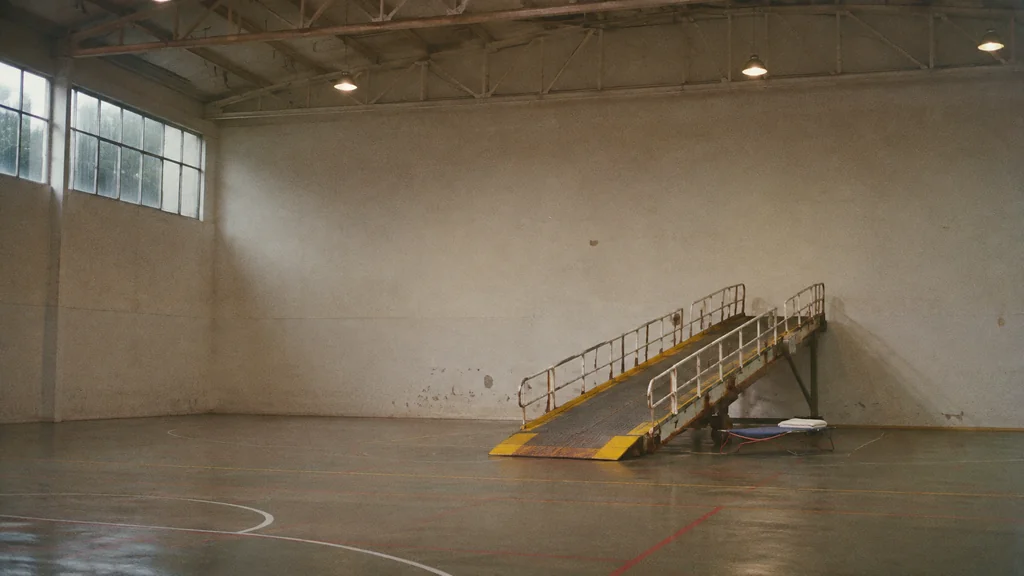
The overflow went to a nearby sports hall fitted with bunks for about 400 to 450 people (El Español). On Sunday, the radio network Cadena SER counted 1,606 people across the centre, the hall and Red Cross spaces combined (SER).
These figures measure different things. Capacity counts beds. SER's figure is a one-day headcount across several sites. EFE's total covers three days and includes people who have since left. Taken together, they show an island holding far more people than its main centre was built for, many of them in a gym.
Armas can provide halls, buses and staff. He cannot order anyone off the island. Onward transfers, and the places where people stay after those first days, are paid for and run by the Spanish government. Its 10 November migration emergency for the Canaries approved €15.18 million for reception places and transfers, plus €1 million for Red Cross health work (La Moncloa). The regional government, led by Fernando Clavijo, runs local health care but can only press Madrid on transfers.
One ferry confirmed, a bigger boat still uncounted
The completed departure came on Saturday, when 158 people sailed to Tenerife on a regular ferry (EFE). No other onward movement that weekend has a published passenger figure.
A larger move was under way by Sunday. SER reported that authorities planned to transfer about 900 people and were organising a boat for more than 800 (SER). No final count has followed. That missing figure does not mean those people stayed. It means no authority has said how many actually left.
Clavijo, for his part, said the promised help had not fully arrived. On Sunday he demanded that the state activate its reinforcements for El Hierro without further delay (Infobae/EFE).
Brussels can help, but only if Madrid asks
The EU has emergency funding for migration surges, and only the national government can apply for it. As of 11 November, Spain had filed no formal request, according to Canary vice-president Manuel Domínguez (Europa Press). No later request has been reported.
Madrid knows the route works. After mass arrivals in Ceuta, Spain's enclave in North Africa, it applied on 24 August, and the European Commission granted €114.7 million on 9 September (European Commission). The Ceuta request took just over two weeks to turn into money.
El Hierro received people faster than Spain has documented moving them on. Saturday's ferry to Tenerife is the only completed transfer with a published count. Sunday's larger departures still have no final figure. The island council runs the overflow but controls neither the transfers nor the paperwork. The Spanish government holds both: the passenger count El Hierro needs before the next boats arrive, and the decision to ask Brussels for the kind of help it sought for Ceuta.
Details about this article
- Model:
- claude-opus-5-5
- Generated:
- 11/16/2026, 1:49:51 AM
- Pipeline run:
- eu_pipeline_20261116_005008
- Watermark:
- SynthID (Google's invisible watermark)
- Human review:
- None before publication