EPA scraps most power-plant carbon limits
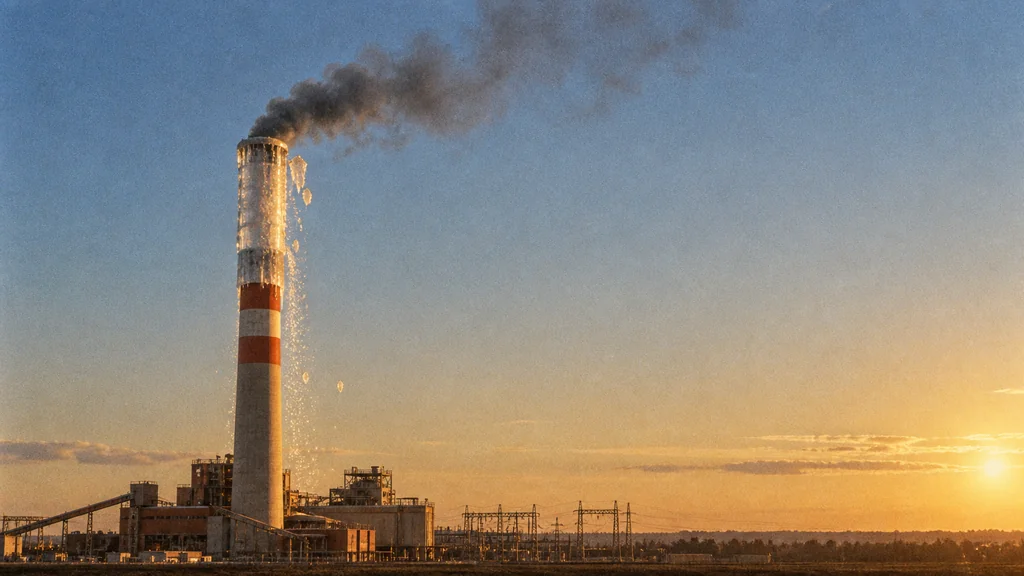
Washington removes the limits as the heat keeps rising.
Image composition · tobriefThe US Environmental Protection Agency signed a final rule on 14 September repealing most of the Biden administration's 2024 greenhouse-gas standards for power plants. The repeal removes emission limits on existing coal units and new gas turbines that had been built around carbon-capture technology (EPA, Sidley).
A separate, still-proposed action would go further. It would eliminate the remaining standards and withdraw the EPA's legal finding that power-sector emissions contribute to dangerous air pollution (Sidley). That finding is the legal foundation the agency used to justify regulating CO₂ from power plants in the first place. Withdrawing it would not erase the Clean Air Act or bar a future EPA from rebuilding the case, but it would force any successor to start the regulatory justification from scratch.
What is final, what is not
The signed repeal takes effect once published in the Federal Register (the US government's official rule book), though as of 15 September it had not yet appeared there. Once effective, it can be challenged in court by state attorneys general or environmental groups, and a future administration could propose replacement rules.
The broader proposal has no finalization date. It must go through a public comment period before the EPA can act on it. That process typically takes months.
EPA claims the repeal will save $300 billion (EPA). The agency's own earlier proposal estimated roughly $19 billion in savings measured in today's money at a 3% discount rate (Federal Register). EPA has not explained the gap between the two figures. On emissions, the agency's modelling projects an additional 123 million tonnes of CO₂ per year by 2035 compared with keeping the rules (regulations.gov). That is an annual figure, not a cumulative total over a decade.
Europe's exposure is real but pre-existing
The repeal widens a transatlantic regulatory gap that already existed. European industry pays substantially more for electricity and gas than American competitors. The Draghi competitiveness report traced the causes to the loss of cheap Russian pipeline gas, the EU's Emissions Trading System (Europe's carbon-pricing market, where companies pay for each tonne of CO₂ they emit) and higher network costs. The Commission's own Affordable Energy Action Plan treats those structural prices as the core competitiveness problem.
The repealed US rules were investments power plants would have had to make later, with compliance deadlines in the 2030s. No European government, industry federation or research institute has yet quantified a price, production or investment effect from this specific action.
The sectors most exposed to a possible US cost advantage are basic chemicals and fertilisers, where gas serves as both energy source and raw material. Spanish chemical producers already face natural-gas costs several times higher than US benchmarks (FEIQUE).
CBAM covers imports, not exports
The EU's Carbon Border Adjustment Mechanism (which charges importers for the carbon embedded in cement, steel, aluminium, fertilisers, hydrogen and electricity) means a dirtier US product entering Europe would face a higher carbon levy (Commission CBAM, CBAM Regulation). That shields the EU's home market. It does nothing for European exporters competing in the US or in third countries. And CBAM counts the electricity used to make some covered goods, but not all of them. It does not cover chemicals at all.
The repeal cannot alter the European Climate Law, which binds the EU to at least 55% net emissions cuts by 2030 and climate neutrality by 2050. Washington's retreat does not change Europe's legal obligations. It may add pressure on energy-intensive European exporters who already competed at a cost disadvantage, but there is no evidence yet of a measurable new price or investment shock. The outstanding question is whether the Commission and national capitals can narrow the energy-cost gap through faster permitting and grid investment. That decision belongs to them, and it predates anything the EPA did last week.
Details about this article
- Model:
- claude-opus-4-6
- Generated:
- 9/16/2026, 1:42:12 AM
- Pipeline run:
- eu_pipeline_20260916_005006
- Watermark:
- SynthID (Google's invisible watermark)
- Human review:
- None before publication