Estonia to close its road border with Russia
AI Daily Synthesis
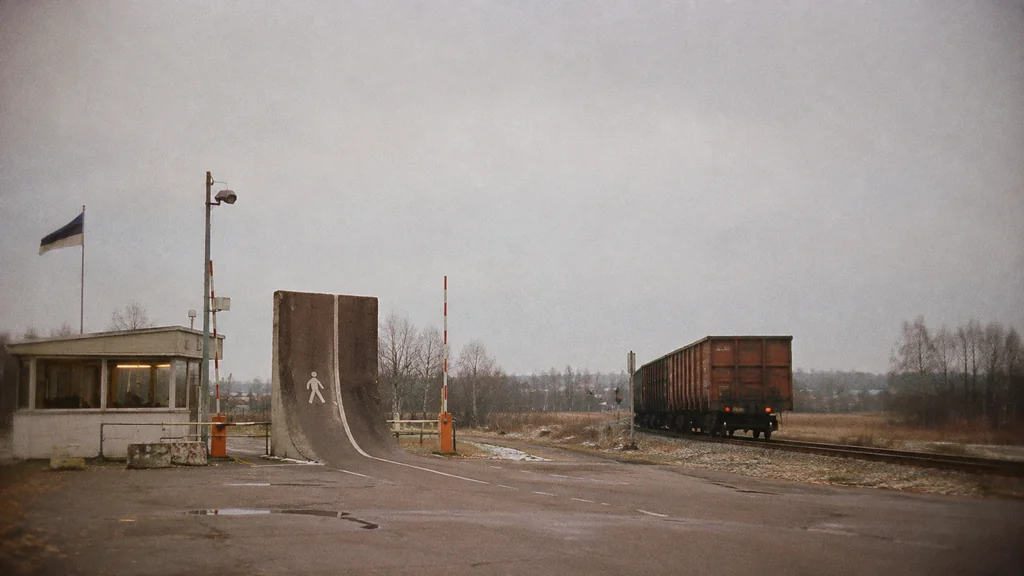
Image composition · tobriefFrom 1 December, no one will be able to cross by road from Estonia into Russia, whether on foot or in a car, bus or truck, under Decision No. 195 approved by the Estonian government on 20 November (Riigi Teataja). Freight trains will continue to cross at Narva (official questions and answers). Tallinn, Estonia’s government, is cutting off crossings by people while keeping freight moving.
The decision names five road crossing points: Narva-1, Narva-2, Koidula, Luhamaa and Saatse. In practice, three were operating: Narva-1 for pedestrians, and Koidula and Luhamaa for pedestrians and vehicles. Saatse served a small number of pedestrians, all residents of the two countries, while Narva-2 had been closed since November 2022 (explanatory document).
The rail exception is narrow. It covers only freight through the Narva crossing, subject to existing restrictions and sanctions checks. Russia had already stopped freight crossings at Koidula (questions and answers). The Estonian government justifies keeping the Narva route open on economic and strategic grounds for Estonia and Europe, including the transport of raw materials from Russia (Estonian government).
Why now
The trigger came on the night of 14 November. At 03:06, an attempt was made to cause an explosion and fire at Threod Systems, a drone manufacturer in Viimsi, near Tallinn. Company security prevented serious damage (Estonian Prosecutor’s Office). Eight residents of Latvia were arrested (LSM). Latvia’s State Security Service (VDD) had warned the Estonians in advance. In nine searches in Latvia, it seized explosive devices, ammunition and mobile phones (VDD). The next day, Prime Minister Kristen Michal asked Interior Minister Igor Taro to prepare the closure (Interior Ministry). The plan was announced on 16 November and approved on 20 November.
The Estonian Internal Security Service (KAPO), the country’s counterintelligence agency, links the attack to Moscow. Its head, Margo Palloson, attributes the order to the GRU, Russia’s military intelligence agency, and says Russia is targeting about ten Estonian defence companies (ERR). The government document relies on a classified assessment by KAPO (explanatory document). No communications, payments or intermediaries have been made public that would allow the chain of command to be checked independently. Prosecutors are still investigating who played which roles and how the attack was organised.
Moscow points to that gap. Kremlin spokesman Dmitry Peskov called the accusations baseless and likened the closure to a wall that harms those who build it (Reuters). After the decision, Russia’s Foreign Ministry summoned Estonia’s chargé d’affaires. Ministry spokeswoman Maria Zakharova called the attempted arson a “pretext”, claimed Tallinn had acted without consultations and was harming its own border regions, and reserved the right to take unspecified measures (Interfax).
Michal argues that the closure will make it harder for Russian services to recruit people and for sanctions to be evaded. He acknowledges that it will not remove every threat (Estonian government). The limits of the measure are visible in this case: the suspects lived in Latvia and did not need to pass through an Estonian border checkpoint. The government is betting that fewer points of contact will mean fewer opportunities for the recruitment it describes.
Who is affected
About 51,300 crossings were recorded in October, counting departures and arrivals together, or around 1,650 a day (explanatory document). Those are journeys, not distinct people. Narva-1 alone accounted for almost half, and the closure will be felt there first.
The mayor of Narva, an Estonian city on the Russian border, called for humanitarian crossings for funerals and visits to elderly relatives (Meduza). No such exception has been announced. The government is urging people in Russia to return in time. For later journeys, it points to crossings through other countries or connecting flights (questions and answers). “In time” has no precise cut-off: the decision sets a start date but gives no time for the last crossing on 30 November (Riigi Teataja).
For trade, the picture is reversed. The government document estimates that 50 to 90 transport companies will be affected (explanatory document). The transport operators’ association says there were about 500 before the war, that fewer than ten trucks a day now cross at Koidula and Luhamaa, and that the few remaining operators already travel mainly through Latvia (ERR). The government has chosen where the cost falls: it is closing routes that contribute little to Estonia’s economy while keeping open the freight route that supplies it.
The government announcement says the measure will be assessed “after six months” (Estonian government), while Interfax reports that it will initially apply for six months (Interfax). The decision, however, requires a review “at least once every six months” and provides for no automatic expiry (Riigi Teataja). Early June is not a reopening date. It is the latest point at which the Estonian government must decide again. Until then, the border will remain closed unless the government decides to change that.
Details about this article
- Model:
- claude-opus-5-5
- Generated:
- 11/21/2026, 4:21:33 AM
- Pipeline run:
- incremental_20261121_033011
- Watermark:
- SynthID (Google's invisible watermark)
- Human review:
- None before publication