Estonia’s port detour meets Russian waters
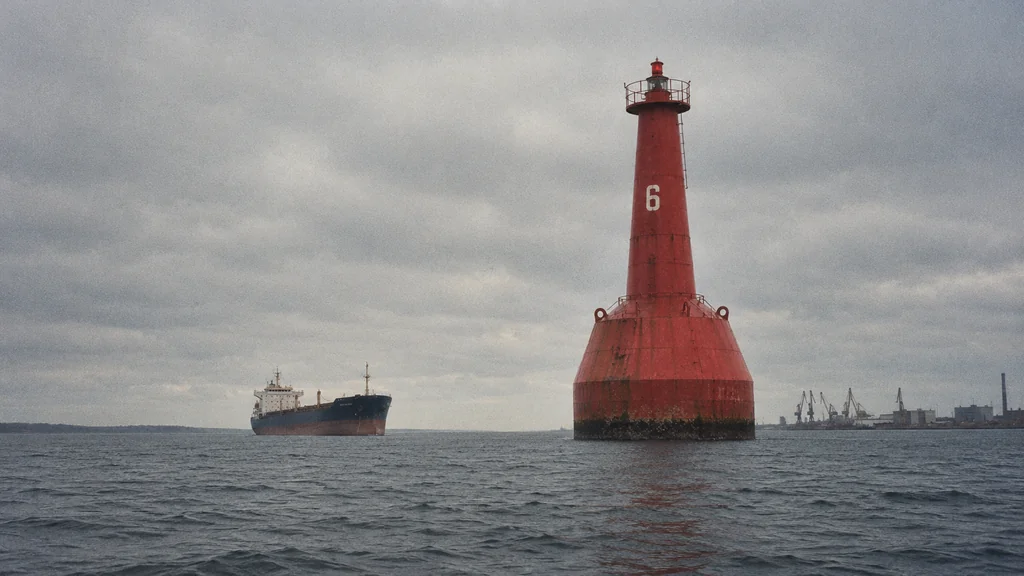
The safer approach to Sillamäe leaves captains waiting on Russia.
Image composition · tobriefRussian border guards on 1 October stopped the Västerbotten, a cargo ship bound for Estonia's port of Sillamäe, as it crossed a short stretch of Russian waters. They held it for hours, then let it go, and Estonia says Moscow never explained why (ERR). It was the second Russian stop on this approach. After Russia held a tanker there in 2025, Estonia moved to route Sillamäe traffic through its own waters (Yle). This ship used the Russian route anyway.
Hours at anchor, no reason given
The ship sat at anchor in Russian territorial waters through much of the day. Ship-tracking data analysed by the Finnish newspaper Aamuposti showed it under way again in the late afternoon (Aamuposti).
Russia has said nothing about the stop. No Russian official has put a name to the decision, and no order, allegation or inspection record has surfaced in the reporting.
Why big ships cut through Russian waters
The ship entered Russian waters because the geography pushes large vessels that way. The track through Russian waters is safer for big ships than threading between shallows in Estonia's own sea area. Reports describe this as an arrangement among Estonia, Finland and Russia, although none names the agreement or quotes its text (ERR).
Russia polices those waters, but within limits. The UN Convention on the Law of the Sea gives ships a right of "innocent passage", meaning they may cross another country's coastal waters as long as they do not threaten its security. The treaty also bars the coastal state from hampering that passage except as the treaty allows (UN).
Are Piel, who runs vessel traffic management at Estonia's Transport Administration, offered the most generous reading of Moscow's move. He said permission to pass does not exempt a ship from inspection, and suggested Russia had considered one necessary. That second point is his guess, not Russia's explanation. Russia has given no grounds, so nobody can yet judge whether this stop stayed within the treaty.
Tallinn's detour, and how far it reaches
The earlier case involved the Green Admire, a tanker that Russia stopped as it sailed out of Sillamäe. Estonian authorities then wanted the port's traffic out of Russian waters altogether (The Maritime Executive).
The Transport Administration followed through, deciding that ships arriving at and leaving Sillamäe would use Estonian waters. Yle presents that decision as a response to the 2025 case, not to this week's stop (Yle).
Västerbotten crossed Russian waters regardless. None of the cited reports reproduces the text of Tallinn's direction, so it remains unclear whether it binds every captain or leaves the choice to the ship. Nothing in the record shows the Västerbotten broke a rule by taking the shorter, safer channel.
That gap matters because the channel itself is the problem. Estonia can advise ships to stay in its waters, but it cannot make its own shallows deeper. As long as the safer track runs through Russian waters, Moscow decides how smoothly ships reach an Estonian port, and it has now shown twice that it is willing to use that position.
The country with the clearest formal stake in this ship has stayed quiet so far. The Västerbotten flew Cyprus's flag, and the flag state answers for its ships at sea. Cypriot media covered the stop, but SigmaLive relayed the Estonian account and carried no statement from Cyprus's shipping ministry (SigmaLive).
For now, the cost lands on captains. Anyone choosing the safer channel into Sillamäe must plan for the chance of hours at anchor under Russian guard, with no reason given and no word from Moscow afterwards. That is a small cost per voyage. Over many voyages, it gives Russia steady leverage over how easily ships reach an Estonian port.
Tallinn's announced detour did not keep this ship out of Russian waters, and Russia delayed it there. The reporting so far does not establish whether captains were obliged to follow Tallinn's direction.
Details about this article
- Model:
- claude-opus-5-5
- Generated:
- 10/2/2026, 2:08:55 AM
- Pipeline run:
- eu_pipeline_20261002_005006
- Watermark:
- SynthID (Google's invisible watermark)
- Human review:
- None before publication