Estonia weighs closing every Russian road crossing
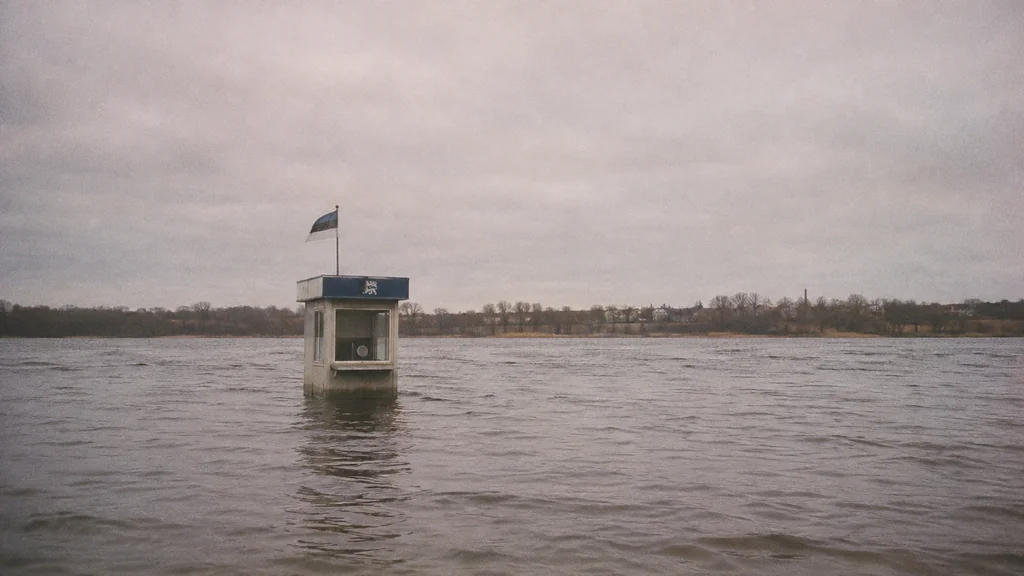
Estonia weighs closing the crossings that connect Narva to Russia.
Image composition · tobriefEstonia's government is deciding whether to shut every road crossing into Russia from 1 December, after a foiled sabotage attack it blames on Russian military intelligence (Interior Ministry). Nothing published so far links those crossings to the suspects. If the closure goes ahead, the border town of Narva and travellers from Finland would feel it first.
A foiled attack, blamed on Moscow
According to Estonian prosecutors, attackers tried to cause an explosion and a fire at Threod Systems, a drone maker in Viimsi outside Tallinn, at 03:06 on 14 November, and a security guard's response prevented serious damage (Estonian Prosecutor's Office). Police and KAPO, Estonia's internal security service, detained eight suspects (ERR).
Latvia's security service, VDD, says it warned KAPO about possible sabotage on 13 and 14 November (VDD). It then searched locations in Latvia linked to the detainees. The trail runs through a neighbouring EU country.
KAPO's director concluded that the GRU, Russia's military intelligence service, ordered the attack, and Prime Minister Kristen Michal has adopted that assessment publicly (Prime Minister's Office, Estonian Prosecutor's Office). Moscow rejects the accusation (BBC).
Estonia has not released the intelligence behind its attribution. Prosecutors say they still have to establish how the attack was organised and what each suspect did. For now, Estonia attributes the attack to the GRU, and no court has tested that claim.
A proposal the cabinet still has to adopt
The closure has not yet been decided. On 15 November, Interior Minister Igor Taro said he would propose shutting all road crossings with Russia to pedestrians and vehicles, with the cabinet to decide later that week whether any closure would be temporary or indefinite (Interior Ministry). The plot and Taro's first announcement were reported here earlier (To Brief).
Estonia's government can make this call alone. Russia sits outside the Schengen area, Europe's zone of passport-free travel, so these crossings form the zone's outer edge. EU border rules let a member country temporarily close such crossings on its own authority (EUR-Lex). The limit is proportionality: the closure has to match the threat it answers. Neighbours get no veto.
Who pays
Narva sits directly across the river from Russia's Ivangorod. Mayor Jaan Toots has warned of humanitarian and economic consequences, and local restaurant and hotel owners expect to lose customers (Postimees). Taro counters that the closure would directly affect relatively few people (ERR).
The cost also reaches Finland. On 4 June 2026, Helsinki decided to keep its own border with Russia closed until further notice (Finnish government). It cited the risk of Moscow pushing migrants across as a pressure tactic.
That pushed travellers from Finland, many with family in Russia, onto Estonian routes. Yle counts about 55,000 crossings by Finnish citizens at Estonia's Russian border so far this year, a tally of trips rather than individual travellers (Yle). Shut Narva, and that route closes too.
Lithuania is not following Estonia's lead. Its interior minister, Martynas Katelynas, said on 16 November that closing Lithuania's Russian border was "not actively being considered" (Lrytas).
The case Tallinn still has to make
Estonian leaders make a serious argument. They say Russian services use the crossings to reach and recruit people inside Estonia, and that a shutdown makes Moscow pay a price for attacking a defence company. A closure would not need to have stopped this attack to make sense. It would only need to reduce that future risk.
Finnish border researcher Jussi Laine sees the move mainly as a political signal, one Russia could turn to its own advantage in its messaging (Yle). His reading and Tallinn's can both hold at once.
Estonia has offered a reason to restrict future movement, but has not publicly connected the Russian crossings to this plot. The evidence made public so far points to Latvia, where the searches took place, rather than to traffic through Narva. When Michal's cabinet adopts its order, it owes Narva and the travellers from Finland an explanation of how closing the crossings would reduce the recruitment and access risk the government itself describes.
Details about this article
- Model:
- claude-opus-5-5
- Generated:
- 11/17/2026, 1:53:35 AM
- Pipeline run:
- eu_pipeline_20261117_005009
- Watermark:
- SynthID (Google's invisible watermark)
- Human review:
- None before publication