EU advisers leave Lebanon’s border gap
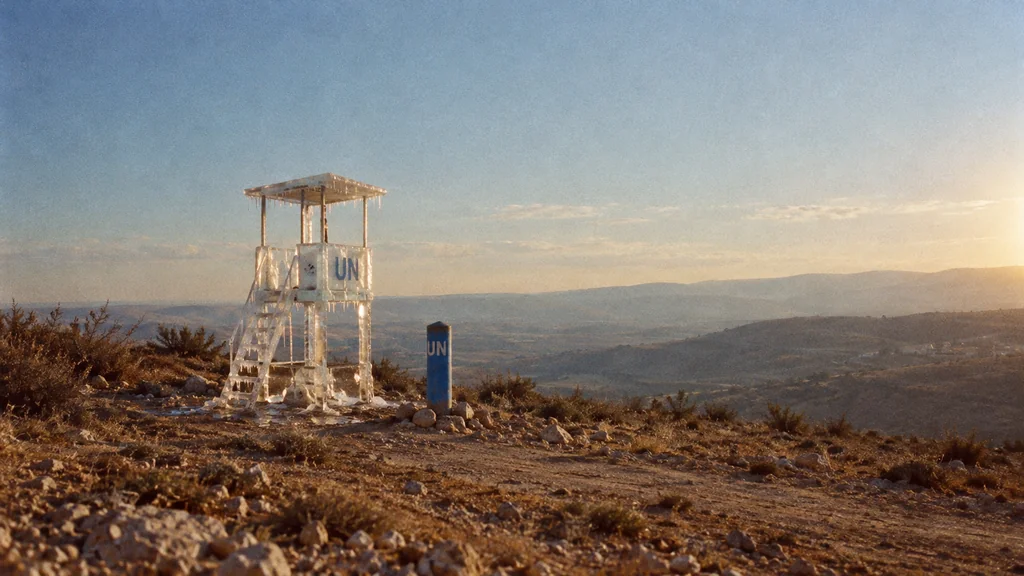
As UN patrols approach their end, no force is ready to replace them.
Image composition · tobriefEU governments on 12 October created a mission to advise and train Lebanon's army and police, with an initial three-year mandate, according to the Council. The mission will help Lebanese forces secure their own border. It will not watch that border, and the UN peacekeepers who do so must end their normal operations on 31 December 2026 (UNIFIL).
What the advisers would do
Lebanon asked for the mission. Its military advisers would work with the Lebanese Armed Forces on land-border control, maritime security, reconnaissance and counter-smuggling, while a civilian team advises the police (Council). President Joseph Aoun welcomed the decision and called the army and police the legitimate tools for extending state authority (MTV Lebanon).
Creating the mission does not put anyone in Beirut. Planning continues, and governments must adopt a separate decision to launch it (Council). Each government also decides for itself whether to send staff. The EU's diplomatic service says its advertised civilian posts depend on political decisions and budget approval (EEAS). The mission still has no published commander or budget, and no list of which countries will send staff.
What the patrols did that advisers will not
UNIFIL, the UN force, patrols the strip between the Blue Line (the UN-marked line of Israeli withdrawal) and the Litani River. It reports violations and keeps a channel open between Lebanese and Israeli forces (UNIFIL). The EU's text gives its advisers no patrol, ceasefire-monitoring or buffer role (Council). Kaja Kallas, the EU's foreign-policy chief, said in Beirut that the mission would not replace UNIFIL (EEAS).
The army that is supposed to take over is already stretched. It had more than 9,000 troops south of the Litani in February 2026 (UN report). The EU's asylum agency describes Lebanon's security forces as chronically underfunded and running on outdated equipment (EUAA).
The EU already pays for some of that equipment. The European Peace Facility, an off-budget EU fund for military aid, has given the Lebanese army €182 million since 2022 (Council). Advisers can add skills on top of that. They cannot pay salaries, and training takes time that the UN calendar does not allow.
Who can still fill the gap
Three sets of decision makers hold the remaining choices, and they are separate from one another. The UN Security Council decides whether a UN force follows UNIFIL. The Secretary-General has put forward three options of roughly 5,525, 3,370 or 1,980 uniformed personnel (UN). Washington, which holds a veto on the Council, had signalled it would block a renewal with no clear end date (Security Council Report).
France and Italy are pursuing a second route outside both the UN and the EU. In a joint statement in June 2026, they said they would explore leading their own international coalition after UNIFIL (Élysée). That idea is still exploratory. It would need its own decisions in Paris and Rome, other contributors and, presumably, Lebanon's consent.
The third set is the EU governments themselves. They have not yet voted to launch the mission, and none is obliged to staff it.
The EU's decision addresses the long run, which is an army and police better able to hold southern Lebanon on their own. It leaves the short run open. UNIFIL's normal operations end on 31 December, so from 1 January the line between Israel and Lebanon could lose the people who log incidents and keep both militaries talking (UNIFIL). Nothing the EU adopted on 12 October fills that role (Council). Whether anyone does depends on the Security Council, where Washington can block a UN successor, and on whether France, Italy or other capitals turn talk of a coalition into troops.
Details about this article
- Model:
- claude-opus-5-5
- Generated:
- 10/13/2026, 1:42:11 AM
- Pipeline run:
- eu_pipeline_20261013_005007
- Watermark:
- SynthID (Google's invisible watermark)
- Human review:
- None before publication