EU court stops lawyerless questioning by deadline
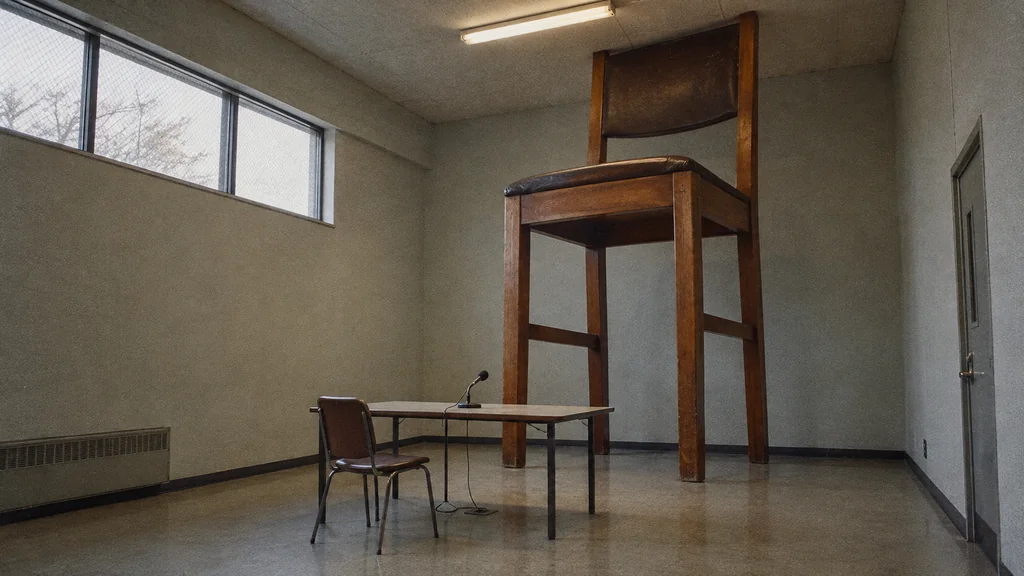
Across the EU, a deadline cannot empty the lawyer’s seat.
Image composition · tobriefThe EU's top court ruled on 22 October 2026 that Hungary and Czechia break EU law by letting police question suspects alone once a waiting period expires (Court of Justice). Police cannot interview a suspect without a lawyer simply because the lawyer has not arrived before a deadline. Both governments must now rewrite their rules, and the same principle binds police across the Union.
In Hungary, police could start questioning a suspect two hours after the lawyer was told of the arrest, whether or not the lawyer had turned up (Court of Justice). Czechia reached the same result through its custody limit. Czech police can hold a suspect for 48 hours before they must release them or bring them before a judge (Advocate General's Czech opinion). If the lawyer could not be reached in that time, questioning could go ahead without one.
Both rules ran into Directive 2013/48/EU, the EU law that sets minimum rights to a lawyer in criminal cases. It guarantees suspects access to a lawyer before police questioning, and a lawyer who can be present and take part effectively during the interview (EUR-Lex).
The Court read "present" as physically in the room, in principle (Court of Justice). That matters because a suspect's answers in a first interview can shape the charges and detention that follow.
A waiver or an emergency, never a stopwatch
EU law does allow questioning without a lawyer, by two separate routes. The first belongs to the suspect, who can give up the right after being properly informed, as long as the choice is voluntary and recorded (EUR-Lex).
The second belongs to the authorities, and only in a specific case. Officials must identify a real danger, such as serious harm to someone's life, liberty or physical safety, or a serious threat to the criminal case itself. They must then give reasons in a decision that a judge can review (EUR-Lex).
Both governments argued that investigators need a fallback. The Advocate General is an adviser to the Court whose opinion comes before the ruling but does not decide it. According to that opinion, Hungary warned that absent lawyers could wreck the legal timetable, frustrate investigations and force releases (Advocate General's Hungarian opinion). A lawyer, it said, could block questioning just by staying away.
Czechia stressed that its custody limit leaves police no slack, and that a quick interview can clear an innocent person (Advocate General's Czech opinion).
The Court accepted that genuine emergencies can justify questioning without a lawyer. But it held that the passing of time proves no emergency, because an exception needs reasons tied to the individual case (Court of Justice). A deadline that runs out is not an emergency.
Hungary lost a second point as well. The Court found that a suspect who simply chooses not to use a lawyer has waived the right, so the directive's safeguards apply even though Hungarian law says the right cannot be given up (HVG).
Who has to change what
The European Commission, the EU's executive, brought both cases, and the Court has now ruled that the national rules breach EU law. Budapest and Prague must bring their codes into line. If the Commission judges either still in breach, it can return to the Court and ask for fines (EUR-Lex).
Prague's first response was cautious. Justice Ministry spokesperson Markéta Poslušná said the ministry respected the ruling and would study its reasoning, without offering a draft amendment or a timetable (TN.cz).
The repair is not exotic. After a Commission warning, France abolished its own two-hour wait for lawyers in police custody, with effect from 1 July 2024 (French National Bar Council).
Poland is a different matter. Article 301 of its criminal procedure code says that a requested lawyer's failure to appear does not prevent questioning (Polish code). The Court has not examined that provision, so whether it falls foul of the same principle is untested. The principle itself is settled. A routine waiting period cannot replace an exception justified case by case, and any national rule that lets questioning start because a lawyer's clock ran out now sits on the wrong side of EU law.
Details about this article
- Model:
- claude-opus-5-5
- Generated:
- 10/22/2026, 7:34:46 PM
- Pipeline run:
- eu_pipeline_20261022_184701
- Watermark:
- SynthID (Google's invisible watermark)
- Human review:
- None before publication