EU diesel release puts pump prices on trial
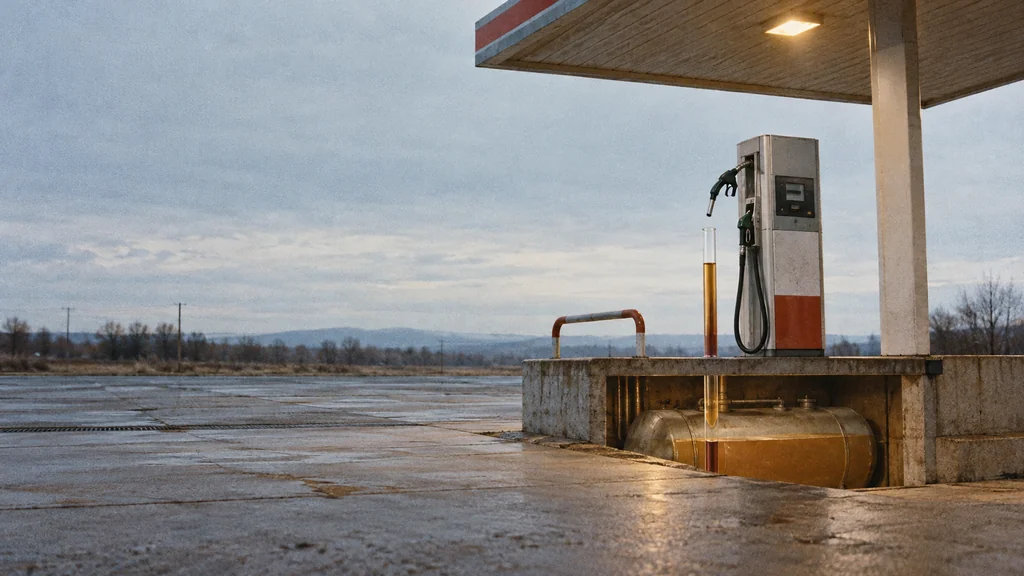
Reserve diesel enters the market; the saving has yet to reach drivers.
Image composition · tobriefTwelve EU countries have committed to release 42.6 million barrels of oil and fuel from emergency stocks by 31 January 2027, including 20.5 million barrels of diesel (Agence Europe, ANSA). These barrels complete a release governments promised in March. Whether drivers pay less depends on how each country sells its stock.
France presented the declaration to EU energy ministers on 29 October (EU Council). The signatories include Germany, Italy and the Netherlands (ANSA).
The March promise came from members of the International Energy Agency (the IEA, which coordinates rich countries' emergency oil stocks). After war in the Middle East disrupted supply, they agreed to make 400 million barrels available, and by 15 October about 330 million had been released (IEA). At that point the agency expected the final total to beat its target because some countries had overshot their pledges (To Brief).
The European declaration sets a finishing date for that effort, so its barrels belong inside the earlier totals rather than on top of them. The Dutch government, for one, describes its final batch as completing the pledge it made in March (Dutch government).
Diesel gets priority because it is ready to use. Crude oil must pass through a refinery before it can fuel a lorry or a tractor. Diesel in a storage tank can go straight to a distributor.
Finished fuels are also where supply is tightest. The IEA estimates that shipments of refined products from the Middle East ran at about 1.9 million barrels a day in September, against 4.7 million before the war (IEA Oil Market Report).
A deadline, not a delivery date
The end-January date is the last day governments plan to release stock. Fuel reaches filling stations later. In between, a stock agency offers the fuel, a buyer wins it, a ship or truck loads it and distributors sell it on.
The Dutch stock agency COVA shows the lag. It issued its latest diesel tender on 29 October and plans loading for December (COVA tender).
Where a litre might get cheaper
Prices start high. EU average diesel cost about €2.15 a litre in the week of 26 October, roughly 35% above late February (Fuel Prices Europe, European Commission).
Germany and the Netherlands sell reserves at market prices. German law requires it (German stockholding law). Dutch tenders price diesel against a published wholesale benchmark, plus whatever extra the winning bidder offers (COVA tender). More supply can shrink the extra price buyers pay when fuel is scarce, but it gives no filling station a fixed discount.
France chose a different design. Its government is selling about 10 million barrels of diesel near the price it originally paid, well below today's wholesale price, and forecasts a pump cut of 12 to 18 cents a litre from 1 November (French Finance Ministry). The decree gives the sales chain until 31 March 2027 to pass the full benefit on (Légifrance).
Distributors will blend the cheap stock with fuel bought at current prices, which dilutes the saving. TotalEnergies has signalled a cut of about 10 cents, conditional on international prices (Reuters via Boursorama). No published figure yet shows either cut at the pump.
Traders and distributors receive the reserve fuel first. Whether they keep any gain or pass it on is what matters for everyone else. Hauliers, farmers, fishers and diesel drivers benefit only if cheaper wholesale fuel shows up in their contracts and receipts.
The emptied stocks will also have to be refilled. On 2 October the G7 (the group of seven large industrial economies) asked the IEA for advice on how to do that (G7 statement). The timing is awkward. The IEA does not expect depleted global stocks of gasoil (a diesel-type fuel) to rebuild before the second half of 2027 (IEA Oil Market Report).
The release should put finished diesel into a tight market; any saving at the pump remains unproven. France has made the only specific promise to drivers, so its pump prices over the coming weeks will be the first test of whether reserve diesel reaches the people paying for it.
Details about this article
- Model:
- claude-opus-5-5
- Generated:
- 10/30/2026, 1:40:18 AM
- Pipeline run:
- eu_pipeline_20261030_005008
- Watermark:
- SynthID (Google's invisible watermark)
- Human review:
- None before publication