EU drops warning over Spain’s migrant permits
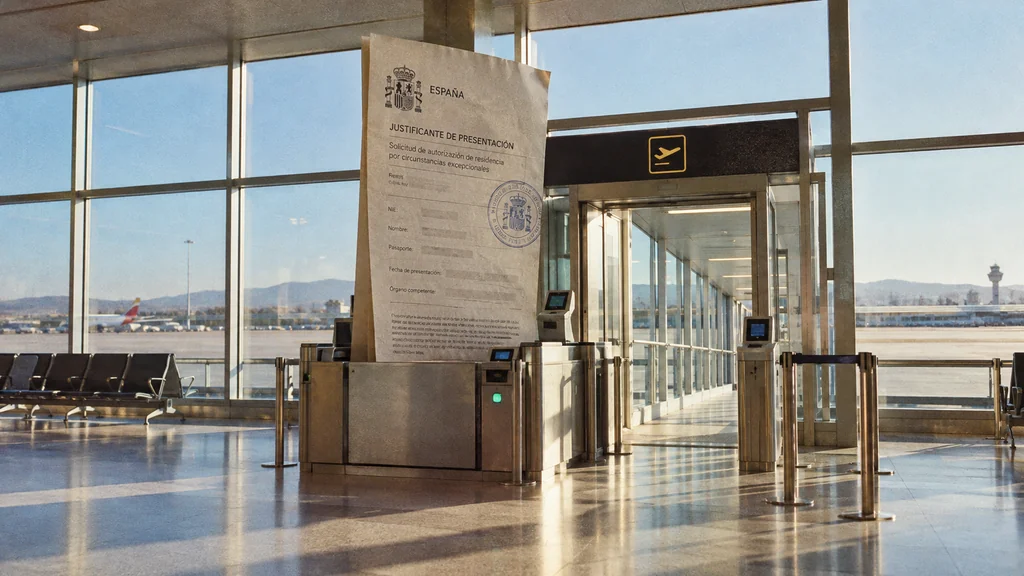
Spain’s provisional papers allow work at home, while travel remains restricted.
Image composition · tobriefItaly, Denmark and Poland wanted EU leaders to warn that national migration measures can attract more irregular arrivals. Spanish and international reporting read the line as aimed at Spain's mass regularisation of undocumented migrants, and the conclusions adopted on 16 October contain no such warning (European Council conclusions). Spain still decides who may live and work on its soil. Its partners fear the effects will spill across open borders, but they have not documented that.
A sentence any leader could strike
The draft, as reported by two outlets, said the EU should avoid measures that might encourage irregular arrivals. It also asked the Commission to explore consultation between governments when one country's choices affect others (POLITICO, EFE). The reported wording did not say whether consultation meant more than talking before acting.
Summit conclusions are political guidance from national leaders, not law. They need consensus, so any single leader can remove a sentence by refusing to sign it. The final text names neither Spain nor any incentive for arrivals (European Council conclusions).
It is less clear who secured the deletion. El Mundo credits Spain's prime minister, Pedro Sánchez (El Mundo). Euronews, citing AP, reported that France also opposed the amendment as an implicit attack on Spain (Euronews/AP). Either way, leaders were only deciding what to say. Whether Spain could issue permits was never on the table.
Why Spain's neighbours care
The three governments' argument rests on Schengen, the zone where most EU countries have dropped passport checks between themselves. Giorgia Meloni told Italy's parliament that one country's migration choices land on its partners (Meloni's parliamentary record). In a zone with one shared outer border, a national decision becomes everyone's concern.
Denmark's prime minister, Mette Frederiksen, asked the Commission to examine what happens when a state legalises people who entered irregularly (Altinget). In August, a letter signed by 22 leaders named large regularisations as possible "pull factors," meaning alleged incentives for future arrivals (Danish Prime Minister's Office).
What a Spanish permit actually allows
Spain's scheme covers only people already in the country. Applicants needed to have been present before 1 January 2026 and to have stayed at least five months without interruption, and the filing window ran from 16 April to 30 June (Royal Decree 316/2026).
An application is not a permit, and the scheme has three stages. By 2 July, the government counted 1,174,978 applications and 609,737 cases processed or admitted to the provisional stage (Spanish government). At that point, El País reported about 11,000 final approvals (El País). Provisional status allows someone to live and work in Spain only. A final decision brings a one-year permit, followed by an identity card (Royal Decree 316/2026).
Even a final permit opens less of Europe than the debate implies. It allows visits to other Schengen countries for up to 90 days in any 180, but not work or settlement there without that country's own approval (European Commission). A provisional document does not count as a travel permit at all. The Schengen Borders Code (the EU law on border crossings) excludes temporary papers issued during a first residence application (EUR-Lex).
Border checks that test something else
The two governments have quarrelled over a separate episode. After a July influx into Ceuta, Spain's enclave on the Moroccan coast, Italy began checking passengers on flights and ferries from Spain, and Madrid answered with checks on arrivals from Italy (ANSA). On 16 October, Meloni and Sánchez agreed to extend Italy's checks by seven days while their interior ministers look for alternatives (Euronews).
The Ceuta episode says nothing about the regularisation. People who arrived in July could not qualify, because the scheme required presence before January. Italy's checks were therefore aimed at a different group.
EU law already lets member states grant irregular residents a right to stay on humanitarian or other grounds (EUR-Lex). Leaders left that national power intact, and the evidence cited so far does not show that Spanish permits have caused anyone to move on to other countries. One caveat applies: there is no public count of final permits since July. That means even the size of the group able to travel legally is unknown.
Details about this article
- Model:
- claude-opus-5-5
- Generated:
- 10/17/2026, 1:32:43 AM
- Pipeline run:
- eu_pipeline_20261017_005006
- Watermark:
- SynthID (Google's invisible watermark)
- Human review:
- None before publication