EU fuel relief rests on national budgets
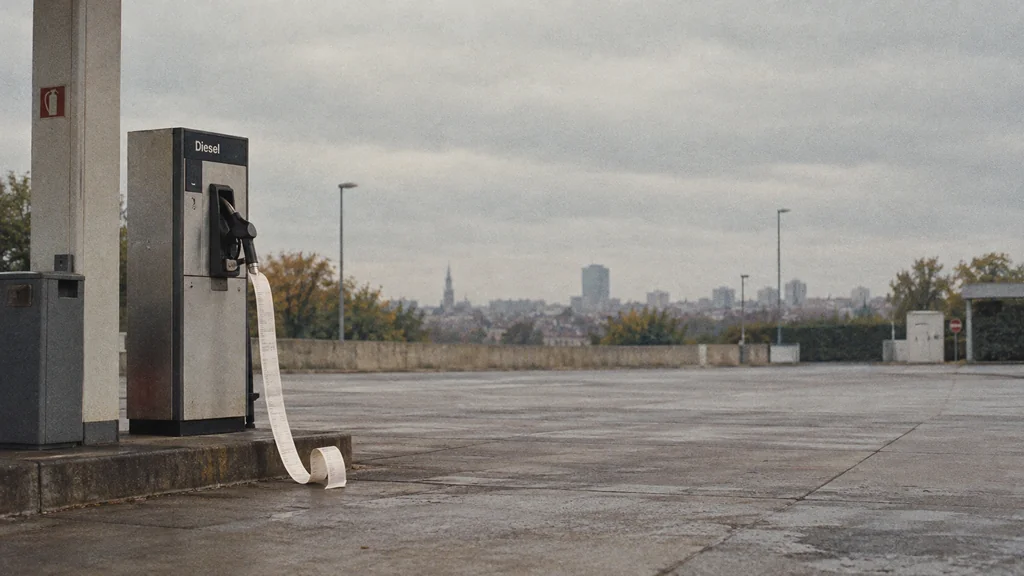
Fuel reaches Europe, while the price of keeping it flowing rises.
Image composition · tobriefEU leaders ended their energy debate in Brussels on Thursday with no measure ready to add fuel supply or bring down prices (Euronews). The idea most likely to make headlines, joint EU buying of energy beyond gas, still had no defined participants, fuels, procedure or timing (Commission briefing). The help that already exists comes from national governments, which can subsidise some farmers, fishers and transport firms. How far that help reaches depends on each government's budget.
The official record shows talks, not a package. When checked on 15 October, the European Council's meeting page listed only participants among its outcome documents (European Council). Draft conclusions reportedly backed extending temporary subsidy rules and voluntary pooling of energy demand, among other items (Agence Europe). That wording asks the Commission to design something. It names no buyer, no subsidy and no production target.
Why fuel keeps flowing but costs more
The squeeze starts outside Europe. The world had about 1.7 million fewer barrels a day of diesel and gasoil in the third quarter than a year earlier, according to the International Energy Agency. The agency linked the gap to the Iran war, disruption around the Strait of Hormuz and lost refining capacity. European importers compete with buyers worldwide for the same cargoes, so when less is available, they must pay more to keep it coming.
That explains how supply can be stable while prices stay high. On 29 September, the Commission's Oil Coordination Group reported that supply remained stable, but that European refineries were already running near maximum capacity (Commission). Stations are not running dry. The fuel arrives, at a higher price, and plants already at full stretch cannot quickly make more. Ursula von der Leyen's talks with refiners have produced no output target or start date.
A road-fuel carbon charge is not behind this year's rise. ETS2, the planned EU carbon market for road fuel and heating, is not due to start until 2028 (Czech government).
What joint buying delivered last time
The EU has tried pooled purchasing before. During the gas crisis, a platform called AggregateEU collected demand from companies and showed suppliers the grouped requests. Buyers then signed their own contracts outside the platform, so a "match" was an introduction, not a purchase.
The European Court of Auditors could not verify that the scheme produced cheaper contracts, because the Commission never saw the final terms (European Court of Auditors). The IEA found no evidence that it brought additional liquefied gas to Europe (IEA review).
Scarcity makes that record more relevant. A bigger buyer can move up the queue, but it adds no barrels; it takes them from someone else. Von der Leyen's version would appoint an operator to sign contracts jointly, yet the plan names no participants (Commission briefing). Until the Commission says whether that operator buys for governments, companies or both, nobody knows who would carry the price, delivery and default risk.
Who pays for the relief
The most concrete help runs through state aid rules (the EU's permission for governments to subsidise firms). Governments may cover up to 70% of verified extra fuel or fertiliser costs for farmers, fishers and some transport firms (Commission METSAF rules). Those rules were adopted on 29 April and expire on 31 December (Euronews).
An extension remains a promise. Von der Leyen pledged one, but the Commission's rules page showed no amendment when checked on 15 October (Commission METSAF rules). This aid offsets an eligible firm's costs. It does not lower the pump price, and ordinary drivers are not covered.
National treasuries pay the bill, because no common EU fund exists (European Parliament research service). The same permission to subsidise therefore favours governments with more money to spend. On 8 October the Commission rejected Italian and Greek requests for more fiscal flexibility, meaning more room under EU budget rules to spend or borrow (Reuters), as we reported at the time (To Brief).
Much of the money already spent misses its mark. The Commission's spring forecast put national energy measures at €38.6 billion if continued through year-end, with roughly three-quarters untargeted (Commission). Untargeted aid goes to everyone who buys energy, not to those most exposed, and it leaves less room for the hauliers and farmers the April rules were written for.
No summit measure is ready to add fuel to Europe's supply. Pooled buying has no defined participants, and the aid extension has no published text. This winter's relief will come from national subsidies, reaching eligible firms rather than drivers, in proportion to what each treasury can afford. Before anyone can judge whether joint fuel buying is worth having, the Commission has to say who would sign the contracts and who would guarantee them.
Details about this article
- Model:
- claude-opus-5-5
- Generated:
- 10/16/2026, 1:33:34 AM
- Pipeline run:
- eu_pipeline_20261016_005006
- Watermark:
- SynthID (Google's invisible watermark)
- Human review:
- None before publication