EU methane delay could stretch to 2030
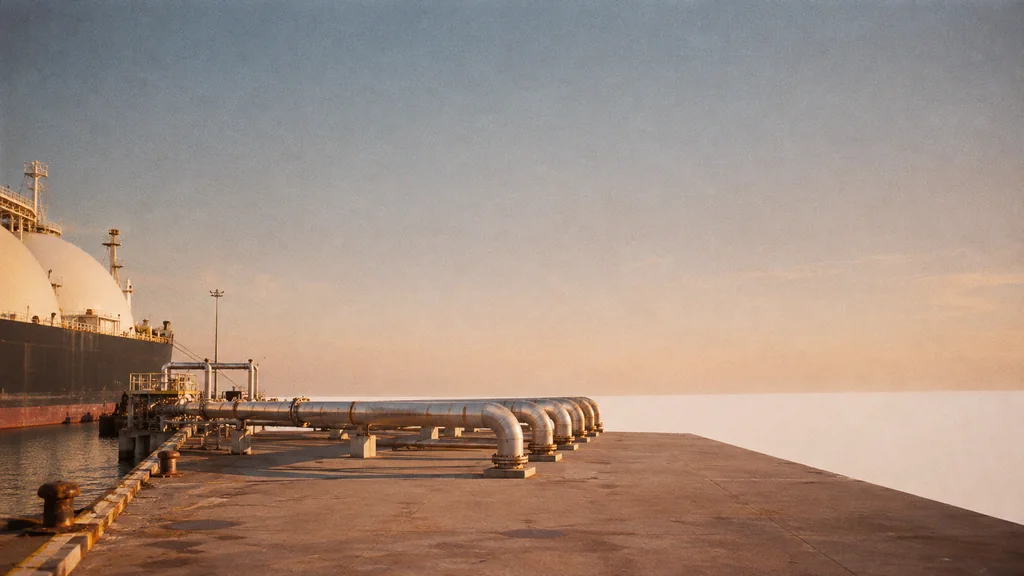
Gas still reaches Europe while the rules for proving its emissions wait.
Image composition · tobriefOn 6 November, EU governments' ambassadors agreed a negotiating mandate that moves the core methane requirement for importers from 1 January 2027 to 1 January 2028 (Council mandate, Reuters). The gas supply squeeze behind the move is documented; the claim that the methane rule itself stopped cargoes rests mostly on a model. Parliament prefers later dates, and until both institutions adopt the same text, importers remain bound by 1 January 2027 (Parliament, the methane regulation).
What importers would have to do
The requirement is paperwork, not a ban. Under Article 28 of the methane regulation, an importer must obtain proof that its supplier measures methane and has the figures independently verified, as the EU requires of its own gas producers (the methane regulation). There is no import ban at this stage, and no cap yet on the methane the fuel may contain. Contracts signed before August 2024 face a lighter test: "all reasonable efforts" and an explanation (the methane regulation).
The rule's reach makes any date change matter. Fuel imported into the EU carried about 7 million tonnes of methane in 2025, nearly twice the Union's own production emissions (IEA). The governments' mandate would move the proof requirement to 1 January 2028 and first annual compliance reports from importers to 31 May 2029 (Council mandate). Parliament voted on 22 October to hold off those first reports until 2031 (Parliament). Because the regulation applies directly in every member state, one delay resets the clock for every importer.
The squeeze is real; the rule's role is thinner
ACER, the EU's energy regulator, documented the pressure this summer: Qatari liquefied gas barely reached Europe, US liquefied natural gas covered roughly 30% of EU gas supply, and the import bill grew by an estimated €18–33 billion (ACER), a squeeze this publication covered at the time (To Brief).
The loudest number comes from a March 2026 Wood Mackenzie scenario commissioned by the European oil and gas industry lobby: under its default assumptions, up to 43% of the EU's 2024 gas imports and 87% of its crude would fail to show compliance with the rule (industry study). That is a model of paperwork risk, not logged losses. Germany's government, asked what the provision had done in practice, told parliament it knew of one contract in which the rule had played a role, and held no quantified volumes (Bundestag answer).
A year that can turn into three
Ireland, which chairs member-state talks this half-year, brokered the one-year compromise between capitals that wanted a year and those that wanted three (Reuters). The same fault line ran through the German government: its economy and environment ministers clashed before Berlin settled on backing at least one year (Tagesspiegel, n-tv).
The Council's "one year" contains an extension device. If the Commission's readiness check due by 30 September 2027 finds too few accredited verifiers to sign off on supplier data, or the data-transfer rules remain incomplete, the mandate must add another year; a second check by 30 June 2028 could add a third (Council mandate). The extension would come as a delegated act, a technical update the Commission adopts on its own authority, though Parliament and the Council can object rather than amend it.
The gaps governments cite to justify the wait are genuine. The Commission's own proposal concedes that verifier accreditation and data-transfer rules are still being built (Commission proposal). The Netherlands shows enforcement can loosen without touching the law: in August 2026, its emissions authority announced no sanctions for breaches of the importer duty due through 2029, barring fraud or gross negligence (Dutch regulator).
Nothing changes for importers until Parliament and EU governments adopt the same text; the deadline in force is still 1 January 2027 (the methane regulation). The Dutch decision adds a caveat: the legal duty survives while the penalty behind it can already be pushed back (Dutch regulator). The 6 November agreement shifted expectations, not obligations (Council mandate). The record separates the two cases cleanly: the supply squeeze is measurable, while cargoes stopped by the methane rule remain a model's claim.
Details about this article
- Model:
- deepseek-v4-pro
- Generated:
- 11/7/2026, 2:32:11 AM
- Pipeline run:
- eu_pipeline_20261107_005008
- Watermark:
- SynthID (Google's invisible watermark)
- Human review:
- None before publication