EU’s €3 duty pushes goods into warehouses
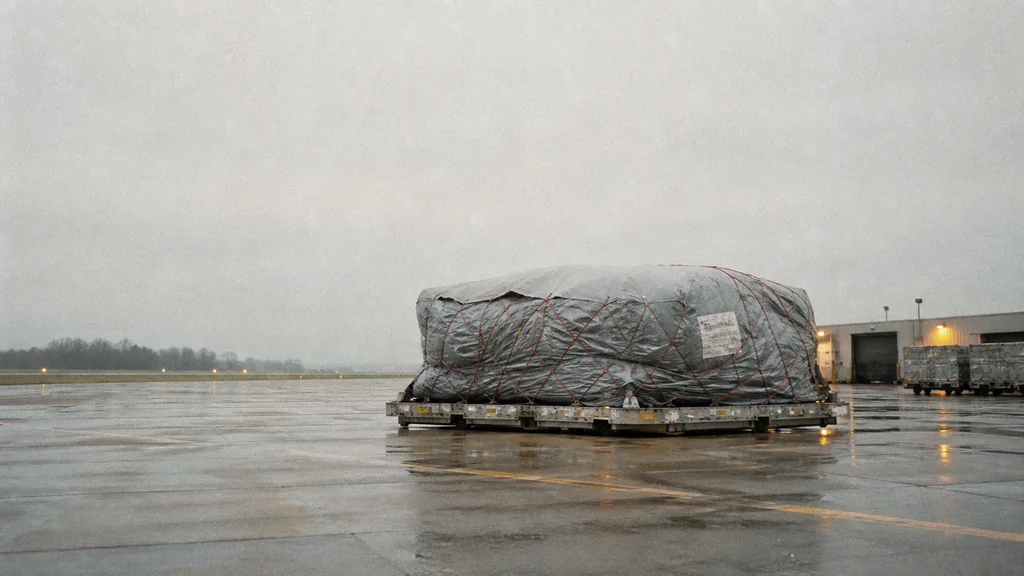
The parcels disappear, but the goods return through larger doors.
Image composition · tobriefDutch customs counted 46% fewer small parcels arriving from outside the EU in July and August, compared with the six months before (Nieuws.nl/ANP). That sounds like a policy working. But fewer parcels do not mean fewer goods. The same products may simply be arriving differently.
What the duty actually does
Until 1 July, parcels worth under €150 entered the EU duty-free. The new rule scrapped that exemption and charges a flat €3 for each product category inside a shipment (EUR-Lex, European Commission). Order a phone case and a T-shirt from Temu, and customs now adds €6 at the border. That is enough to make very cheap purchases feel less cheap, and the parcel numbers show it.
The drop is EU-wide. Poland's customs declarations for e-commerce fell 50.1% from June to July (TVN24). France's finance ministry estimated small-parcel imports across the bloc dropped 30–40%, with Joko transaction data showing Temu volumes down 50% but Shein down just 15% (Le Figaro). That Shein gap matters. Shein already ships bulk inventory to warehouses inside Europe, so the border duty barely touches it.
Same goods, bigger boxes
Liège Airport, Belgium's main hub for Asian e-commerce cargo, tells the fuller story. Small e-commerce parcels there fell 24% year-on-year and customs declarations dropped 52%. But total cargo tonnage rose 4% (AKTUS/CCI Liège-Verviers-Namur). Fewer little packets, more total weight. The simplest explanation: platforms are bundling products into larger shipments that clear customs differently, then distributing them from inside the EU.
Belgian customs data backs this up. Consignments valued above €150 rose 10%, and products were increasingly grouped into bigger loads (RTL Belgium). Shein's warehouse near Wrocław already serves European fulfilment (Business Insider Polska, Wrocław.pl). Temu is reportedly doing the same. The trade has not shrunk. It has moved from millions of tiny parcels crossing a border to bulk freight entering a warehouse.
And consumer demand has not collapsed either. Polish polling found 79.7% of buyers kept using Chinese platforms after the new charge took effect (MSN Poland). People still want cheap goods. They are just getting them through a different supply chain.
Who gains, who loses
European retailers are the clearest winners. They already pay full customs duties and meet EU product-safety rules. The German Retail Association has argued that Temu and Shein routinely failed to meet those same requirements while domestic shops bore the full cost (DW). The €3 duty narrows that gap, though it does not close it. EU warehouse operators and logistics firms also stand to gain as platforms move stock onshore.
Consumers who bought very cheap goods lose if prices rise or checkout friction increases. But the Commission's strongest argument was never really about price. It was about safety. In one EU-wide customs operation, 84% of lab-tested products from small e-commerce parcels were dangerous (DG TAXUD). France's consumer-protection agency found 46% of roughly 600 marketplace products analysed were dangerous (TF1 Info). Germany's telecoms regulator found 62.4% of 511 checked Temu products were non-compliant (MDR).
The channel shifted — did the risk?
The duty did what duties do: it made one route expensive, so trade found another. If platforms now import bulk into EU warehouses, border customs can inspect more thoroughly at fewer points. But the safety problem then moves inside Europe, where national market-surveillance bodies (the agencies responsible for checking products already on shop shelves) must find, test and pull non-compliant goods under EU product-safety law (Regulation (EU) 2019/1020).
A separate handling fee, expected around November, has not yet been priced (Douane Nederland). From July 2028, the full common customs tariff replaces the flat €3 rate. Parcel counts answer the easy question. Safety checks must answer the harder one: whether fewer dangerous products actually reach buyers. That data does not exist yet.
Details about this article
- Model:
- claude-opus-4-6
- Generated:
- 9/2/2026, 2:05:13 AM
- Pipeline run:
- eu_pipeline_20260902_005006
- Watermark:
- SynthID (Google's invisible watermark)
- Human review:
- None before publication