EU’s €6.6bn Ukraine deal favors refunds
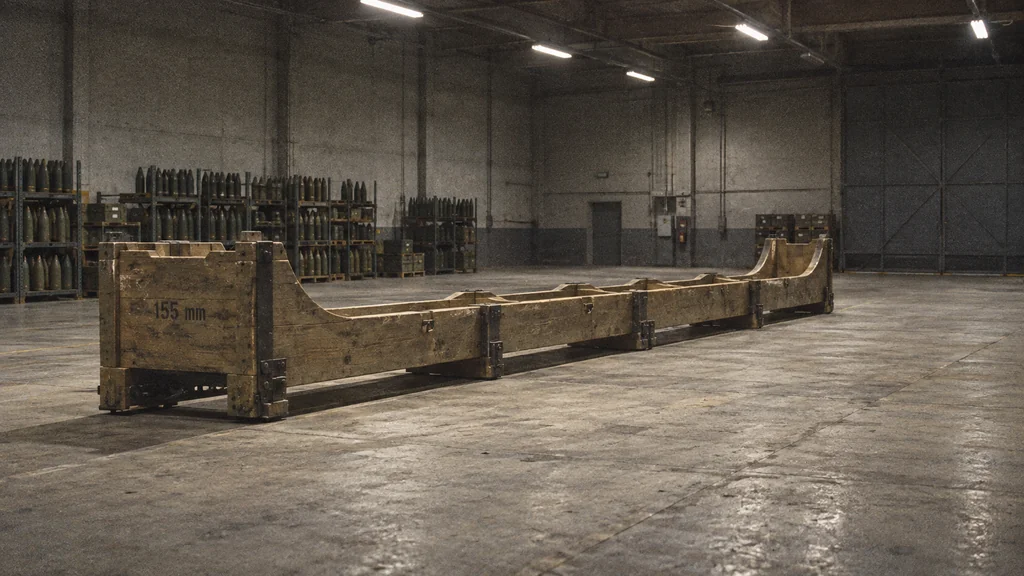
Europe prepares to repay weapons already delivered, while formal approval waits.
Image composition · tobriefEU governments agreed on 25 September how to divide €6.6 billion in military aid for Ukraine that Hungary had blocked for years, and €4.7 billion of it will reimburse member states for weapons they have already delivered (Delfi Estonia, Știrile ProTV). National ambassadors struck the deal, and it is still only political. Legal acts have to be adopted before any money moves (Euronews).
Three slices, three destinations
The money sits in the European Peace Facility, the pot EU governments have paid into since 2021 to finance military support abroad (Council Decision 2021/509). Kaja Kallas, the EU's foreign-policy chief, announced the rest of the split: €1 billion for new joint equipment purchases and €900 million for the EU mission that trains Ukrainian soldiers (Euractiv, Delfi Estonia).
Each slice follows its own path. Refunds land in national treasuries, purchase money goes to arms suppliers, and training money pays for the mission.
None of it reaches Kyiv's state budget, whose shortfall we examined last month (To Brief). The fund arms and trains Ukraine's army. It does not pay the state's bills.
Why refunds took the biggest share
Hungary could stop the fund on its own because EU foreign-policy decisions with military implications require unanimity, meaning any single government can veto them (Treaty Article 31). Viktor Orbán's government used that power for years. The agreement followed Orbán's defeat in the April 2026 election and Péter Magyar's arrival as prime minister (Euronews).
Once Budapest stopped blocking, the argument moved to who gets paid. Germany, a large donor, wanted most of the pot steered toward new support for Ukraine (Euractiv).
Poland pushed for refunds, and its case is practical. Countries that emptied their arsenals for Kyiv have to restock before they can give more, and a refund pays for that restocking. The final split leaned Warsaw's way, with reimbursement the largest line (Știrile ProTV).
Some of that refund money may still flow back to Ukraine. Kallas said certain governments would pass their reimbursements on to Kyiv but did not name them. According to the Kyiv Independent, Germany and Sweden intend to, though neither has attached an amount.
What stands between the deal and the payments
The ambassadors reached their agreement in the Political and Security Committee, the body where member states coordinate foreign and defence policy between ministers' meetings. Ministers still have to turn the political deal into formal decisions. Interfax-Ukraine expected that step, with signatures, at a Council meeting on 28 September (Interfax-Ukraine).
The public record does not yet show what that final approval involves, or whether any government could use it to reopen the argument. Even after sign-off, the cash will arrive slowly. Poland's deputy defence minister, Paweł Zalewski, expects his country's refund in 2027 (RMF24).
What governments settled this week is mostly how to share costs they had already carried, and the legal basis for paying any of it out is still pending. Most of the fund reimburses weapons Ukraine has already received. The new help for Kyiv's army comes from the joint purchases and the training mission. Anything beyond that depends on donors such as Germany and Sweden choosing to send their refunds back to Ukraine.
Details about this article
- Model:
- claude-opus-5-5
- Generated:
- 9/26/2026, 8:38:03 AM
- Pipeline run:
- eu_pipeline_20260926_074621
- Watermark:
- SynthID (Google's invisible watermark)
- Human review:
- None before publication