EU sanctions 1,569, spares Silmet supplier
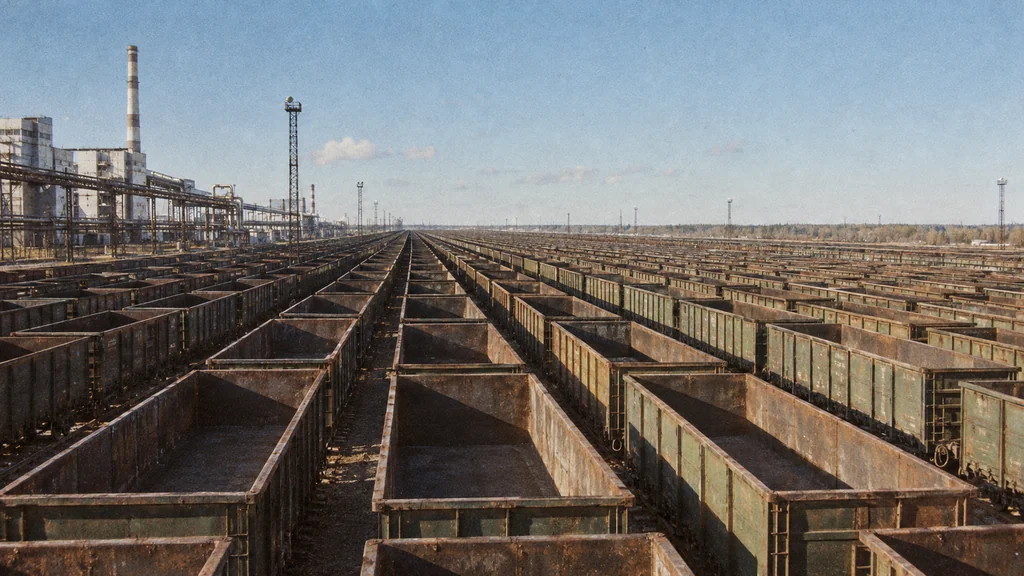
Silmet gains time to replace Russian supplies, but no deadline is set.
Image composition · tobriefEU ministers on 12 October put 826 Russian military-industry companies and 743 of their executives under sanctions, in what the Council calls its largest listing package since Russia's full-scale invasion of Ukraine (Council). One Russian supplier is missing because Estonia asked for its removal, citing NPM Silmet, a plant in Sillamäe that still relies on the firm's materials (ERR). Estonia used its place in a decision every member state had to approve to buy Silmet time to find another source.
What the listing forces Europeans to do
The package became law in two steps. EU ambassadors, who prepare ministers' decisions, agreed it on 7 October (Reuters), as we reported then (To Brief). Publication in the EU's Official Journal on 12 October turned that political deal into binding law with named targets (EUR-Lex).
Any bank or company under EU law must now freeze funds the targets own or control. It also cannot pass them money or other economic resources, directly or through intermediaries (EUR-Lex). The Commission's guidance says a freeze immobilises assets without confiscating them (European Commission). The listed executives are also barred from entering the EU (Council).
The Council's reasoning on the companies is specific. Its regulation notes that the 826 firms appear on a recent Russian-government list of military-industry companies eligible for state subsidies (EUR-Lex). Moscow's own register places them inside its war economy, and the Council relies on it as part of its case. The EU describes the firms as mid-level makers of electronics, radars, explosives, and missile and navigation systems, with annual turnover of at least €20 billion and more than 250,000 staff (EEAS).
A freeze bites only where a target deals with European banks, suppliers or customers. The Kyiv School of Economics estimates that China supplied about 75% of Russia's reported 2026 imports of tracked critical goods, trade that EU asset freezes do not directly cover (KSE). Some reports put the day's total at 1,646, a figure that adds 77 people listed in separate acts for running Russia's Duma elections in occupied Ukrainian territory (EUR-Lex).
Why Estonia asked for an exception
Before the ambassadors' deal, Estonia asked for a Russian company and an executive linked to it to come off the draft. Its envoy in Brussels, Kerstin Lepik, told public broadcaster ERR that the firm supplies strategic materials to Silmet, whose output goes into European electric vehicles, wind turbines, electronics and aviation (ERR).
The request divided Estonian politics. Parliament's foreign affairs committee named the supplier as Solikamsk Magnesium Plant and called its exclusion a "very unpleasant political precedent" (Riigikogu). Foreign Minister Margus Tsahkna argues that Europe must raise pressure on Russia while freeing strategic production from Russian raw materials, and says Estonia sought to delist no one already sanctioned (Estonian foreign ministry). Prime Minister Kristen Michal told the same broadcaster the outcome clashed with Estonia's values-based approach, and urged Silmet to find another supplier quickly.
A dependency without a deadline
Estonia's leverage came from the rules. Sanctions listings require unanimity, meaning every member state must agree, so a single government's objection can reshape a draft. The record shows no explicit veto threat, only a request that was granted.
The route out of the dependency also runs through Brussels. On 9 October the Commission picked Silmet's plan to switch to other raw materials as one of 46 new strategic projects, a status meant to speed up approval and financing (European Commission). Tsahkna then demanded that this European backing come with a deadline for ending Silmet's reliance on Russian feedstock (Estonian foreign ministry).
The EU left this supplier off the list while Silmet looks for other inputs, and the public record so far contains no deadline for ending that dependence. The Commission's project selection does not by itself show who would set one. Until a date exists, Europe's sanctions on Russia's arms industry carry an exception shaped around a supply chain it still needs.
Details about this article
- Model:
- claude-opus-5-5
- Generated:
- 10/13/2026, 1:42:25 AM
- Pipeline run:
- eu_pipeline_20261013_005007
- Watermark:
- SynthID (Google's invisible watermark)
- Human review:
- None before publication