Europe names five, Moscow holds the door
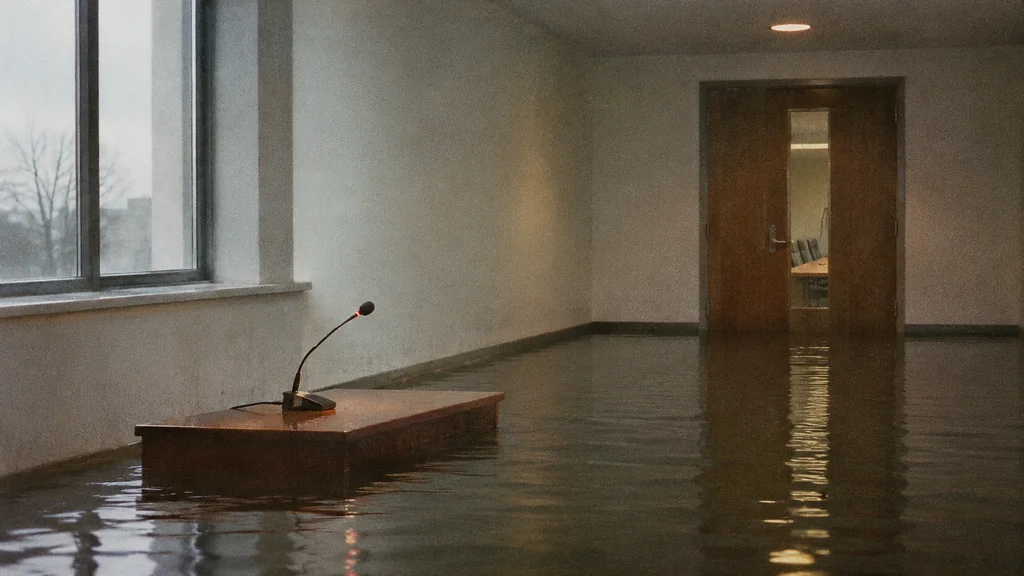
Europe names its negotiators while the next table remains closed to them.
Image composition · tobriefEU leaders agreed in Dublin on 13 November that the EU institutions plus France, Germany, Italy, Poland and the United Kingdom will represent Europe in any talks to end Russia's war against Ukraine (Council, RTÉ). The decision settles who should speak for Europe, a question that left Europeans outside the main room at the last round. Russia has not agreed to let them in, and the team cannot promise EU sanctions relief on its own.
Names, but no instructions
The five capitals are now called the E5 (RTÉ). The group widens the trio of Paris, Berlin and London, which had done most of Europe's talking on Ukraine, by adding Rome and Warsaw. Britain left the EU but remains central to Europe's military planning. Its seat ties the team to the countries that would have to back any security arrangement.
The EU side is vaguer. No full delegation list has been published, so it remains unclear which EU officials would sit at the table, or who would lead.
The decision is political, not legal. Polish prime minister Donald Tusk stressed that the Dublin meeting was informal and held no vote (Polsat News). Giorgia Meloni's office said defining the team's "political and negotiating mandate" was a second stage still to come (ANSA). That mandate would set what the team may propose and what it may concede. Leaders have published nothing on territory, sanctions or guarantees.
Moscow has not said yes
At the last round in Abu Dhabi on 10–11 November, Ukrainian and Russian negotiators met under American mediation. Europeans held a separate meeting with Ukraine, the US and NATO (Council). The Kremlin said its delegation held no talks with European officials there (Anadolu).
US envoy Jared Kushner then said Europeans would join the next round, arguing that no final deal could be concluded without them (AP). He spoke after meeting Vladimir Putin and Volodymyr Zelenskyy, the opening we reported the day before Dublin (To Brief).
Moscow's answer narrowed it. Kremlin spokesman Dmitry Peskov said on 13 November that Russia wanted to assess the Europeans' intentions before deciding whether to expand the talks (Le Monde). That turns Kushner's statement into an American expectation that Russia can still decline. No date or venue for the next round has been announced.
What the team cannot deliver
Moscow has a reason to care about Europe's views, because some things a settlement might seek sit with governments beyond the five. Sanctions are the clearest case.
EU sanctions are adopted and lifted by the Council of the EU, where ministers from each member government sit. That body differs from the European Council of leaders that met in Dublin. Its foreign-policy decisions normally require unanimity, meaning any single government can veto. So the four EU members of the E5 cannot speak for the votes of the other 23 (EUR-Lex). Britain, outside the EU, has no vote at all.
Security guarantees run through a different channel. Costa said they should be handled by the Coalition of the Willing, the group of Ukraine's backers led by France and Britain, working with NATO (Council). That group works outside EU rules. Any guarantee would therefore depend on what its members' governments are each willing to commit, rather than on a vote in Brussels.
Dublin gave Europe a list of preferred speakers and nothing more binding. Moscow can still refuse to sit across the table from them, and has made assessing their intentions a precondition. Even if the E5 gets in, any EU sanctions relief it discusses would still need the approval of every EU government, including the 23 that were not named in Dublin.
Details about this article
- Model:
- claude-opus-5-5
- Generated:
- 11/14/2026, 1:53:10 AM
- Pipeline run:
- eu_pipeline_20261114_005009
- Watermark:
- SynthID (Google's invisible watermark)
- Human review:
- None before publication