Europe reaches Abu Dhabi without a mandate
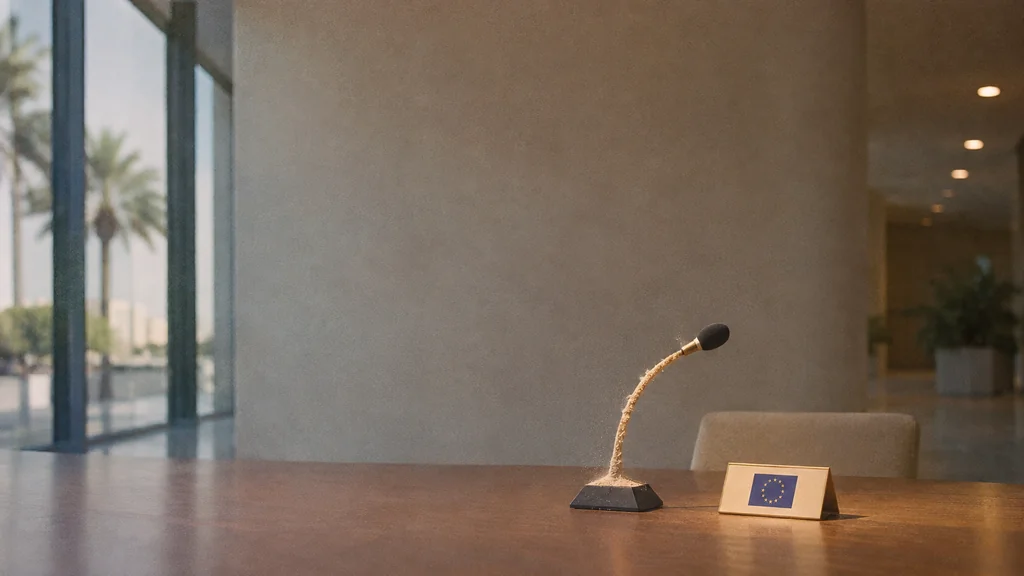
Europe reaches the talks before its governments decide what it can promise.
Image composition · tobriefUkraine and Russia are due to negotiate in Abu Dhabi on 10 and 11 November with the United States as mediator (Reuters). Advisers from France, Germany, Britain, Italy, the EU institutions and NATO have travelled there too (POLITICO). They can argue for terms in side meetings. They cannot promise the European troops, or the changes to EU sanctions, that a deal would depend on, because governments back home make those decisions.
Two tracks, and only one includes Moscow
The planned format is trilateral, meaning Ukraine, Russia and the US negotiate together. Ukraine's team is led by Rustem Umerov, and Washington sends envoys Steve Witkoff and Jared Kushner (Interfax-Ukraine). Russia's delegation is led by presidential aide Vladimir Medinsky (Reuters). Early on 10 November, no start time had been published and no session had been confirmed (AP).
The Europeans work on a separate track. Kushner said he and Witkoff would meet partners from Ukraine, the EU, NATO, Germany, France, Britain and Italy before the trilateral sessions (Kushner). Umerov has described similar coordination meetings on Kyiv's side. In practice, Europeans brief and lobby Ukraine and the US separately, and those two carry positions into the room with Russia.
France promised at the weekend that Europeans would take part (To Brief), and they are present. National security advisers from the four capitals have travelled. So have the chief aides to Commission president Ursula von der Leyen and to António Costa, who chairs the European Council, the gathering of EU national leaders (Euronews). Berlin confirmed its adviser's trip, while most other names rest on press reporting (DW). No published record shows that any of them will see, edit or approve the text that goes to Moscow.
The Kremlin says it prefers that arrangement. Spokesman Dmitry Peskov argues that Europeans already have their own channels to Kyiv and Washington and may matter later, in wider talks on Europe's security. Aide Yuri Ushakov was blunter about keeping them out, while Kushner has argued that a durable settlement will eventually need direct talks between Russia and Europe (France 24).
Nobody holds a mandate for the Union
Europe's own gap runs deeper than Moscow's objections. On 5 November, Italy's prime minister Giorgia Meloni asked Costa to put a question to EU leaders: who should represent the Union, and with what authority. She said she was not seeking an Italian seat (ANSA). Costa agreed to discuss it at the leaders' informal meeting in Dublin on 13 November but appointed no envoy (Irish presidency).
Until then, each adviser in Abu Dhabi speaks for one capital or one EU office. Even a named EU envoy would face a ceiling. An envoy could argue for terms with one voice. An envoy could not alone commit national troops or undo sanctions that need every member government's agreement.
The decisions that stay at home
Troops show the limit most clearly. The Multinational Force for Ukraine, led by France and Britain, exists on paper as a declaration of intent. It depends on a ceasefire and a request from Kyiv, and it sets no troop numbers and no deployment date (UK government).
Preparation has started anyway. Several hundred Dutch personnel began rehearsing such a mission in Poland on 9 November, though the Dutch government says any real deployment needs a separate cabinet decision (Dutch defence ministry). Rehearsing a mission does not commit a government to send troops.
Sanctions follow the same logic. EU sanctions decisions generally require unanimity, meaning any single member government can block them (Council of the EU). If Moscow wants sanctions relief as part of a deal, nobody in Abu Dhabi can promise it. The decision would come back to all member governments, and any one of them could refuse.
Washington, Moscow and Kyiv will shape the terms in Abu Dhabi. European governments gain their leverage later, when they are asked to send soldiers or to vote on sanctions. Refusing at that stage means blocking a deal the three parties have already accepted, which carries a far higher political cost than shaping it now. Europe's leaders meet in Dublin on 13 November (Irish presidency). They owe an answer on who speaks for the Union, and with what authority, before that later decision arrives.
Details about this article
- Model:
- claude-opus-5-5
- Generated:
- 11/10/2026, 1:57:07 AM
- Pipeline run:
- eu_pipeline_20261110_005009
- Watermark:
- SynthID (Google's invisible watermark)
- Human review:
- None before publication