Europe’s €87 gas hits importers first
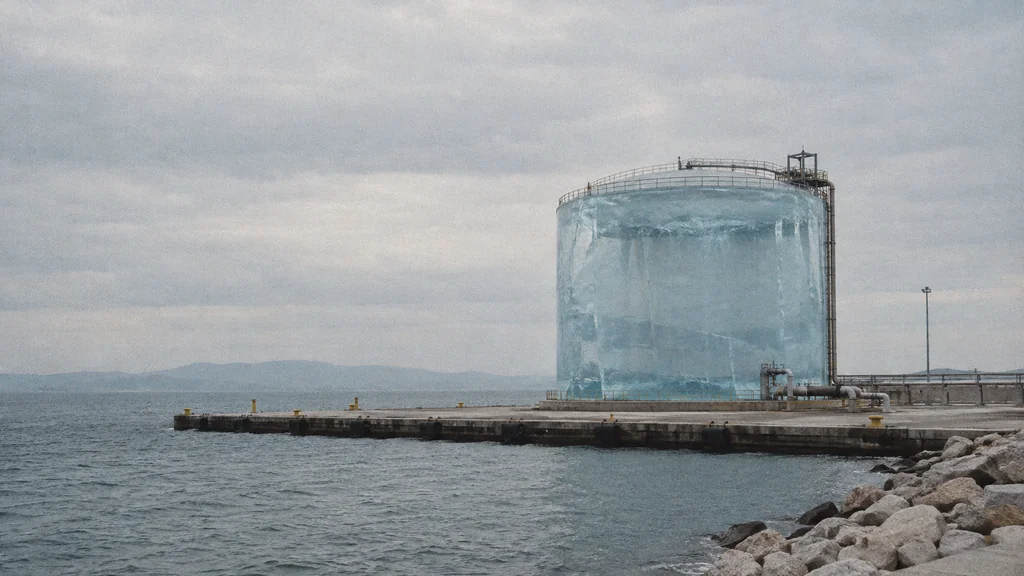
Europe enters winter with less gas stored and replacement cargoes costing more.
Image composition · tobriefGas for November delivery traded at a reported €87.20 per megawatt-hour on the afternoon of 13 October, about 3% up on the day and the highest level since late 2022 (Der Standard/APA). In February the same benchmark sat near €32 (Brussels Times). Reduced Qatari supply and lower European stocks explain the jump, and the cost lands first on companies that must buy replacement gas now.
The quote comes from the TTF, a Dutch trading hub whose futures contracts set Europe's reference gas price (ICE). A futures contract fixes today the price of gas delivered later. That price climbs when buyers expect a tight winter, even if no home or factory is short of gas today. It is a wholesale price. Nobody's bill moves with it automatically.
Less Qatari gas, less in storage
Qatar supplied about one-fifth of the world's LNG trade before the disruption, its emir, Sheikh Tamim bin Hamad Al Thani, said in a speech on 13 October (Amiri Diwan). LNG is gas chilled into liquid so tankers can carry it. He said a significant part of Qatar's exports had been disrupted, and he gave two causes. The Strait of Hormuz, the sea lane Qatari tankers must pass through, is closed, and Ras Laffan, the country's main export plant, was damaged.
Some of that damage will last. Strikes in March knocked out about 17% of Qatar's export capacity, and QatarEnergy expected repairs to take three to five years (S&P Global). European buyers now compete with Asian buyers for the cargoes still on offer, which lifts the price both must pay.
Europe also has less gas stored. EU storage was 72% full on 1 October, against 83% a year earlier (ENTSOG). The European Commission argues that pipelines and import terminals can still handle an ordinary winter with lower stocks (European Commission).
ENTSOG, the association of Europe's gas network operators, also ran scenarios, which test outcomes and are not forecasts. In an ordinary winter, storage would end March around 29% full. If 20% less LNG reached Europe, it would end near 13% (ENTSOG). Paying more for winter gas now is how buyers insure against the second case.
This picture explains why winter gas is expensive. It does not explain why the price rose on that particular afternoon, and the reports tie that one day's move to no single trigger.
Importers pay first
The immediate cost falls on companies that must replace gas that never arrived. Italy's Edison said Qatar failed to deliver 35 cargoes bound for its Adriatic import terminal, about 4.6 billion cubic metres of gas, and that it had replaced 23 of them by late September (Edison). Edison has not said what it paid. Any company in its position buys at current market prices, while producers and traders with spare gas to sell gain from the same rise.
Household bills move later, and unevenly
Households do not buy TTF futures. Their suppliers buy gas ahead of time and pass on costs in three main ways. Some customers have fixed-price contracts. Others have indexed offers, whose price follows a published benchmark. Others pay regulated tariffs, prices set or capped by the state. Each moves on its own timetable.
France shows the delay. Its energy regulator, the CRE, publishes the benchmark that indexed offers follow. That benchmark rises 6.6% on 1 November, adding about €12 to the average November bill for those customers (CRE). The CRE set that figure from September prices, so this week's jump is not in it.
Spain is pushing part of the cost into the future. It capped the October rise in the gas part of its regulated tariff at 35%, and households will repay the deferred difference, with interest, from January 2027 (BOE). The cap lowers this autumn's bills and raises later ones.
The market is pricing a thinner gas cushion for winter. Importers like Edison, which need replacement cargoes, carry the immediate cost. Households pay according to their contracts and their government's tariff rules, so a French customer on an indexed offer and a Spanish customer on the regulated tariff will feel the same wholesale rise at different times. Nobody yet knows how much of this week's jump will reach household bills. That depends on how cold the winter turns out and how much LNG reaches Europe.
Details about this article
- Model:
- claude-opus-5-5
- Generated:
- 10/14/2026, 1:38:19 AM
- Pipeline run:
- eu_pipeline_20261014_005006
- Watermark:
- SynthID (Google's invisible watermark)
- Human review:
- None before publication