Europe’s €90 gas spike leaves factories exposed
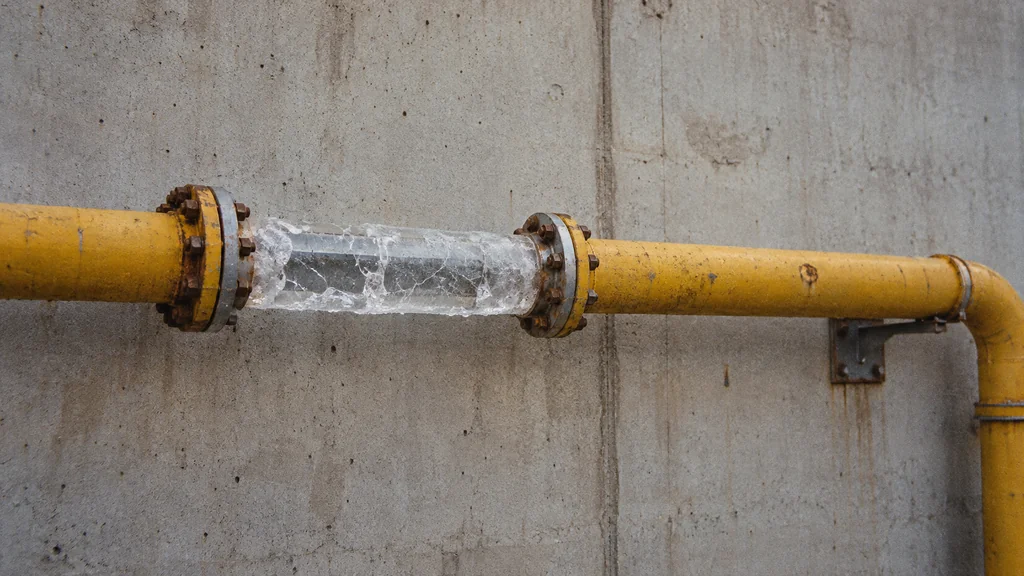
Europe’s thin gas cushion leaves factories closest to the price swing.
Image composition · tobriefEuropean wholesale gas for November delivery rose above €90 per megawatt-hour on Tuesday, the first time since 2022 (Investing.com, France Épargne). By late afternoon it had fallen to about €84, more than 4% below Monday's level (ČTK). The swing will not reach this month's bills. It shows how exposed winter gas buyers are when Europe's storage runs low, and why factories feel the pressure before households do.
The price is for a futures contract traded on the TTF (the Title Transfer Facility, a Dutch trading hub whose prices serve as Europe's benchmark). The contract fixes today's price for gas delivered throughout the following month (ICE). It closed Monday at €88.04 (Anadolu), after climbing above €87 the week before on disrupted Qatari deliveries (To Brief). Nobody has offered a verified explanation for Tuesday's afternoon reversal.
Why low storage makes prices jumpy
Underground storage is Europe's winter cushion. Gas goes in during summer and comes out when heating demand peaks. On 18 October, EU stores were 74.58% full (GIE), against a five-year average of 89.1% (Voltstack, using GIE data). With less gas in reserve, every delayed tanker moves the price further.
Tankers are being delayed. Disruption in the Strait of Hormuz has trapped shipments from Qatar and the United Arab Emirates, almost 20% of global exports of liquefied natural gas (Reuters). Liquefied natural gas, or LNG, is gas chilled into a liquid so it can travel by ship. With fewer cargoes available, Europe and Asia now bid against each other for what remains (Reuters).
Reopening the route would not end the squeeze at once, because damage to Qatar's liquefaction plants will keep some output offline (IEA). Prices still sit far below the last crisis, when the next-month contract reached €339.20 on 26 August 2022 (Dutch government).
Expensive gas and missing gas are also separate risks. Germany's stores were only 61.1% full, yet its Federal Network Agency calls supply stable and rates the risk of a tense situation as low (Federal Network Agency). Europe's storage operators expect the continent to get through winter, though a scenario with tight LNG supply leaves stores near 13% full by the end of it (GIE scenarios).
Who pays, and when
The first to pay are buyers who still need winter gas they have not locked in, or whose contracts follow the current wholesale price. Chemicals, metals and refining are among the most gas-intensive industries (French Treasury). Firms that bought in stages or at fixed prices feel the rise only when those deals expire. German utilities such as RheinEnergie sell exactly these arrangements to industrial clients (RheinEnergie).
Most households sit further down the line, because their prices are set in advance. France shows the lag. On 12 October its energy regulator, CRE, set the November reference price for households at €194.90/MWh including tax, up 6.6% (CRE). That decision came before Tuesday's trade, so the spike cannot appear in French November bills.
Spain delays the cost in a different way. A royal decree capped the rise in the part of the regulated household tariff that tracks wholesale gas costs at 35% for October and 15% for January (Royal Decree-Law 25/2026). The cap does not erase the gap between what the gas cost and what customers were charged. The same tariff customers repay it in later price reviews, with financing costs added on top (Royal Decree-Law 25/2026).
Tuesday's spike changes little on its own, but it shows who stands closest to the market. Factories and refiners without fixed-price cover pay today's rates whenever they buy winter gas. Households on fixed or regulated tariffs are protected until those tariffs reset. What they pay after that depends on whether wholesale prices stay high through the winter, and that turns on how quickly LNG cargoes from the Gulf reach Europe again.
Details about this article
- Model:
- claude-opus-5-5
- Generated:
- 10/20/2026, 7:01:43 PM
- Pipeline run:
- eu_pipeline_20261020_180759
- Watermark:
- SynthID (Google's invisible watermark)
- Human review:
- None before publication