Europe’s diesel squeeze outpaces $116 oil
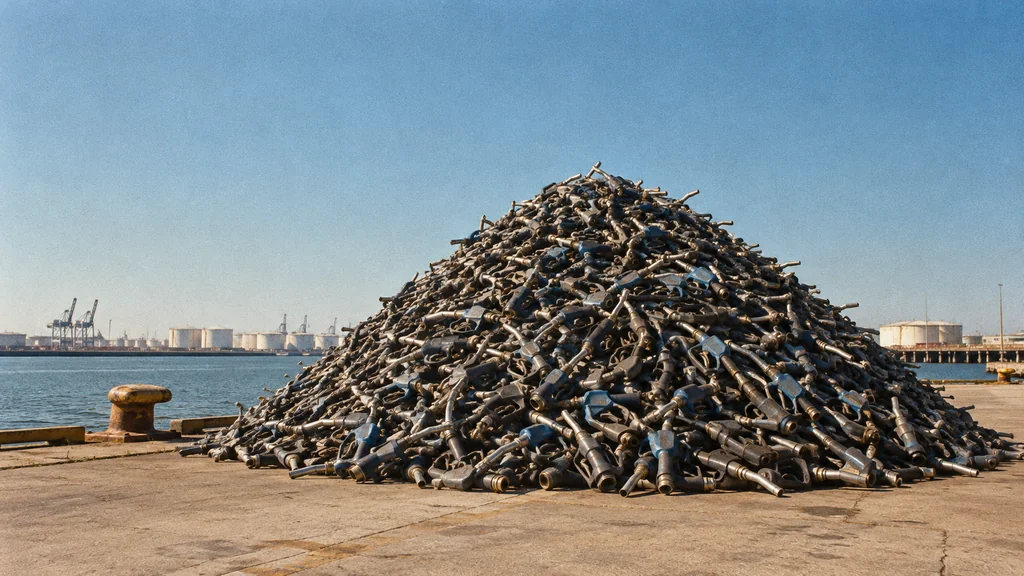
Rotterdam’s next diesel cargoes need higher prices to reach the quay.
Image composition · tobriefBrent, the main benchmark price for crude oil, settled at $116.72 a barrel on Friday (Dow Jones Market Data, CNBC). By Dow Jones's count, that was its highest close since 29 April and a 6.24% weekly gain. Traders are betting that a wider Gulf war could cut crude supply, while diesel already faces a more immediate squeeze: the Middle East is exporting less fuel, and shipping what remains has become very expensive.
Crude keeps moving, at a cost
Brent is the price of a futures contract, an agreement to buy oil for delivery later. It therefore reflects what traders expect as much as what is flowing today. So far, crude is still flowing. Middle Eastern crude exports ran at about 17.3 million barrels a day in October, slightly above their level before the conflict began (Reuters).
Recent attacks have done little physical damage. Saudi Arabia's energy ministry said air defences intercepted a drone aimed at the Shaybah oil field, and field operations were unaffected (Saudi Press Agency).
The strain shows up in transport. According to the same Reuters analysis, hiring a tanker to carry crude to China cost more than 12 times its prewar rate (Reuters). The barrels are arriving, but each one costs far more to deliver. The simplest reading of Friday's rise is that much of it is a risk premium, the extra amount buyers pay today because supply might fail tomorrow.
Diesel is the tighter market
Nobody fills a car with crude. Refineries turn it into petrol and diesel, which trade at their own wholesale prices. On those refined fuels, the Middle East looks very different. The International Energy Agency says the region's exports of refined products were about 1.9 million barrels a day in September, against 4.7 million before the conflict (IEA).
This figure measures something different from the Reuters crude number, and it covers an earlier month. Still, it shows that one source of Europe's diesel has shrunk sharply, even though crude kept moving.
Freight costs turn that shortfall into a buying problem. Kpler, a firm that tracks oil cargoes, calculated on 21 October that new November diesel shipments to Rotterdam lost money at current freight rates from every origin it assessed (Kpler). Put plainly, landing a fresh cargo in the Dutch port would cost more than a trader could sell it for there. Kpler does not expect imports to stop. Its numbers imply that European buyers must offer higher prices to attract new cargoes, at least until freight costs ease.
German pump prices from before Friday's jump fit that picture. E10 petrol averaged €2.110 a litre on 21 October, 4.1 cents less than a week earlier, while diesel rose to €2.255 (ADAC via VerkehrsRundschau). Petrol getting cheaper while diesel got dearer is consistent with a squeeze specific to diesel, although one week of data cannot prove it.
When the bill arrives
Drivers will not feel Friday's crude price all at once. The European Central Bank estimates that crude moves take one to two months to pass fully into pump prices. It also finds that a 10-cent-per-litre rise in crude costs adds roughly 10 cents before tax (ECB). Part of a move can reach the pump sooner, but the full effect builds over weeks, and only if the higher price lasts. Many fuel taxes are fixed per litre, so the percentage rise at the pump is smaller than the rise in crude.
In Germany, timing matters because public support is temporary. The country's 14.04-cent-per-litre fuel tax cut expires on 31 December (VerkehrsRundschau). Until then, taxpayers cover part of drivers' fuel costs. If prices stay high, that cushion disappears just as more of the increase reaches the pump.
Diesel buyers bear the direct risk. Hauliers, farms and builders that buy fuel in bulk would absorb any lasting rise in their costs. Whether they can pass it on to customers depends on their contracts and their competitors.
Middle Eastern crude exports have held up so far, which suggests Friday's Brent price mostly reflects fear of disruption. Diesel is under more concrete pressure. Refined-product exports from the region have fallen by more than half, and freight rates have already made the next cargoes into Europe unprofitable at current prices (IEA, Kpler). Other suppliers and existing stocks can soften the squeeze. Even so, Europe's next diesel purchases already cost more to secure, whatever Brent does next week.
Details about this article
- Model:
- claude-opus-5-5
- Generated:
- 10/24/2026, 1:30:23 AM
- Pipeline run:
- eu_pipeline_20261024_005008
- Watermark:
- SynthID (Google's invisible watermark)
- Human review:
- None before publication