Europe’s energy premium tops €100bn, commissioner says
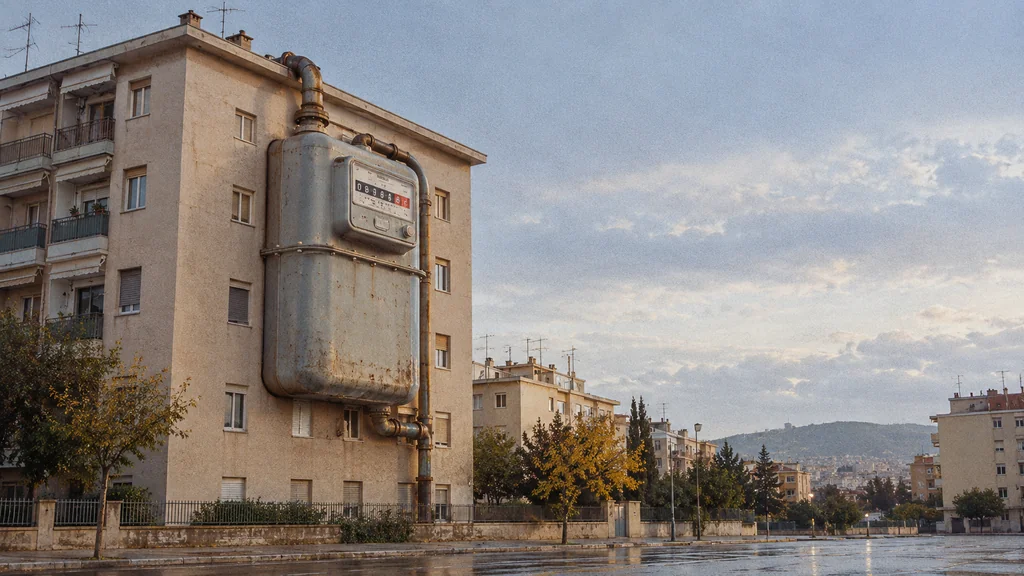
Gas keeps arriving; Europe’s bill grows before winter begins.
Image composition · tobriefJørgensen estimates that Europe has paid more than €100 billion extra for energy this year "without receiving one extra molecule of gas or oil," the EU energy commissioner said in Dublin on 29 September (Commission recording). He was warning about price, not shortage. The informal meeting of energy ministers ended with no joint declaration and no binding measure (Irish Presidency).
The figure is his own and covers oil as well as gas. He did not say which earlier prices or import volumes it assumes (RTÉ), so it is best treated as a political number rather than an audited bill.
Enough gas, at a higher price
A shortage means buyers cannot get gas at all. A price shock means they still get it but pay more, and officials describe the second. On 25 September, the Commission's gas coordination group judged supply stable even though storage sat below historical levels (European Commission).
EU stores were 71.16% full on 27 September, against 82.3% a year earlier (GIE AGSI, APA). Emptier tanks do not mean empty homes, because storage is only one source. Germany's network regulator, the Bundesnetzagentur, rates the risk of strain as low because pipelines and liquefied natural gas (LNG, gas chilled into liquid and shipped by tanker) keep arriving (DW).
The cost comes from competition for those tankers. Disruption around the Strait of Hormuz has shrunk the global LNG supply, so European buyers bid harder against Asian ones for each remaining cargo (Columbia University). TTF, Europe's benchmark wholesale gas price, stood around €73 per megawatt-hour on 29 September, against about €33 before the war escalated in late February (La Stampa). That gas price explains only part of Jørgensen's estimate, which also includes oil.
Who meets the higher price first
Firms buying gas at market prices feel it first. Electricity follows, because in Europe's wholesale power markets every producer selling in a given hour typically receives the price of the most expensive plant needed to meet demand, and that plant is often gas-fired (Columbia University). When gas rises, wind, solar and nuclear power sold into that market fetches the higher price too, and whoever buys the electricity pays it.
How fast this reaches households depends on their contracts. Regulated tariffs and fixed-price deals delay the increase until they are reset. Jørgensen singled out the nearly 50 million Europeans he says cannot heat their homes adequately even in a normal winter (Euronews).
Prices also cross borders, though not evenly. Italy's energy minister, Gilberto Pichetto Fratin, says his country has enough gas but warns that German refilling could raise what Italian industry and power producers pay (Corriere).
Buying less, and binding no one
Governments can ease that pressure by buying less, at the cost of a thinner safety margin. The Commission had asked capitals to relax refilling so a buying rush would not push prices higher, and we reported the Dutch cabinet weighing its answer (To Brief). On 11 September, the Dutch government said it had cut this winter's target to 64% full, about 93 terawatt-hours, above the roughly 70 terawatt-hours withdrawn on average over the previous five winters (Dutch government). The new target covers a typical winter. Gasunie, the state gas-grid operator, pointed out that the old target had been sized for the coldest winter in thirty years (Gasunie). Lower buying may reduce pressure on prices, but it leaves less gas in reserve if the cold is severe.
Dublin produced nothing comparable at EU level. The Irish Presidency's account lists sessions on affordability, innovation and security, with no binding outcome attached (Irish Presidency). Jørgensen asked governments to cut gas use and peak-hour electricity demand, but these are requests, not obligations (Commission recording).
Officials judge supply stable, wholesale gas costs more than it did before the war escalated, and ministers left Dublin without a binding measure to ease that cost. Firms buying at market prices pay first, and households follow as their contracts reset. The size of the winter bill remains uncertain, and the Commission still owes an account of how it arrived at its €100 billion (RTÉ).
Details about this article
- Model:
- claude-opus-5-5
- Generated:
- 9/30/2026, 1:52:45 AM
- Pipeline run:
- eu_pipeline_20260930_005007
- Watermark:
- SynthID (Google's invisible watermark)
- Human review:
- None before publication