Europe’s Ukraine talks seat has no mandate
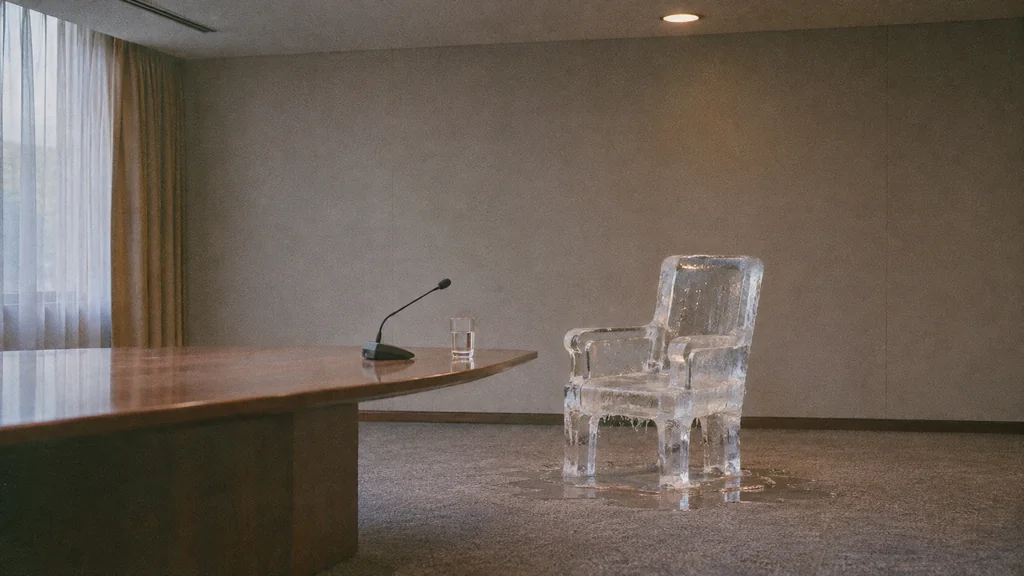
Washington offers Europe a seat before anyone agrees who can fill it.
Image composition · tobriefSteve Witkoff, Donald Trump's envoy, left a meeting with Vladimir Putin on 12 November saying "the Europeans will join at the next meeting" of the Ukraine–Russia–US talks (Reuters). The Kremlin has confirmed no European participant, and EU governments have authorised no one to negotiate for them. That gap matters because much of what Russia wants from a deal, sanctions relief and limits on foreign troops, only European governments can give.
The promise followed talks in Abu Dhabi on 10–11 November, the first direct Ukrainian–Russian meeting under US mediation in nine months, which produced only an agreement in principle on a large prisoner exchange (AP). Europeans were in the city but met Ukraine and the Americans separately, a format EU leaders were already arguing over (To Brief).
Volodymyr Zelenskyy wants that to change. After the Americans briefed him, he welcomed Europeans joining the negotiating team with a real voice (Reuters). Witkoff named no date, venue or participants.
What Moscow has actually agreed to
The Kremlin's line has barely moved. On 28 October, Putin's aide Yuri Ushakov ruled out European participation (Kyiv Independent). This week he confirmed nothing, calling Europe's approach a "recipe for endless war" and demanding an end to European military aid before any shared table (Euronews).
Putin himself said only that Moscow had never opposed dialogue with Europe and that Europeans had broken it off. Kremlin spokesman Dmitry Peskov added that Europeans must first agree on a representative, mocking their squabbling as "spiders in a jar," while Putin told the Americans that European troops in Ukraine after a ceasefire would be unacceptable (AP). Putin voiced openness to talking, but Moscow has named no European at any scheduled meeting, and its aides want Europe to stop arming Ukraine first.
What only Europeans can give
Kaja Kallas, the EU's foreign policy chief, said Russia wants sanctions lifted and frozen assets released, and that Washington cannot negotiate either on Europe's behalf (France 24). She has the treaties on her side. EU sanctions are foreign-policy decisions that normally need the consent of every member government, so relief needs all of them too (EUR-Lex).
Troops work differently, because each country decides for itself. France and Britain lead planning for a multinational force, and the declaration signed in Paris in January left each country's contribution to its own constitutional procedures (Paris declaration).
Romanian President Nicușor Dan wants a further line held: NATO membership and allied troop deployments in Europe should not be bargained over with Moscow. "These are not matters that concern Russia," he said in Dublin (Adevărul).
Who speaks for Europe
On 5 November, Italy's Giorgia Meloni wrote to António Costa, who chairs the European Council (the body of EU national leaders). She asked leaders to decide who speaks for the EU and with what mandate, meaning what that negotiator may say or agree to (DIRE).
Estonia's prime minister, Kristen Michal, says the answer already exists. Costa and Kallas hold the job, he argues, and Putin must not be allowed to choose a friendlier European face (Politico).
Thursday's European Political Community summit, an informal forum of EU and non-EU leaders, could not settle the question because it has no power to appoint an EU negotiator. Costa closed it saying Europeans were engaging "as a team," and named no envoy (Council).
Appointing someone is the easier step. EU ministers can name a special representative by qualified majority, a weighted vote no single country can block (EUR-Lex). But anything that envoy offered on sanctions would still need every government's consent, and no EU envoy could commit British or Norwegian soldiers.
The 27 EU leaders meet in Dublin at 11:00 on Friday, with Europe's diplomatic role on the agenda (Council). Washington can promise Europe a chair, but it cannot make Moscow accept the person in it or commit European governments to anything. Those governments control the concessions Russia wants most, sanctions relief decided jointly in the EU and troops decided capital by capital. So far they have given no one the authority to bargain over either.
Details about this article
- Model:
- claude-opus-5-5
- Generated:
- 11/13/2026, 1:43:39 AM
- Pipeline run:
- eu_pipeline_20261113_005009
- Watermark:
- SynthID (Google's invisible watermark)
- Human review:
- None before publication