European Parliament: six months’ warning before a medicine runs short
AI Daily Synthesis
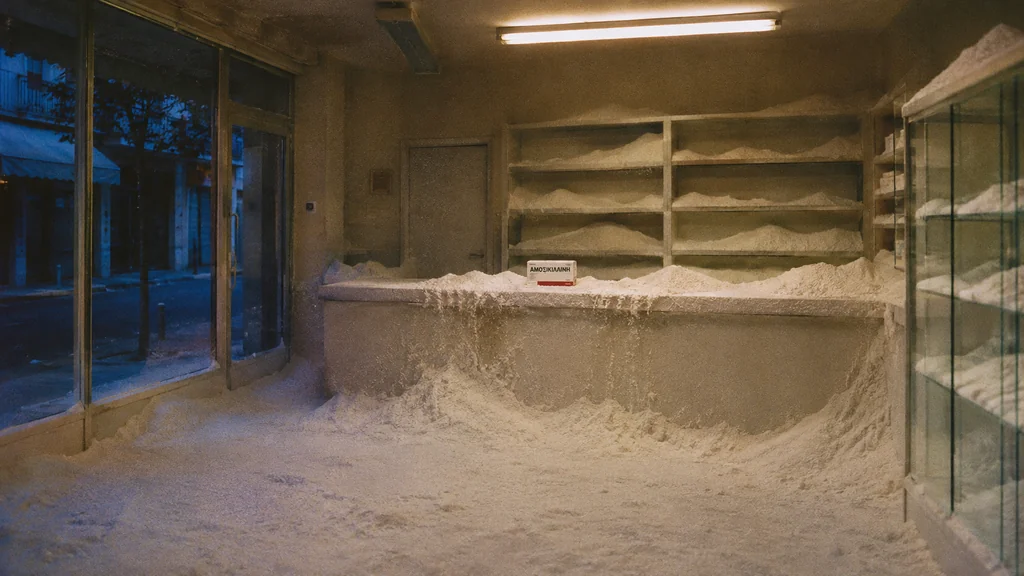
Image composition · tobriefOn 25 November, the European Parliament gave final approval to a broad overhaul of EU pharmaceutical law and voted separately on the Critical Medicines Act (European Parliament). The overhaul requires companies to warn authorities at least six months before an expected supply interruption and one year before permanently withdrawing a medicine (regulation text). The second regulation, which covers antibiotics, insulin and vaccines, among other medicines, still awaits formal approval from the Council of the EU (European Parliament, next steps).
For patients in Greece, the problem is familiar. A count of the latest list from the National Organisation for Medicines (EOF), using data through 31 October, shows that more than 340 medicinal products have limited availability (EOF, Farmakopoioi, TheNewspaper). The causes vary, from increased demand to production problems. The list counts products, not patients going without treatment.
The bakery without flour
Why can a medicine run short even when it is made in a European factory? Every pill contains an active ingredient, the molecule that does the therapeutic work. A factory may turn that ingredient into tablets or injections without producing it itself. Think of a bakery with bakers and equipment that imports its flour: if the shipment stops, so does the bread. A European Commission analysis estimates that roughly three in four registered factories making chemical active ingredients are outside the EU, mainly in India and China. That figure counts facilities, not quantities of medicine (Commission).
And flour needs wheat. For amoxicillin, China’s share was estimated at 20% at the active ingredient stage, but rose to 71% when essential precursor chemicals were included, according to an independent analysis by the EU Institute for Security Studies (EUISS) (EUISS). Amoxicillin also ran short in the winter of 2022–23, for a different reason: infections surged faster than production could increase (Commission, statement on shortages).
The broad overhaul addresses this. It asks companies to map their supply chains rather than hold a specified stockpile. For every prescription medicine, the company will keep a shortage prevention plan listing the factories that make it and each factory’s share. In other words, it must record where its flour comes from. The plan also includes a demand forecast. The company must provide it within two days if a national authority or the European Medicines Agency (EMA), which oversees medicines at EU level, asks for it (regulation, Article 121 and Annex IV).
National authorities such as EOF will publish confirmed shortages, along with their causes, expected duration and available alternatives. If those alternatives are insufficient and a country risks running out within a month, EMA can, as a last resort, mobilise voluntary help from other member states (regulation, Articles 122–131).
The accompanying directive, which we covered when the Council of the EU approved it, gives smaller markets another tool. Within a year of a new protected medicine receiving authorisation, a country can ask the company to make it available in its market. If the medicine is not continuously available three years after that request, the company loses its regulatory protection there: the years during which cheaper generic versions cannot compete with it (directive, Article 59).
The second regulation goes after the flour
The Critical Medicines Act passed with 592 votes in favour, 35 against and 30 abstentions (roll-call vote). It provides funding for production within the EU in return for giving the European market priority. It also changes public tenders: reliability of supply will count alongside price (European Parliament).
Two pharmacies that buy all their stock from the cheapest wholesaler will both run out if its warehouse closes. If they split their orders, they have an alternative, but pay a little more. The Commission describes the same trade-off across Europe: tenders with a single supplier and the lowest price as the deciding factor keep costs down, but reduce the number of companies that maintain production (Commission). Security of supply will therefore cost more, and no estimate of how much has yet been published.
The same problem explains joint procurement, which the regulation allows for at least five countries (European Parliament): a small market such as Greece becomes more attractive to suppliers when it combines its order with others (Commission proposal). EMA’s current list of critical medicines contains 276 active ingredients. They are listed because their absence would seriously harm patients, not because they are in short supply (EMA). The new regulation will apply once the new EU-wide list is officially published (European Parliament, next steps).
For the broad overhaul, the clock starts when it is published in the EU’s Official Journal, which had not happened by 26 November. The general regulation enters into force 20 days later, the notification requirements take effect six months later, and the rest of the package takes effect in two years (regulation, Article 187).
For a country with hundreds of products on the list, that timetable will bring the first visible change: six months’ warning before a shelf empties, instead of a surprise at the pharmacy counter. Only the second regulation will bring the flour, and it still awaits the Council’s signature.
Details about this article
- Model:
- claude-opus-5-5
- Generated:
- 11/26/2026, 4:41:43 AM
- Pipeline run:
- incremental_20261126_033009
- Watermark:
- SynthID (Google's invisible watermark)
- Human review:
- None before publication