Finland is missing from NATO talks
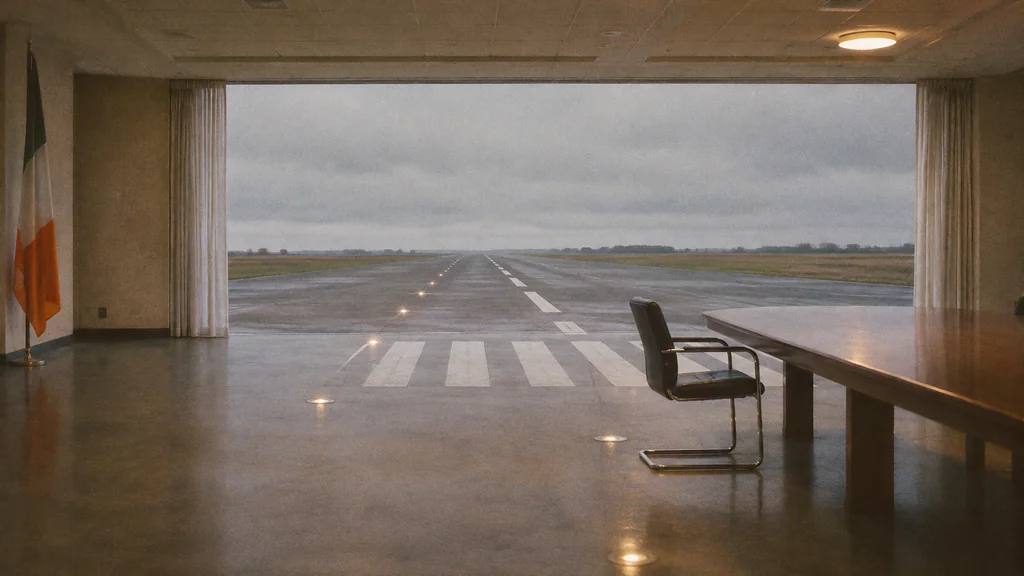
Europe considers security terms while the capitals whose consent matters await a seat.
Image composition · tobriefRussia wants Finland to leave NATO and allied bases kept out of Estonia, Latvia and Lithuania, Germany's Bild reported on 13 November (Bild). Agencies from Italy to Turkey repeated the claim, all crediting Bild, and the Kremlin denied that any such proposal had been made (Anadolu, ANSA). The report is unconfirmed, but it points to a real gap. Talks touching Europe's security could move ahead without the governments whose consent those terms would need.
What readers can and cannot check
Bild attributes the proposal to Putin's circle. It says the proposal reached European representatives around the Ukraine talks in Abu Dhabi. Its published account names no participant and reproduces no negotiating text (Iltalehti reported the Finnish reaction to that account). Readers cannot inspect the source. Every agency that repeated the terms credited Bild, so the repetition confirms nothing.
Helsinki has not confirmed the report either. Defence Minister Antti Häkkänen said Finland had no information that such a demand was presented in Abu Dhabi, and he called the idea outrageous (MTV). Foreign Minister Elina Valtonen added that no official demand had reached Helsinki, and that membership is for Finland and the alliance to decide (Iltalehti). The Kremlin's denial contradicts Bild, but it does not settle what may have passed through an informal channel.
What Russia asked for before, and who would have to agree
Moscow has put demands of this kind in writing before. In December 2021, its draft treaty with NATO asked allies to return their deployments to the levels of 27 May 1997 (Russian foreign ministry). That formula would have constrained the forces later stationed in the Baltic states. Russia's strongest argument is that allied troops near its border threaten it. That argument supports talks on mutual risk reduction, but it gives Moscow no say over which alliance a neighbour joins.
The Finland clause runs into NATO's founding treaty. Under Article 13 of the North Atlantic Treaty, a member leaves only by giving notice to the United States, and withdrawal takes effect a year later. The treaty contains no clause for expelling anyone (NATO). Neither Washington nor Moscow can take Finland out. Only Helsinki can.
Troop deployments need two parties to agree. The host has to consent: Lithuania agreed to host Germany's 45th Armoured Brigade, under a bilateral agreement its parliament ratified (Lithuanian defence ministry). The sending country decides what it supplies. The brigade stays as long as both Vilnius and Berlin want it there. Nobody has published what a "base ban" would actually cover, so it is unclear whether it would reach that brigade.
Europe's seat, and who is missing from it
Baltic ministers raised the same concern before and during the Bild story. In remarks published on 10 November, three days before the report, Lithuania's Kęstutis Budrys said Russia must not gain leverage over which allied forces sit in the region. He also said Europe's security cannot be settled without Europe (LRT/BNS). On 13 November, the day of the report, Estonia's Foreign Minister Margus Tsahkna said Russian officials were again raising alliance membership and troop placement. He called those terms unacceptable, though he did not vouch for Bild's wording (Estonian foreign ministry).
It remains unclear who would carry those objections into the talks. According to ANSA, leaders meeting in Dublin moved toward a negotiating format, though they have not chosen a single negotiator or agreed a common mandate (ANSA). The format would combine EU institutional representatives with advisers from five countries: the UK, Germany, France, Italy and Poland. The available reporting does not say who proposed it or what authority it would hold. For now it rests on that single account.
Finland, Estonia, Latvia and Lithuania are not among the five. Britain, one of the five, sits outside the EU. Without a mandate, nobody has authorised the group to bargain over terms that only those four governments can grant, together with the allies that station troops with them.
The Finland and Baltic clauses remain one newspaper's unverified account. Russia's appetite for rolling back allied deployments is on the record. However the leak is resolved, any credible deal on Finnish membership or Baltic deployments needs sign-off from Helsinki, Tallinn, Riga and Vilnius. It also needs the allies that send troops. The EU leaders building the Dublin format owe those four capitals a mandate that says so before talks resume.
Details about this article
- Model:
- claude-opus-5-5
- Generated:
- 11/14/2026, 1:53:55 AM
- Pipeline run:
- eu_pipeline_20261114_005009
- Watermark:
- SynthID (Google's invisible watermark)
- Human review:
- None before publication