Finland signs drone deal, production unverified
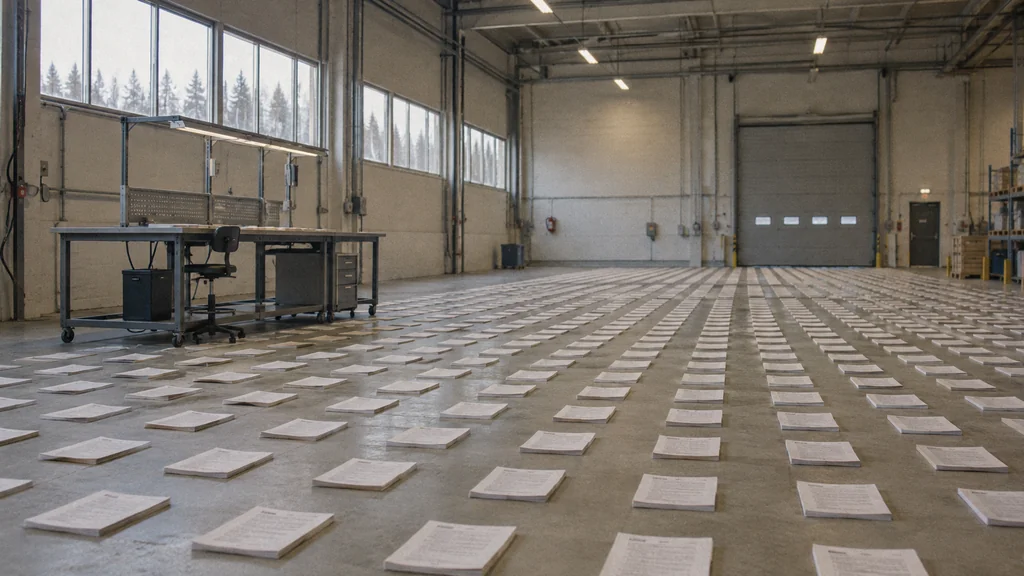
Finland’s drone agreement has a signature, but no verified joint production line.
Image composition · tobriefFinland and Ukraine have agreed to help build Ukrainian-designed drones in Finnish factories. Presidents Alexander Stubb and Volodymyr Zelenskyy signed a defence cooperation agreement in New York on 23 September (Finnish government). The two companies expected to build the drones describe their project in contradictory terms, and no public record shows a joint production line running.
On one side is General Cherry, a Ukrainian maker of interceptor drones, which are built to catch and destroy enemy drones in the air. A company representative told Janes on 24 August that its drones were already being produced in Finland.
On the other side is Patria, the Finnish defence company named as its partner. Patria's September statement calls starting production with General Cherry in Finland an "objective" (Patria). The two firms signed a letter of intent in August, a document that states shared intentions but binds neither side.
Patria executive Mikko Leino told Aamulehti that negotiations were advanced and that the aim was concrete production during 2026. He declined to give details. Neither company has explained whether General Cherry was describing a separate small operation, an early phase of the joint project, or something else.
What the presidents actually signed
The deal is branded a "Drone Deal", but its text is broader. Finland's government says it covers technology exchange, joint research and joint industrial projects, including unmanned systems (Finnish government). It also promises simpler handling of export authorisations, the government permission needed to send controlled military items abroad. It names no factory, order, delivery date or funding.
The political purpose is clearer than the industrial plan. Stubb has previously said roughly 90% of drones from the planned cooperation would go to Ukraine, with the rest for Finland or other customers (Helsinki Times). Kyiv would get more supply. Finland, which shares a long border with Russia, would get access to designs tested in the war it most needs to understand. That split is still an aspiration, not a figure written into any company contract.
Who decides what gets built
The presidents set the direction, but they do not build anything. Patria and General Cherry decide whether production makes business sense and where it happens. A company could run pilot production on its own money, but sustained output needs customers willing to pay.
Governments control the border crossing. Finnish officials license each export of military equipment under the country's defence-materiel export law (Finlex). In doing so they apply the EU's shared criteria for judging arms exports, which every member state uses (EUR-Lex). The new agreement promises to simplify that paperwork. Nothing published shows approvals have yet become faster, and nothing suggests the review itself goes away.
What delivery looks like elsewhere
Germany offers a comparison with a paper trail. There, the firm Quantum Systems builds drones from designs licensed by Ukraine's Frontline Robotics. Berlin's defence ministry says the first drone from that line was handed to Zelenskyy in February 2026 (BMVg). The joint venture later reported shipping a first batch to Ukraine by early April (Kyiv Independent).
That is the kind of evidence missing in Finland: a named factory, a handover, a shipment someone outside the company can check. Finland has none of these on record yet.
What exists is real but narrower than the "drone deal" label suggests. Finland and Ukraine have signed a cooperation agreement, and Patria has a named Ukrainian partner and a 2026 target. The claim that a joint line already runs rests on one company's word, while the other still calls it an objective. Patria and General Cherry owe the reconciliation: what has actually been built in Finland, where, and by whom.
Details about this article
- Model:
- claude-opus-5-5
- Generated:
- 9/24/2026, 1:44:42 AM
- Pipeline run:
- eu_pipeline_20260924_005006
- Watermark:
- SynthID (Google's invisible watermark)
- Human review:
- None before publication