Five Russian weapons hit unshielded Moldova
Moldova tracks the weapons overhead while its interceptors remain a plan.
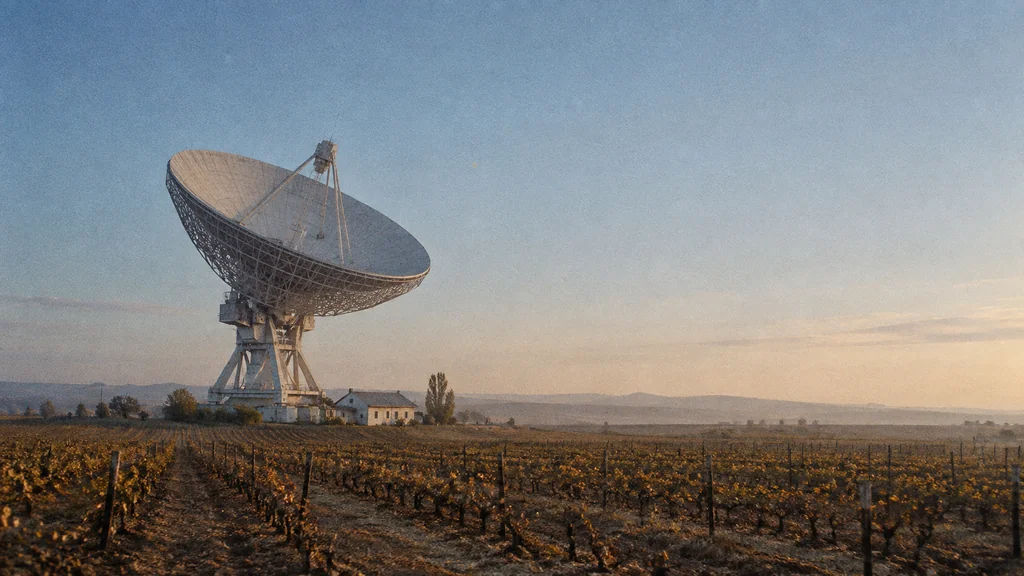
Image composition · tobriefFive Russian missiles and drones crossed into Moldova on Saturday morning and exploded on its soil, according to President Maia Sandu (Kyiv Independent). Moldova's monitoring followed them in, but no official account describes any attempt to bring them down. The country's defence minister has answered with a plan to buy interceptors, and because Moldova sits outside NATO, no ally is obliged to cover the gap in the meantime.
What came down, and where
The defence ministry first described five drones crossing the border on the morning of 3 October, while Russia was striking Ukraine (Digi24). After teams examined the impact sites, Defence Minister Anatolie Nosatîi corrected the count to three missiles and two drones (RBC-Ukraine).
The correction bears directly on defence. Missiles fly faster than the drones Moldova has been reporting for years, and stopping them generally takes more capable systems than a small army keeps on hand.
The worst damage came near Crocmaz, in the south-east. A blast in or near a vineyard set vegetation alight and shattered windows on a farm building (WP). Nobody was hurt, according to the first official reports (Digi24).
Both the weapon count and the damage rest on the Moldovan government's word. Radar tracks and fragment analysis were not available for independent checking when this article was written.
Police and soldiers secured the sites, and Sandu told residents to stay away from fragments (Logos Press). The foreign ministry summoned Russia's ambassador, Oleg Ozerov, and handed him a protest note (Korrespondent).
Seen, but not stopped
Moldova's weak point lies between detecting a weapon and destroying it. Its monitoring followed Saturday's flights, yet the president, foreign ministry and defence ministry describe no interception in their statements (Logos Press).
A missing interception does not prove that a shot was possible. Bringing a missile down over farmland and villages can scatter wreckage onto homes, and the record does not show whether Moldova had any weapon in range. It is also unclear whether residents were warned before the impacts.
Saturday was not the first crossing. Moldova's defence ministry counted 81 airspace violations from 2022 to 24 September 2026, including 44 this year (Newsmaker). Those figures count crossings, not explosions.
Nosatîi says the government is preparing to buy interceptor missiles and drones and to expand monitoring (Ziarul de Gardă). For now that is a purchase plan. Moldova does not yet have a working shield.
European help, without a guarantee
Moldova is a candidate to join the EU and a partner of NATO, which brings cooperation but no promise of protection. NATO's Article 5, under which allies treat an attack on one as an attack on all, covers only members' territory (NATO). Neighbouring Romania is covered. Moldova is not.
Romanian coverage described the explosions across the border and reported no Romanian response in the air (Adevărul). That silence does not show that no aircraft took off. It does show that nobody has publicly claimed a role in defending Moldovan skies.
The EU's support has gone into equipment. In May 2024 it approved a package for Moldova's armed forces from the European Peace Facility, the EU fund that pays for arming partner militaries (EU Council). That money helps Moldova build an army. It does not commit any EU government to fire on weapons crossing Moldova's border.
Saturday's emergency response kept people away from live fragments, and no one was hurt. The reporting supports a narrower finding about defence. Moldova saw five weapons coming, none is recorded as intercepted, and the interceptors its minister wants have not yet been bought. Until they are bought and working, Moldova must defend its own airspace, and Nosatîi owes Moldovans a date for when that will change.
Details about this article
- Model:
- claude-opus-5-5
- Generated:
- 10/4/2026, 2:00:26 AM
- Pipeline run:
- eu_pipeline_20261004_005006
- Watermark:
- SynthID (Google's invisible watermark)
- Human review:
- None before publication