Flanders records 14 local West Nile cases
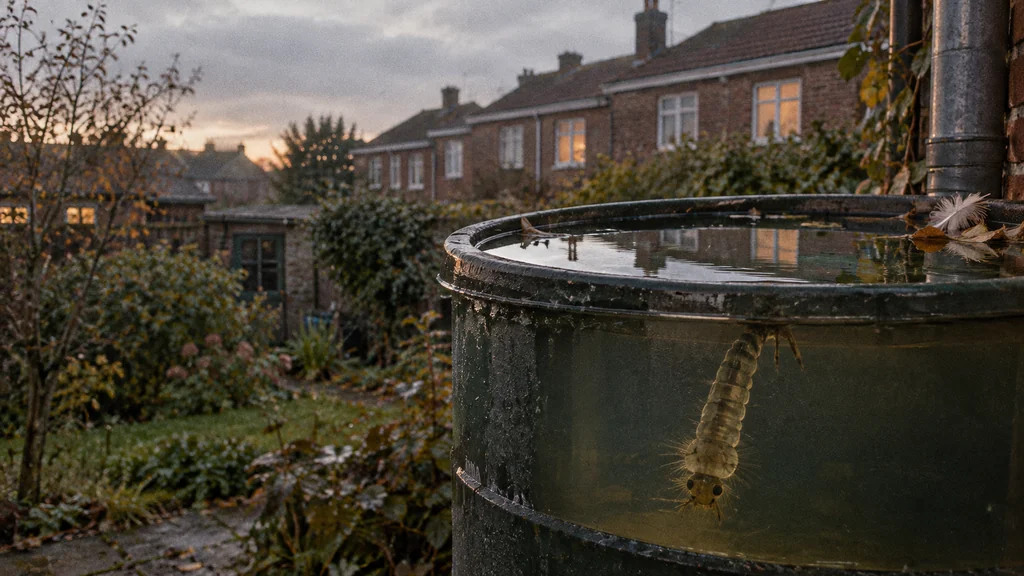
In Flemish gardens, the bird–mosquito cycle now reaches people.
Image composition · tobriefA mosquito bite in Flanders can now pass on West Nile virus. Belgium recorded its first locally acquired human infections this season, 15 by 7 October (ECDC). Belgian scientists had already found the virus in wild birds sampled in August 2025 (Sciensano). The human cases show that a virus first spotted in wildlife is now reaching people.
"Locally acquired" means the person caught the virus inside the country, not on a trip abroad (ECDC weekly report). On 15 October, Flanders reported 14 confirmed cases and two deaths, both in people at risk of severe illness (Flemish health department). Those cases are only the visible part. Most West Nile infections cause no symptoms at all (ECDC factsheet), so many infected people never see a doctor or get a test.
A relay race between birds and mosquitoes
To see why a bird finding matters to people, picture a relay race. Wild birds and mosquitoes hand the virus back and forth all summer. A mosquito drinks blood from an infected bird, the virus multiplies inside the insect, and a later bite delivers it to another bird (ISS). Birds keep the race going because their blood carries enough virus for the next mosquito to pick up.
People and horses stand outside that loop. They can fall ill, but they carry too little virus in their blood to infect a mosquito that bites them (Belgian federal health service). Specialists call them "dead-end" hosts, because the chain stops with them.
That has a practical meaning. An infected person in Flanders does not pass the virus to the mosquitoes around them, so they do not feed the outbreak. Each human case points back to infected mosquitoes, and behind them to birds carrying the virus nearby. A human case is a signal that the bird–mosquito loop is running close to where people live.
What the birds and horses revealed
Belgium detected the virus in birds before it recorded any local human cases. That tells us the order in which it was found, not when it arrived. Because most infections are silent, earlier human cases could have gone unnoticed.
This year, the animal findings showed how widely the virus had travelled. Belgium reported 14 horse and 26 bird outbreaks across 18 of its 44 statistical regions (ECDC–EFSA report). Each type of animal adds something different. A bird outbreak shows the loop itself turning in that area. A sick horse is a dead end, like a person. It shows that infected mosquitoes there were already biting large mammals, which means people nearby faced the same bites.
Belgium is not alone. ECDC described record West Nile infections this year, with the virus spreading into new parts of Europe (ECDC). According to the joint monitoring report from ECDC and the European Food Safety Authority, the 2026 season covered a wider area than any before it. Transmission had eased from its August–September peak by early October (ECDC–EFSA report).
Protection comes down to avoiding bites. ECDC recommends insect repellent, loose long clothing in the evening when mosquitoes are most active, screens or nets on windows and beds, and getting rid of standing water where mosquitoes breed (ECDC). These measures matter most for people at risk of severe illness, like the two Flemish patients who died.
In about a year, Belgium has gone from detecting West Nile in wild birds to recording people infected on its own soil, with the virus present in animals across much of the country. Each link in that chain has now been documented, from bird to mosquito to horse to person. Whether the loop starts up again in the same places once mosquitoes return next summer is the question Belgium's animal and human surveillance teams will be tracking.
Details about this article
- Model:
- claude-opus-5-5
- Generated:
- 10/17/2026, 1:35:22 AM
- Pipeline run:
- eu_pipeline_20261017_005006
- Watermark:
- SynthID (Google's invisible watermark)
- Human review:
- None before publication