France can guard Yanbu, not its oil supply
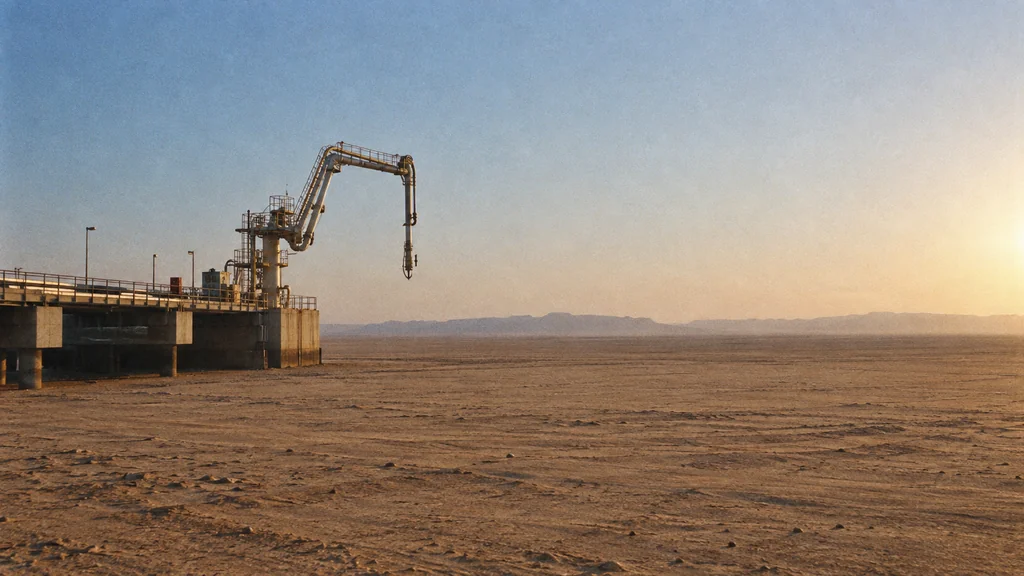
France can defend Yanbu’s berth, but its oil has yet to return.
Image composition · tobriefEmmanuel Macron pledged on 24 September to send French soldiers, radars and air-defence systems to protect Yanbu, Saudi Arabia's Red Sea oil terminal (TF1, Argus). The damage that interrupted shipments sits far inland. French defences may help protect Saudi Arabia's export port, but they cannot restart the damaged pipeline that feeds it. European refiners that rely on those cargoes still have no confirmation that Saudi crude is loading again.
What France is offering
Macron announced the deployment on television, as To Brief reported that day (To Brief). He presented it as a French-Saudi arrangement and said talks with Riyadh were finalised. Saudi Arabia has published no terms of its own.
The details that would show whether the pledge can work are missing. Macron gave no troop numbers, equipment models, duration or cost (Le Parisien). Nobody outside government yet knows where the French troops and equipment would go, or when.
The EU cannot fill that role. Its Red Sea naval mission, Aspides, escorts merchant ships at sea and has no mandate to protect Saudi shore facilities or the pipeline (Council Decision 2024/583). Whatever protection Yanbu receives will come through a deal between Paris and Riyadh.
The threat to the port is real enough. The Saudi-led coalition fighting in Yemen said it intercepted six ballistic missiles affecting the Yanbu and Taif areas on 24 September, the day of Macron's announcement (Al-Monitor).
Why the port is not the problem
Gulf oil normally leaves through the Strait of Hormuz, and that exit has been choked. The US Energy Information Administration estimated that flows through the strait fell from 21.6 million barrels a day in late 2025 to 4.9 million in the second quarter of 2026 (EIA).
Saudi Arabia's way around the bottleneck is the East–West pipeline, which carries crude from its eastern oilfields across the desert to Yanbu (Reuters via RTÉ). Tankers bound for Europe load there and sail north toward Suez.
Drone strikes around 10–13 September damaged pumping stations along that line and stopped the crude feeding the port (Arab Gulf States Institute). Kpler, a shipping-data firm, recorded no crude loaded at Yanbu after 11 September (Kpler). No attacker has been conclusively identified.
Pumping restarted at a low rate on 22 September (Reuters via The National). Aramco, Saudi Arabia's state oil company, might need roughly six weeks to restore full capability, Bloomberg reported (Bloomberg via Transport Topics). Loadings for European buyers remain unconfirmed.
Who pays while the pipeline mends
Poland's ORLEN shows the cost for European refiners. The group runs refineries in Poland, Lithuania and Czechia, and Saudi Aramco supplied roughly 40% of the crude it processed (Reuters via The Straits Times). For Lithuania the dependence runs higher, with Saudi Arabia supplying 44% of its crude imports so far this year (VE).
ORLEN says it has contracted 16 additional deliveries from Norway, Britain, Algeria, Kazakhstan and elsewhere, and that current demand is covered (LRT). That is the company's claim, not a count of tankers that have docked. According to a report updated on 25 September, ORLEN still had no confirmation that its Saudi cargoes had loaded at Yanbu, and its replacement barrels cost more (Rzeczpospolita).
The squeeze reaches beyond Poland. At least three unnamed European refiners have been told to expect no Saudi crude in October (Argus). None of the reporting shows a fuel shortage. The cost arrives instead as pricier substitute cargoes and uncertain delivery dates.
French radars could help Yanbu withstand the next missile or drone attack, and the coalition's interception claims suggest that risk is live. They cannot repair pumping stations deep in the Saudi desert. Until Aramco restores the pipeline and tankers load at Yanbu again, ORLEN and other European refiners will keep paying more for barrels from elsewhere.
Details about this article
- Model:
- claude-opus-5-5
- Generated:
- 9/26/2026, 8:36:41 AM
- Pipeline run:
- eu_pipeline_20260926_074621
- Watermark:
- SynthID (Google's invisible watermark)
- Human review:
- None before publication