France cuts 1,588 teaching posts amid protests
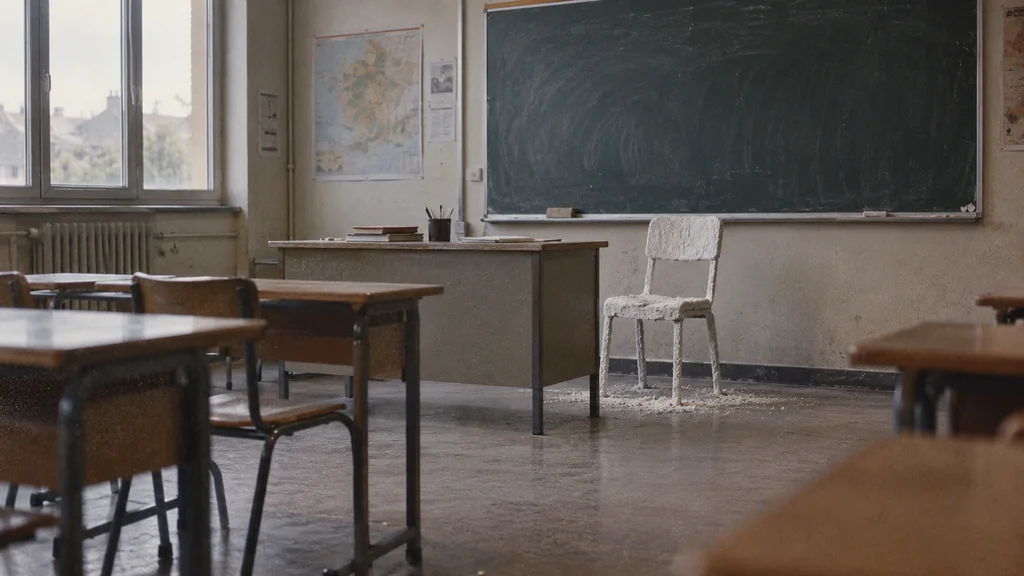
France proposes fewer teaching posts as pupils protest unfilled absences.
Image composition · tobriefOn Thursday, Prime Minister Sébastien Lecornu's government presented its 2027 budget. By evening, the education minister had promised to withdraw a new registration fee for some students (DNA). The proposed cut in teaching posts stays in the plan, and staffing is what protesting pupils have been complaining about. Lecornu also still has to get the budget through a parliament where he has no majority.
What the pupils want
The school protests began before anyone had seen the budget. According to BFMTV, the movement started on 18 September at Lycée Saint-Exupéry in Créteil, a Paris suburb. The pupils' complaints, as that outlet reports them, are about the schools they attend now: absent teachers who are never replaced, crowded classes, cold buildings and the stress of Parcoursup, the national university-admissions platform.
The protests have grown into a confrontation with the police. Interior Minister Laurent Nuñez reported that police detained 1,949 people at school blockades on Thursday 1 October (TF1).
What the budget asks, and of whom
The government lists €43 billion of new measures and €11 billion carried over from earlier decisions, for a headline total of €54 billion (French government, Reuters). That figure does not mean the state will spend €54 billion less than it does today. It measures the gap between the plan and what spending would reach if pensions, salaries and other costs kept rising automatically.
As a result, the deficit falls only a little. The government forecasts 5.4% of GDP this year and aims for 5.0% in 2027 (French government).
Most of the burden falls on public payrolls and retirees. Civil servants' pay stays frozen, and pensions above about €1,260 a month would rise more slowly than prices (Reuters).
The measure aimed most directly at students was a registration fee for those without grants: €178 a year for BTS vocational courses and €270 for preparatory classes (Franceinfo). The fee was worth about €33 million and survived only a few hours before Education Minister Édouard Geffray said it would go (DNA). That promise has yet to be written into the bill. The bill also freezes housing allowances (APL), which many students depend on, and the government has made no promise on those.
More money, fewer teachers
According to Le Monde, school funding rises by €1.2 billion to about €64 billion, while 1,588 teaching posts disappear. Geffray argues that pupil numbers have fallen by roughly 180,000. On his reasoning, a strictly proportional cut would have removed around 9,600 posts (France 24).
His comparison is a national average. Enrolment falls in some areas and holds steady in others, and the published figures do not say which schools will lose staff. A school that already leaves absences uncovered could still lose a post. That is the problem the pupils describe.
A parliament Lecornu does not control
The European Union limits the overall numbers but not the details. Under the EU's excessive deficit procedure, finance ministers from the other member states can press France to reduce a deficit well above the treaty's 3% of GDP ceiling (EUR-Lex). They have no say over how many teachers a lycée gets. Paris makes that decision.
In Paris, Lecornu lacks a reliable majority, as our preview of the plan noted (To Brief). Socialist deputies said on Thursday that they saw no basis for a compromise (Le Monde). The National Assembly was expected to begin examining the bills from 13 October (EFE).
The constitution offers a shortcut. Article 49.3 lets the government adopt a bill without a vote. In exchange, the Assembly can bring down the government through a no-confidence motion, and Lecornu had already promised not to use the article (Le Figaro).
The government has given ground on the cheapest and newest grievance, a fee that may not even have been what drove pupils into the streets. Even that concession remains only a promise until it appears in the bill. The teaching-post cuts are still in the plan, so the pupils' main complaint about unreplaced teachers gets no answer from this budget. When the Assembly debate opens, Geffray and Lecornu will need to explain where those 1,588 posts will be cut. They will also need to explain why the schools that already struggle to cover absences will not be among them.
Details about this article
- Model:
- claude-opus-5-5
- Generated:
- 10/2/2026, 2:09:42 AM
- Pipeline run:
- eu_pipeline_20261002_005006
- Watermark:
- SynthID (Google's invisible watermark)
- Human review:
- None before publication