France’s 5% deficit target needs replacements
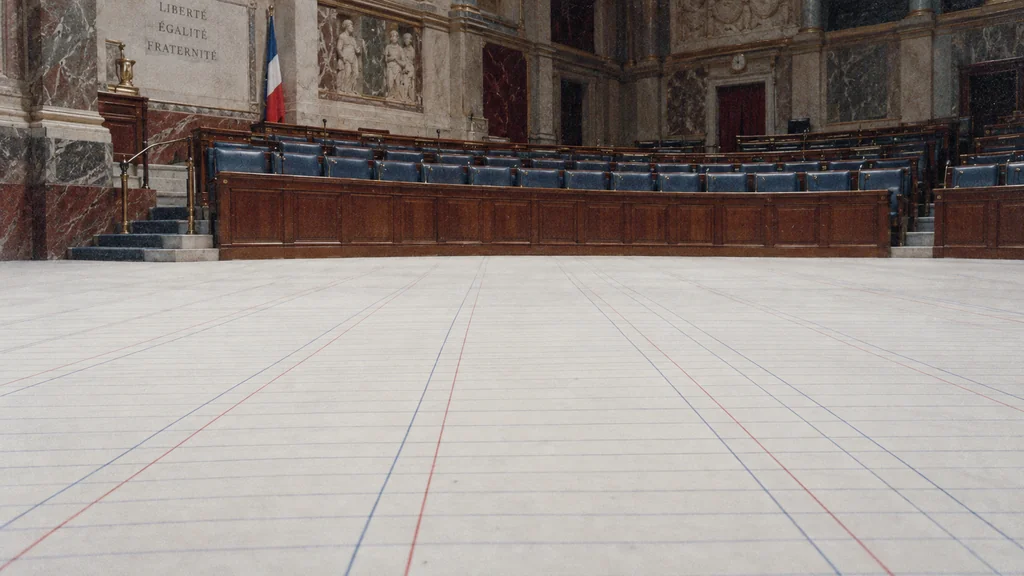
In France’s budget debate, every concession leaves a column to fill.
Image composition · tobriefFrance's government wants to cut its deficit, the amount the state spends beyond what it collects, from 5.4% of GDP this year to 5% in 2027 (Government budget presentation). Every tax lawmakers drop and every cut they reverse must be replaced by another tax or cut, or the target slips. Since Tuesday, the full National Assembly has had to make that choice.
A Socialist motion to throw out the bill failed that day by 149 votes to 236 (Assembly voting record). That kept the bill alive without settling what goes in it. A week earlier, the finance committee rejected the bill's revenue section by 31 votes to three (LCP committee report), as we reported at the weekend (To Brief). Because that vote was only advisory, deputies are now amending the government's original text (Assembly timetable).
Who pays under the government's plan
The High Council for Public Finances, the independent body that checks government forecasts, counts €43 billion of new measures, about €18 billion from revenue and €25 billion from spending restraint (High Council opinion). Civil servants face a pay freeze, pensions above the lowest grow more slowly, and large companies keep paying a profit surtax, though at a lighter rate (Government budget presentation). Income-tax brackets also rise with inflation. That helps households, who are less likely to land in a higher bracket just because their pay kept pace with prices.
The plan rests on a forecast the High Council calls optimistic: 1% growth next year (High Council opinion). If the economy grows more slowly, tax receipts come in lower and the gap widens even if parliament changes nothing.
Every concession needs a replacement
Parliament has already started changing things. A provisional costing found that the committee's amendments worsened the balance by about €10 billion, enough to leave the deficit near 5.4% (LCP committee report). Roland Lescure, who negotiates for the government, says he will bargain with the opposition as long as the 5% ceiling holds (AFP report).
He needs votes from parties that would fill the hole in opposite ways. The Socialists want heavier taxes on large fortunes and inheritances, tougher action on fraud, and protection for wages and pensions (Socialist Party priorities). Laurent Wauquiez's Republicans want €20 billion of extra savings but resist measures that hit pensioners (La Tribune). Both sides want to shield pensioners, which removes one of the government's savings. The proposals cited here do not identify enough replacements.
What a long delay would cost
France already borrows at a premium. On 13 October its ten-year bonds yielded 4.810%, against 3.435% for Germany and 4.505% for Italy, according to Greece's debt agency (Greek debt agency bulletin). One day's prices do not prove the budget fight caused that gap. They do show what new borrowing costs, and that cost spreads into the budget gradually as old bonds mature and are replaced at current rates (AFT maturity data).
Lescure argues that debt is not snowballing, putting the average rate on all outstanding debt at 2.5% in 2027, below nominal growth (growth including inflation) of 2.7% (MoneyVox). That average is held down by older, cheaper debt. The High Council warns that newly issued debt already costs more than growth, and it projects debt at 121.7% of GDP (High Council opinion).
If no budget is in force by January, France falls back on a special law. It lets the state collect existing taxes and keep borrowing, but limits spending to essential services at last year's level (IGF report). Jérôme Fournel, who led the finance inspectorate's study, said the tool works for about two months (Le Figaro). Run for nine to twelve months around a presidential election, it would leave the deficit at least 0.5 percentage points of GDP wider than in 2026, the inspectorate estimated (IGF report).
The committee's provisionally costed changes would erase the planned deficit improvement if enacted without replacements. The full Assembly has not adopted them, and the growth forecast could still move the numbers either way. Neither caveat changes the arithmetic facing Lescure, the Socialists and the Republicans: each must name the tax or cut that replaces any measure they remove.
Details about this article
- Model:
- claude-opus-5-5
- Generated:
- 10/14/2026, 1:38:11 AM
- Pipeline run:
- eu_pipeline_20261014_005006
- Watermark:
- SynthID (Google's invisible watermark)
- Human review:
- None before publication