France’s €54 billion budget barely cuts deficit
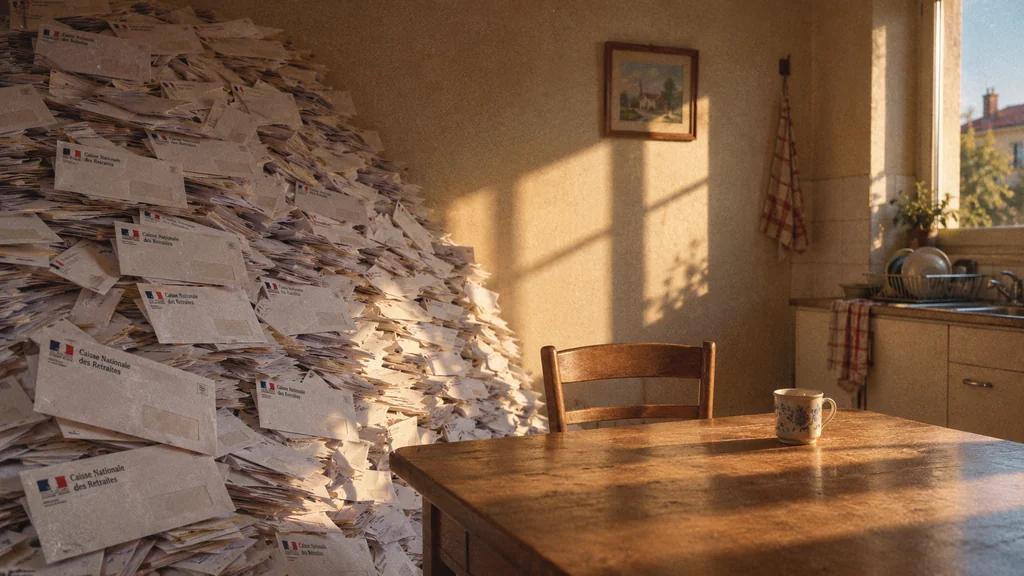
France’s pension savings accumulate in homes where payments buy less.
Image composition · tobriefPrime Minister Sébastien Lecornu has promised a budget effort of about €54 billion for 2027, yet the deficit he targets falls only from a forecast 5.4% of GDP (gross domestic product, the economy's yearly output) this year to 5% next year (France 24, Le Monde). Most of the money cancels cost increases that would arrive anyway. The rest falls unevenly on pensioners, civil servants and local councils, while large companies end up paying less.
Why €54 billion buys so little
The government measures its effort against an imagined 2027 in which it does nothing. In that version, interest, pension and health costs keep climbing, and Lecornu said the deficit could then exceed 6.5% of GDP (Deutschlandfunk). Against that baseline, simply holding spending steady counts as a saving.
Le Monde split the total in two. About €40 billion offsets spending growth that was coming anyway, and only about €14 billion goes beyond that to push the deficit down (Le Monde).
That split is a newspaper's reading, and the official accounting should arrive today. The two bills, one for the state budget and one for social security, are due to be presented at 08:30 this morning (Finance ministry).
Who the bills ask to pay
Pensioners carry the clearest load. Labour Minister Jean-Pierre Farandou wants about €5.5 billion from pensions, €4.1 billion of it by raising pensions above about €1,260 by less than inflation (TF1). The finance ministry expects prices to rise 1.8% in 2027 (Finance ministry forecasts). Retirees above that line would receive more euros that buy less.
The other €1.4 billion would come through income tax, by lowering from €4,439 to €3,000 the cap on a 10% allowance that lets retirees knock part of their pension off their taxable income (TF1). This reaches a different group. It affects retirees whose pension income is high enough for the allowance to hit the cap, and they would pay more tax.
Civil servants face a freeze in the index point, the base value behind much of their pay scale, worth roughly €2 billion in savings (La Dépêche). The part of pay tied to that point would stay flat as prices rise, though other parts of individual salaries can still move.
Local authorities are asked for about €5.4 billion, aimed at better-resourced bodies including around 40% of communes, France's municipalities (BFMTV). Jean-François Debat, who chairs the local-finance committee, called the demand disproportionate and warned that it could hold back local investment.
Large companies fare better than the "effort" label suggests. A temporary surcharge on big firms that raised about €8 billion would continue at a level yielding about €5 billion, so affected firms would pay roughly €3 billion less than now (Budget ministry).
What parliament can change
Lecornu has no dependable majority. The Socialists ruled out support in September (Deutschlandfunk). Marine Le Pen warned that her National Rally could reject a budget that fails to raise pensions in line with inflation (Die Zeit).
Lecornu had promised not to use Article 49.3, which passes a bill without a vote unless a majority brings down the government. On 30 September, it was being discussed again as a fallback (Le Figaro).
Councils have some reason for hope. Last year, a proposed local-government effort of more than €4.7 billion ended at about €2 billion (BFMTV). Any concession this year would have to be paid for elsewhere, absorbed by a weaker deficit target, or covered by growth above the ministry's 1% forecast for 2027 (Finance ministry forecasts).
On the government's own figures, this budget slows the slide in France's public finances rather than stopping it. Most of the effort only holds off costs that would otherwise rise. The savings people will feel land on retirees above the pension threshold, better-off pensioners who pay income tax, civil servants and wealthier councils. Large firms are the one group asked to pay less than they do today.
Details about this article
- Model:
- claude-opus-5-5
- Generated:
- 10/1/2026, 2:50:55 AM
- Pipeline run:
- eu_pipeline_20261001_005008
- Watermark:
- SynthID (Google's invisible watermark)
- Human review:
- None before publication