France’s fridge attack reaches EU sanctions
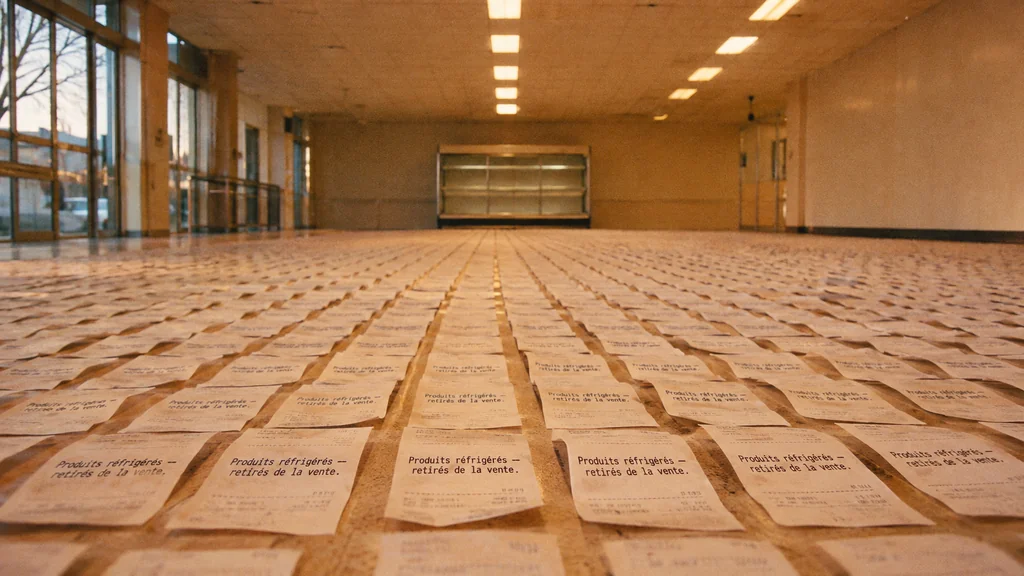
France counts the losses while EU ministers weigh whom to name.
Image composition · tobriefOvernight on 11–12 October, intruders took control of the computers that run supermarket refrigerators in France, forcing endless defrost cycles and switching off the alarms meant to warn staff (CERT-FR). Paris says the attack reached more than 700 food sites and destroyed food worth several tens of millions of euros (French Foreign Ministry). France now blames an Iranian unit and wants EU sanctions. Those require a named target and evidence every government can accept, and the refrigeration failures reported elsewhere in Europe since then remain unattributed.
What the attackers broke
The targets were refrigeration controllers. These small computers let technicians adjust temperatures, defrost schedules and alarms remotely, often through a web page. Anyone who reaches that page can turn routine commands against the shop.
Further refrigeration incidents followed outside France. On 2 November, the supermarket chain Delhaize confirmed problems at about 40 Belgian stores and emptied chilled displays at some of them (RTBF). No government has formally attributed those later incidents to Iran.
France points at Tehran
On 9 November, Foreign Minister Jean-Noël Barrot blamed the October attack on a group called Shahid Kaveh and summoned Iran's ambassador (French Foreign Ministry). Shahid Kaveh is a cyber unit tied to Iran's Revolutionary Guard, the elite branch of the country's armed forces.
The public account describes three kinds of evidence. Investigators point to methods associated with the unit, Persian-language traces, and IP addresses that prosecutors say led to terminals in Iran (TV5 Monde). The raw logs remain unpublished, and the judicial investigation is still open. Tehran rejected the accusation as unfounded and unilateral (Euronews).
The French accusation covers only October, and only France (To Brief). On 16 November, Barrot brought his case to fellow EU foreign ministers and asked for a sanctions list within a month (Politico).
What an EU decision would take
That meeting produced words rather than a decision. EU foreign-policy chief Kaja Kallas cited the French attacks and said further sanctions were being prepared, without naming any targets (EEAS). The Council's published results record a discussion of Iran and cyber threats, but no listing over the fridges (Council).
The same meeting showed what a real decision looks like. Ministers did add a pro-Russian hacking group to the EU's cyber sanctions list, with a named target, written reasons and a legal text (EUR-Lex). A listing under that regime freezes assets and can bar travel. It requires unanimity, which means any single government can veto it (Council Decision 2019/797).
Belgium shows why that matters. Interior Minister Bernard Quintin cited serious indications of Iranian involvement and urged support for France. Foreign Minister Maxime Prévot replied that the evidence did not justify a formal accusation (Reuters). A divided cabinet does not mean Belgium will block a listing. It does show that France's evidence has not yet convinced everyone who gets a say.
The courts add a second test. Anyone sanctioned can challenge the listing, and the EU's top court has overturned Iran-related sanctions before because ministers failed to back up their stated reasons (CJEU). Whatever governments agree must survive that scrutiny, which is harder when the underlying logs stay secret.
France has done what governments rarely do after a cyberattack: it has named a specific unit and described its evidence in public. A sanctions listing over October is plausible. France, however, can only propose a person or entity. All 27 governments must agree to it, including ministries that still doubt the evidence, and they must be ready to defend their reasons before judges. Even then, sanctions would answer the French attack alone, because no government has said who caused the fridge failures in Belgium. Paris has named an attacker. The EU still has to settle on a target it can defend.
Details about this article
- Model:
- claude-opus-5-5
- Generated:
- 11/17/2026, 1:53:18 AM
- Pipeline run:
- eu_pipeline_20261117_005009
- Watermark:
- SynthID (Google's invisible watermark)
- Human review:
- None before publication