France will guard Yanbu’s oil terminal
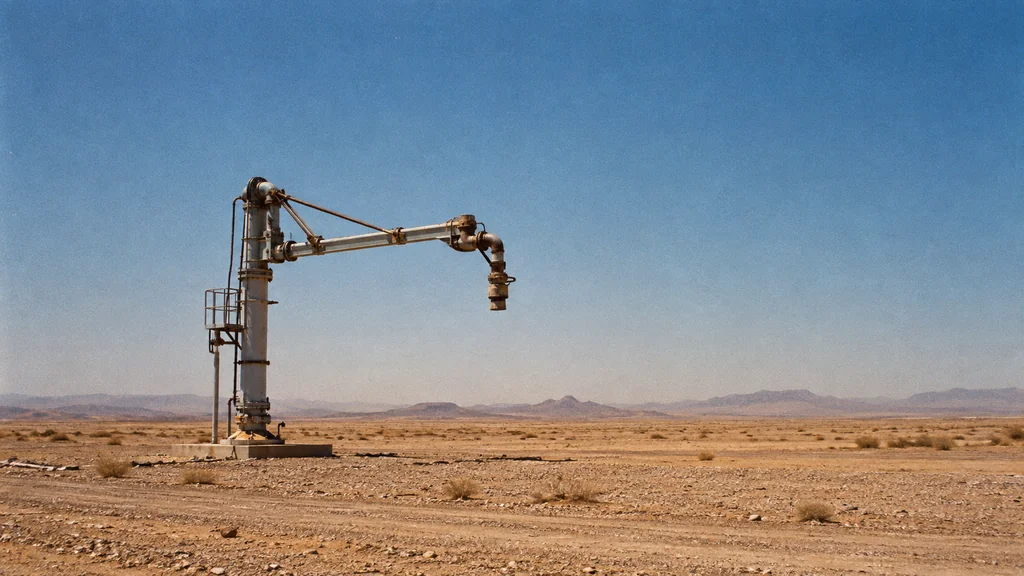
France prepares to guard Yanbu while its inland supply remains broken.
Image composition · tobriefEmmanuel Macron announced on 24 September that France will send soldiers, radars and air-defence systems to protect Yanbu, Saudi Arabia's Red Sea oil-export terminal (TF1, Le Parisien). He called it protection, not entry into a war, and presented it as relief for French drivers. The damage that halted Yanbu's exports this month is inland, along a pipeline that sits outside the announced mission.
Why one Saudi port reaches European refineries
Yanbu is the end of the East–West pipeline. It carries crude from Saudi Arabia's eastern oilfields across the country, so tankers can load on the Red Sea and avoid the Strait of Hormuz.
That bypass became essential once Hormuz traffic collapsed. The US Energy Information Administration estimates that oil flows through the strait fell from 21.6 million barrels a day in late 2025 to 4.9 million in the second quarter of 2026 (EIA).
In September the bypass broke too. Drones struck three inland pumping stations along the roughly 1,200-kilometre pipeline, badly damaging one, in attacks reportedly carried out by pro-Iranian militias in Iraq (AGSI). Kpler, a cargo-tracking firm, recorded no crude loaded at Yanbu after 11 September (Kpler).
Europe felt the gap quickly. Argus reported that at least three European refiners were told they would receive no Saudi crude in October (Argus).
What France has actually committed
So far, France has committed to very little that anyone can inspect. Macron said talks with Riyadh were finalised (TF1). No Saudi statement of terms has surfaced, and his verb pointed to the future: France will send.
The public record gives no troop count and no radar or missile models. It sets out no command arrangement, no duration and no cost. Rafale fighter jets, Macron said, would depend on need, which makes them a possibility rather than part of the package.
The arrangement is purely bilateral, between Paris and Riyadh. The EU's own Red Sea naval mission, Aspides, has a defensive maritime mandate: it escorts merchant ships and does not guard Saudi land or airspace (EEAS).
At home, the left-wing leader Jean-Luc Mélenchon demanded a parliamentary vote (Le Parisien). The Constitution requires less. Under Article 35, the government must inform Parliament within three days of an intervention beginning, and must seek a vote only if it lasts beyond four months (Légifrance).
Guarding the port, not the pipeline
The Saudi-led coalition says it intercepted six Houthi ballistic missiles affecting the Yanbu and Taif areas on 24 September, though that account did not establish whether any caused damage (Al-Monitor). If France sends capable air defences and places them at the terminal, they could improve warning and interception around the berths and storage tanks. That would reduce the risk of a second shutdown at the port itself.
Defences on the coast cannot fix the pipeline. They do not cover the inland pumping stations, and Bloomberg reported that full restoration could take about six weeks (Rigzone).
That limit matters for Macron's promise to drivers. He claimed that easing pressure at such a site could show up at French pumps within two days (TF1). A defended terminal only helps if crude reaches it, and that depends on repairs hundreds of kilometres inland.
France's announced mission may protect Yanbu's loading facilities. It does nothing for the damaged inland pipeline that supplies them, and Paris has yet to say what equipment it is sending or where it will sit. Once the deployment begins and the government notifies Parliament, deputies can press it for the answers the announcement left out: how many troops, which weapons, and what they are allowed to shoot at.
Details about this article
- Model:
- claude-opus-5-5
- Generated:
- 9/25/2026, 1:44:24 AM
- Pipeline run:
- eu_pipeline_20260925_005006
- Watermark:
- SynthID (Google's invisible watermark)
- Human review:
- None before publication