France wins Usmanov’s EU sanctions exit
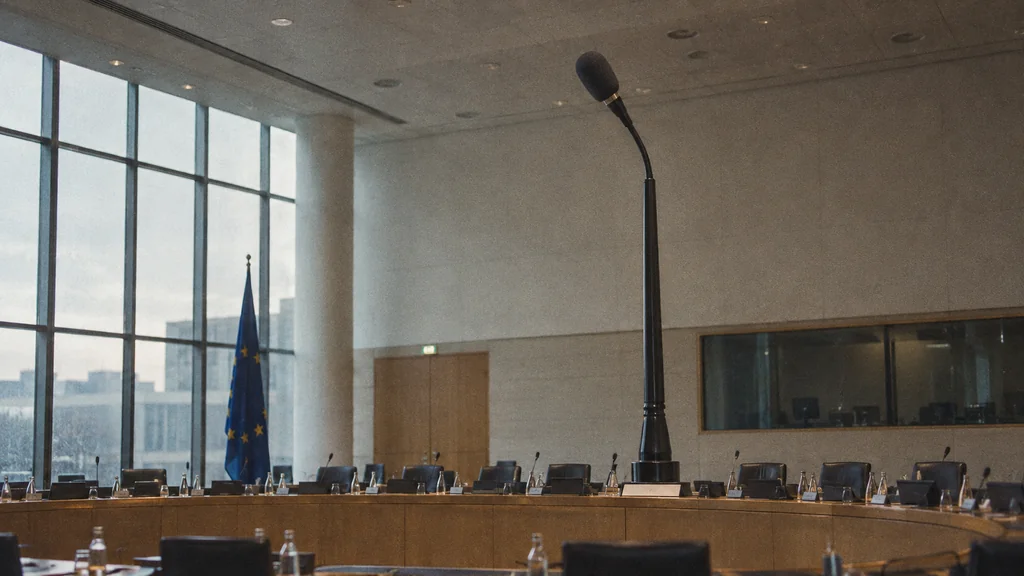
France wins an exception from the EU sanctions list without explaining why.
Image composition · tobriefEU governments renewed their Russia sanctions for three more years on 22 September, but removed billionaire Alisher Usmanov from the list (Council). France pushed for his removal and has given no public reason specific to his case. The next day, Azerbaijan pardoned a jailed Frenchman. That timing raises a question the evidence so far cannot answer.
How one veto threat moved the list
Usmanov, a Russian-Uzbek businessman, was on an EU listing. A listing is a sanction that requires banks and companies in every member state to freeze a person's assets. Listings must be renewed periodically by the Council of the EU, the forum where national governments agree sanctions. Decisions there require unanimity, which means any single government can block them.
Slovakia spent months trying to get Usmanov and fellow billionaire Mikhail Fridman removed, without success. On 11 September, France made its own request, covering Usmanov alone (Euronews).
With two governments now withholding consent, the renewal stalled. The EU extended the listings by only a week while Slovakia and France held out (STVR).
The pressure worked. The final decision keeps listings on nearly 3,000 people and entities in force until 22 September 2029 (Council). It also drops a handful of names, Usmanov and Fridman among them (Le Monde).
A pardon the next day, and an unconfirmed link
Azerbaijan's president pardoned Martin Ryan, a French citizen detained since December 2023, on 23 September (APA). That evening, France's foreign ministry said Ryan was back with his family. It welcomed the pardon as a humanitarian gesture and did not mention Usmanov (TV5Monde).
Before the sanctions decision, Euronews reported that diplomats described an arrangement: Azerbaijan would pardon two French nationals in return for Usmanov's removal (Euronews). Reuters separately quoted three European diplomats as saying Paris had privately accused Baku of using Usmanov to pressure France over two of its citizens (France 24).
Azerbaijan rejected that account, and neither government has confirmed an exchange. The second Frenchman, businessman Anass Derraz, was still in prison on 24 September (BBC). No terms were ever published, so his continued detention proves nothing either way.
The explanation France owes its partners
France's only stated rationale has come from an unnamed diplomat in Paris. The diplomat cited a specific national-security issue and said international partners had approached France about Usmanov (Le Figaro).
That explanation is thin compared with the court record. In February 2024, the EU's General Court upheld Usmanov's listing. It accepted that he was a leading businessman in sectors that provide substantial revenue to Russia (EUR-Lex). The ruling does not make his removal unlawful, because governments acting together can drop any name. It does show that the original case against him survived judicial review.
Estonian Foreign Minister Margus Tsahkna said Paris pushed hard without giving a detailed explanation. He has asked France to account for its reasoning (ERR).
The work of keeping pressure on the two men now falls to national capitals. Estonia and Latvia have imposed their own restrictions, and Lithuania is preparing measures (To Brief). Each of these governments must now write and enforce its own rules. Those rules stop at its borders, and banks elsewhere in the EU no longer have any EU obligation to freeze the men's assets.
The verified part of this story is about power. France used a decision that needed every government's agreement to win an exception from an EU-wide sanctions list. It has not told the other governments or the public what threat justified that exception. Whether Ryan's pardon was connected remains unproven. France's foreign ministry, which describes the Council talks as confidential, is the only party that can settle the question.
Details about this article
- Model:
- claude-opus-5-5
- Generated:
- 9/25/2026, 1:46:15 AM
- Pipeline run:
- eu_pipeline_20260925_005006
- Watermark:
- SynthID (Google's invisible watermark)
- Human review:
- None before publication