French salary ranges wait on Parliament
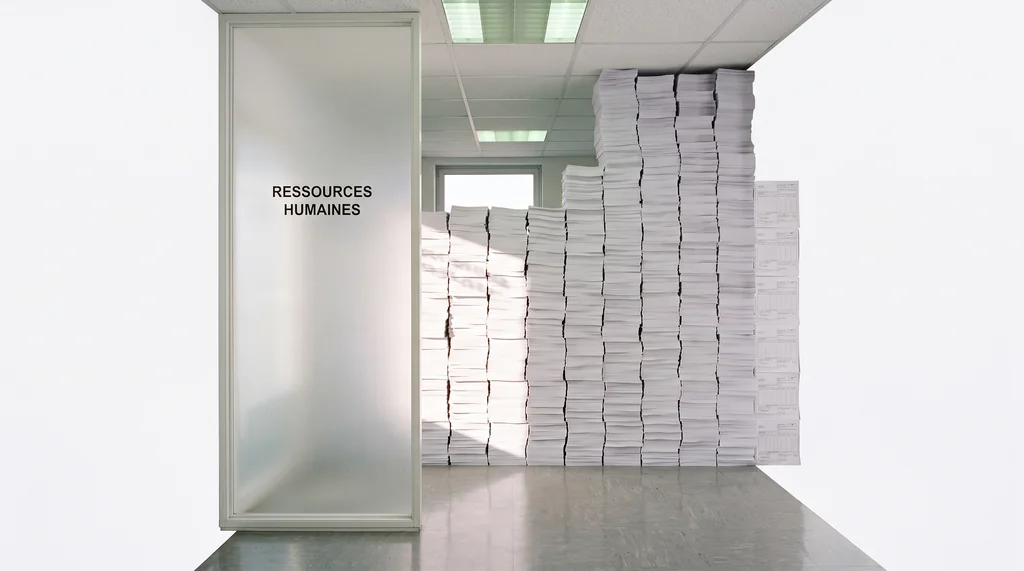
France guarantees equal pay while the evidence remains stubbornly blank.
Image composition · tobriefFrench jobseekers will not yet gain the right to see a salary range before applying for a job. French workers still cannot ask their employer for a sex-disaggregated breakdown of what people in comparable roles earn. Labour minister Jean-Pierre Farandou announced on 25 August that the bill transposing the EU Pay Transparency Directive will reach the Council of Ministers (France's weekly cabinet meeting where bills are formally approved) on 9 September 2026, nearly three months after France missed the EU's 7 June transposition deadline (Boursorama/AFP, Les Echos). The delay matters because France already bans unequal pay. What it lacks are the practical tools that let workers detect it before going to court.
What French Law Covers — and Where It Goes Quiet
France is not starting from scratch. Employers must ensure equal pay for equal work, and companies with 50 or more employees already publish an annual equality index scored out of 100, with corrective obligations below 75 (Éditions Tissot, Legifrance). Workers can challenge pay discrimination in court, and French law already shifts part of the burden of proof: the claimant presents facts suggesting discrimination, then the employer must justify the gap (Service-Public).
But the information that makes those rights usable does not exist. There is no duty to show applicants a salary range, no ban on asking candidates what they currently earn, and no right for employees to request average pay data broken down by sex for comparable roles (Ogletree Deakins France, Entreprendre.Service-Public). You have the right to equal pay. You just can't find out whether you're getting it.
What the Directive Would Change
The EU directive, agreed by member states in 2023, changes what workers can ask for at two key moments (Directive (EU) 2023/970).
Before hiring, employers must disclose a pay range for the advertised position and cannot ask candidates about their salary history. This flips the negotiating dynamic: instead of anchoring pay to what someone already earned, the employer states what the job is worth (European Commission).
Inside the workplace, any employee can request aggregated pay data, broken down by sex, for people doing equal or equally valued work. Not named colleagues' payslips, but category-level averages. If that data reveals a gap of at least 5% in any worker category that the employer cannot objectively justify, a joint assessment with employee representatives becomes mandatory. That assessment forces management to sit down with workers' representatives, identify the causes, and agree on corrective measures (Dairia Avocats).
The French draft may go further than the EU baseline by applying some obligations from 50 employees, below the directive's 100-worker reporting floor. Unions welcomed the lower threshold but criticised slower calculation cycles for smaller firms (TPE Actu).
Who Is Exposed, and Who Can Act
The missed deadline does not mean every French employer woke up on 8 June in breach of new duties. EU directives generally need national law before they bind private companies. Until France legislates, the new transparency obligations remain unenforceable against private firms (Morgan Lewis, Noerr).
The risk sits with the French state. The European Commission can refer France to the EU's Court of Justice for missing the deadline, and ask the court to impose financial penalties in the same action. It already took that route in July 2026 against France, Ireland, Spain and the Netherlands over late transposition of the NIS2 cybersecurity directive (European Commission).
The authority chain from here runs through several hands. Farandou presents the bill to cabinet on 9 September. Cabinet approval sends it to Parliament, where both the Assemblée nationale and the Sénat must pass it. Only once enacted does the new information right become something a French employee can invoke against a private employer. The Commission can punish France for delay, but it cannot directly order a French company to publish a salary range.
Germany's experience with its existing pay transparency law offers a caution about what happens after legislation passes: according to the IAB (Germany's federal labour-market research institute), only 4% of eligible workers ever used its information right, and researchers found no measurable effect on pay inequality in covered firms (IAB-Forum). A right to data matters only if workers know it exists, employers classify jobs honestly, and inspectors or courts can act when the numbers reveal a gap.
France's delay does not erase the right. It delays the evidence workers need to prove whether the right means anything.
Details about this article
- Model:
- claude-opus-4-6
- Generated:
- 8/26/2026, 1:50:25 AM
- Pipeline run:
- eu_pipeline_20260826_005007
- Watermark:
- SynthID (Google's invisible watermark)
- Human review:
- None before publication