Frontex’s 30,000 officers may take until 2041
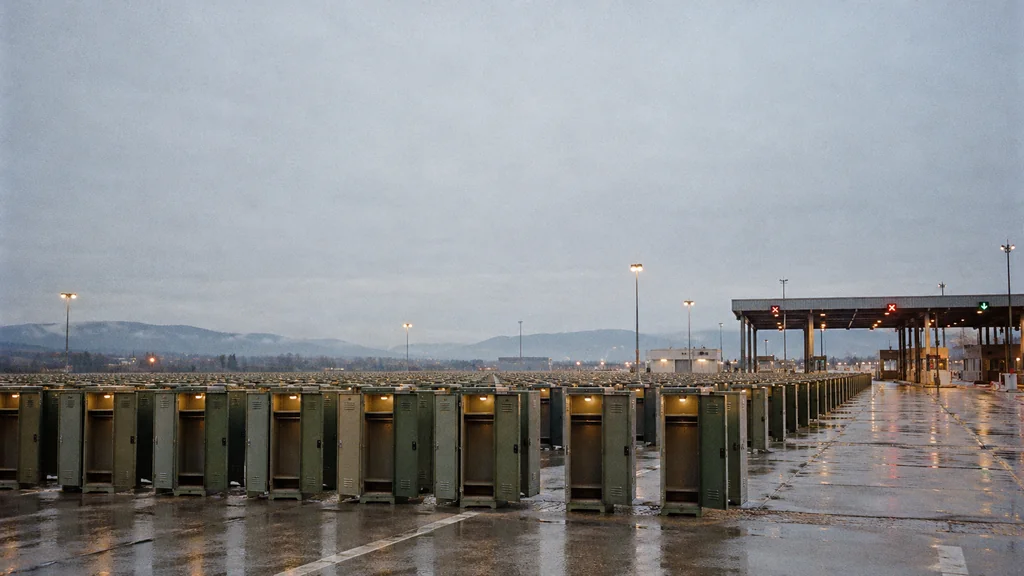
Europe proposes more border guards; national ministries still hold the people.
Image composition · tobriefThe European Commission announced a Frontex corps of 30,000 officers on 27 October (Commission). The staffing schedule in its own draft is much slower. It reaches 17,500 officers in 2034 and treats the full number as an ambition running to 2041 (draft annexes). Even on that slower path, most of the officers would come from national governments rather than from the EU agency itself.
Who the 30,000 would actually be
Migration Commissioner Magnus Brunner presented the plan days after promising to make Frontex, the EU's border and coast guard agency, the bloc's central returns agency (To Brief). It remains a proposal. The European Parliament and the Council, where national governments sit, must both approve it before anything changes.
Only a minority of the corps would work for Frontex. The agency would employ 6,000 people directly, up from the 3,000 currently scheduled (draft). Governments would lend another 7,000 under existing arrangements. The rest would be a new reserve of 17,000 national border guards (Commission).
That reserve is where the gap opens. The schedule foresees only 6,000 reservists by 2034 (draft annexes). For comparison, the target already written into EU law is 10,000 officers, and it falls due only in 2027 (Commission).
National ministries hold the people
Reservists would stay national officers. When they are not deployed, they still work for their own police or border authorities (draft). Each country gets a quota: Germany, for example, would owe 900 reservists by 2034, on top of the officers it already sends (draft annexes).
The EU would help with training but not with wages. Frontex would cover the reservists' additional training, and states could claim up to €21,000 for each officer trained (draft). Ordinary salaries stay on national budgets.
The draft also lets a government hold officers back in one stated case. Under Article 70, a state may keep them at home in "duly justified exceptional circumstances," meaning that sending them would seriously disrupt its own border or return work (draft). That is a narrow exception, not a general right to opt out. It still leaves room for a government under pressure at its own frontier to argue that its guards are needed there.
Poland shows why that matters. Deputy interior minister Maciej Duszczyk told RMF24 that Warsaw supports a stronger Frontex as long as it avoids unnecessary bureaucracy. He noted that Polish guards already help Lithuania and Latvia, and that Poland needs no Frontex help on its Belarus border (RMF24). A government can back the agency politically and still guard its own staff closely.
The budget nobody has agreed
The money is not settled either. The Commission pencils in about €11.888 billion for Frontex in 2028-2034, against roughly €6 billion in the previous budget period (Reuters, draft). That sum depends on governments and Parliament agreeing the next long-term EU budget, the seven-year spending plan now under negotiation.
The Commission is also moving away from its own earlier view. Its 2024 review judged the current Frontex rules, which set the 10,000 target, a sufficient basis for future challenges (evaluation). That review came before the reserve was proposed, so it does not settle whether a reserve is needed. It does mean the Commission has yet to explain what changed.
The package goes beyond staffing. It adds a rapid-response force, which the Commission links to this year's mass crossing into Ceuta, Spain's enclave bordering Morocco (El País), and it widens the agency's role in returns. Both raise separate questions about speed, oversight and rights.
On staffing, the draft supports a clear conclusion. It gives Frontex a larger claim on Europe's border guards without making them Frontex's guards. Parliament and the Council can still change the numbers, and the budget talks decide what the EU can pay for. Once those votes are done, the corps grows only as fast as national interior ministries train officers and release them.
Details about this article
- Model:
- claude-opus-5-5
- Generated:
- 10/28/2026, 1:27:50 AM
- Pipeline run:
- eu_pipeline_20261028_005008
- Watermark:
- SynthID (Google's invisible watermark)
- Human review:
- None before publication