Germany’s KNDS deal buys a veto
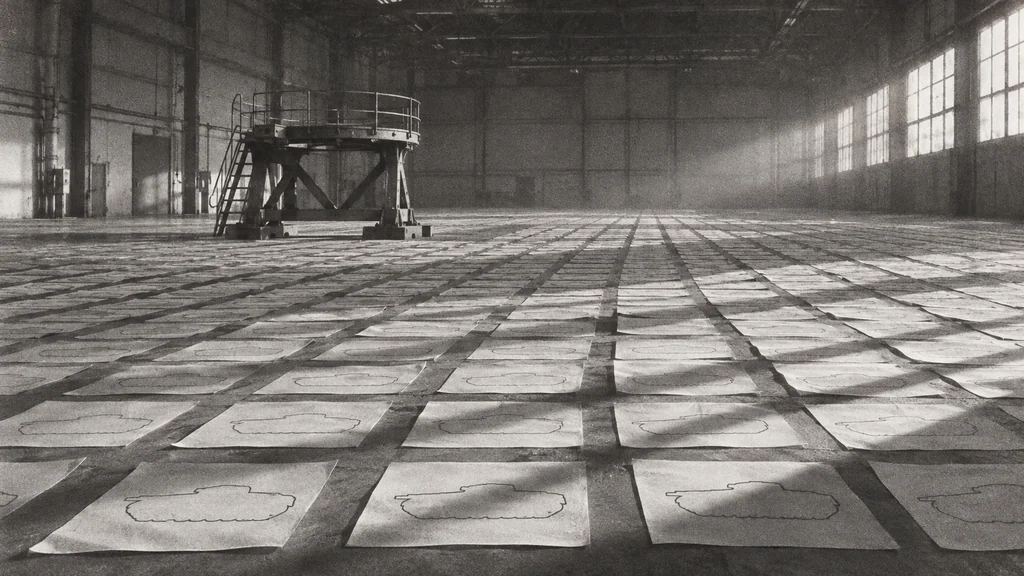
Germany approaches a half stake; the armies still lack a shared tank design.
Image composition · tobriefGermany has agreed in principle to buy the 50 percent of KNDS still held by the founding families. If it goes through, the maker of Leopard tanks and artillery would be owned equally by the French and German states (Reuters, SPIEGEL). What Berlin would gain is a say in the company; what it would not gain is a settlement of the two armies' dispute over what to build, as the Franco-German tank programme shows.
A handshake, not a contract
No purchase contract exists yet. The Finance Ministry told the German parliament's budget committee on 5 November that the state and the Bode and Braunbehrens families had agreed in principle on Berlin taking the entire 50 percent, and a day later the Economy Ministry described the talks as good while declining details (Tagesschau).
The families are the last large private shareholder. The other half belongs to the French state, so a completed purchase would put the company entirely in public hands, split equally between Paris and Berlin.
The reported price sits below the €7.2 billion that the budget committee authorised on 26 June (SPIEGEL, Reuters). That money was meant for a different plan: Berlin wanted 40 percent, Paris would have trimmed its stake, and up to 20 percent was reserved for stock-market investors (German government).
KNDS shelved the planned listing on 1 July (KNDS). A signature could follow within weeks, though neither the company nor the families has confirmed the deal (Tagesschau).
What Berlin is buying
Berlin's stated goal is to stop an outside buyer from gaining control of KNDS Deutschland, the German operating company that builds Leopards and artillery, and to hold a say equal to France's (German government). That say is a veto. The governance framework published on 24 June gave each state three seats on a twelve-member board; managers would run daily business, while either side could block a change of leadership, structure or a major investment (KNDS). Those rules belonged to the earlier plan; the pact spelling out shareholder rights in this purchase is not public.
The strategy French and German leaders agreed on 22 June already gave the two states equal governance rights (Élysée). Berlin held no shares. This purchase would change that, with a full half instead of the 40 percent first planned.
The power runs one way. Either state could stop a move it dislikes, but neither could order the company to design a particular tank.
The veto ends at the factory gate
MGCS, the plan for a shared Franco-German main battle tank, shows the boundary between owning and deciding. Engineering work is split evenly, with KNDS France, KNDS Germany, Rheinmetall and Thales each holding 25 percent of the project company (KNDS). The Franco-German defence summit on 17 July still narrowed the plan to research ahead of a proof of concept, with no shared chassis, gun or production plan (Élysée).
The partners continue to argue over which gun wins and how many tanks to build (To Brief). Companies split the work; governments do not agree on the product, and owning half of the maker settles neither argument. Other European armies buy Leopards through national procurement channels, and the share purchase changes none of those contracts. What it offers them, at best, is a German state with a direct interest in keeping the production lines running.
Germany is buying a blocking share, not a tank decision. Paris and Berlin now sit on the same side of the boardroom; the dispute over the tank remains between the two defence ministries. If the purchase and the shareholder pact are finalised, Berlin will be able to stop certain moves inside KNDS. It will not, by itself, settle what the two armies want built.
Details about this article
- Model:
- deepseek-v4-pro
- Generated:
- 11/7/2026, 2:37:12 AM
- Pipeline run:
- eu_pipeline_20261107_005008
- Watermark:
- SynthID (Google's invisible watermark)
- Human review:
- None before publication