Google’s €13bn Finland bet lacks new power
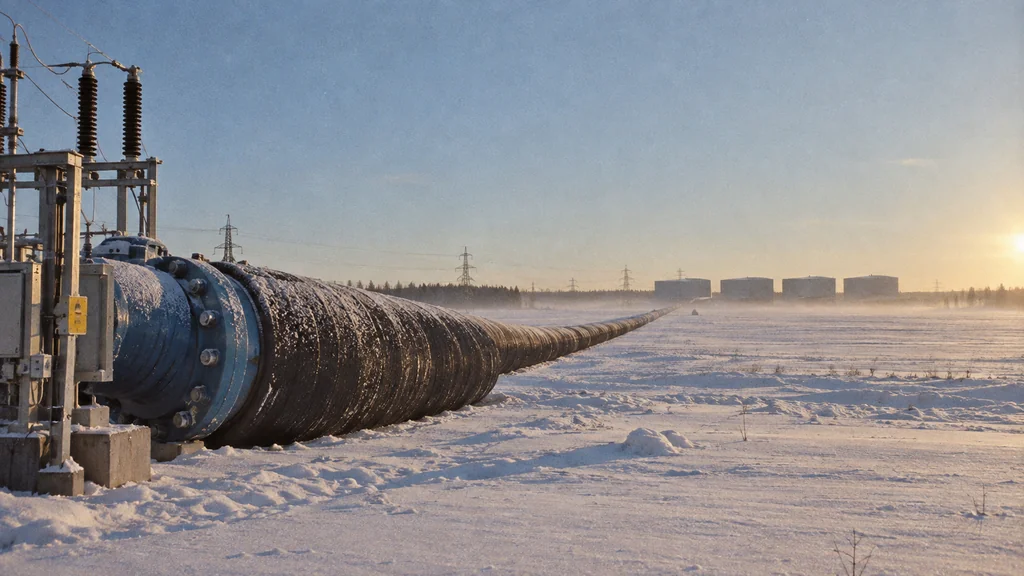
Google secures the power before Finland measures the burden.
Image composition · tobriefWho pays for the electricity that Google's Finnish data centres will consume? The company announced plans to spend at least €13 billion in Finland over 2027–2028, expanding computing facilities across four sites (Google, Yle). Alongside the spending plan, Google signed a 22-year deal to buy up to half the output of the country's Loviisa nuclear plant (Fortum). The contract is real. What remains missing is the other side of the ledger: how much power Google will actually use, and whether enough new generation exists to cover it.
What is binding and what is not
Three announcements arrived on 9 September, each at a different level of certainty. The power-purchase agreement (a long-term contract locking in electricity supply) with Fortum is signed and commercially binding. Deliveries start in 2028, ramp to half of Loviisa's capacity by 2030, and run until 2049. Fortum had to disclose the deal to investors and said it would lift the profit it earns on capital tied up in the business by roughly 1.4 percentage points at full volume (Fortum).
The €13 billion, by contrast, is a corporate investment announcement. No site-by-site allocation or procurement schedule has been published, and a substantial portion covers computing hardware whose domestic share is undisclosed (Aamulehti). A separate memorandum of understanding explores a possible new Loviisa reactor and further renewables. The memorandum commits neither company to build anything (Google).
Almost all the power already existed
Nearly all the nuclear output in the deal is existing generation. Finland licensed Loviisa to operate until 2050 in 2023, and Fortum had already planned a turbine upgrade before Google appeared (Fortum 2023 licence). Only 10 MW of extra generating capacity is attributed to the new partnership (Fortum). Google has also contracted 629 MW of Finnish onshore wind and announced a 94 MW battery (Google). But megawatts of wind describe peak output under ideal conditions, not annual energy delivered. And a battery's MW rating measures how fast it discharges, not how much energy it stores; without a duration figure, its actual storage capacity is unknown.
The comparison the public needs is between annual energy consumed by Google's data centres and annual energy produced by genuinely new sources. Google has not published its expected electricity consumption. Fingrid (Finland's grid operator) has cited a 2 GW figure, but that measures spare capacity on the regional grid for all data-centre projects, not Google's load alone (Fingrid).
The Nordic price channel
If Finnish demand grows faster than Finnish supply, the cost can travel. Northern Sweden showed the mechanism last January. After the Aurora Line interconnector opened in late 2025, boosting cross-border capacity by over 40% (Svenska kraftnät), cold and calm weather coincided with high Finnish imports. Winter averages in northern Sweden's price zones hit €61/MWh, up from €16–17 the previous winter (Svenska kraftnät). Weather drove much of that spike, and the same cable can move cheap power into Finland when conditions reverse. But the episode shows the channel: when Finland draws more electricity than it generates, Nordic neighbours absorb the price pressure.
How much of Google's spending stays in Finland?
Google's own commissioned study estimates an average €3.6 billion annual GDP contribution during 2027–2028 and more than 37,000 "jobs supported" (Google). These figures deserve scrutiny. Imported servers count as investment spending in Finland, but the money flows straight back out to manufacturers abroad. Finnish wages, construction margins and locally sourced services stay. The study does not separate these. Nor does it clarify whether "jobs supported" means roles filled in a single year, cumulative job-years, or net additions after accounting for workers pulled from other projects.
Ireland offers a reference point. Data centres consumed 23% of all metered electricity there in 2025 (CSO). Ireland's regulator now requires new centres to provide power plants that can run when needed, matching their peak demand, plus 80% of consumption from new, unsubsidised renewables (CRU). Spain's draft rules demand hourly matching with new renewable plants (MITECO). Finland has not imposed comparable requirements.
The PPA gives Fortum long-term revenue certainty for a plant producing a significant share of Finnish electricity. Google gets a binding claim on clean-energy credentials. Finland has not yet shown that new generation will match the data-centre load, or that Google rather than network users will bear the resulting grid costs.
Stocks in this story
Details about this article
- Model:
- claude-opus-4-6
- Generated:
- 9/10/2026, 2:09:31 AM
- Pipeline run:
- eu_pipeline_20260910_005006
- Watermark:
- SynthID (Google's invisible watermark)
- Human review:
- None before publication