Greece gathers five allies against Turkey–Libya sea line
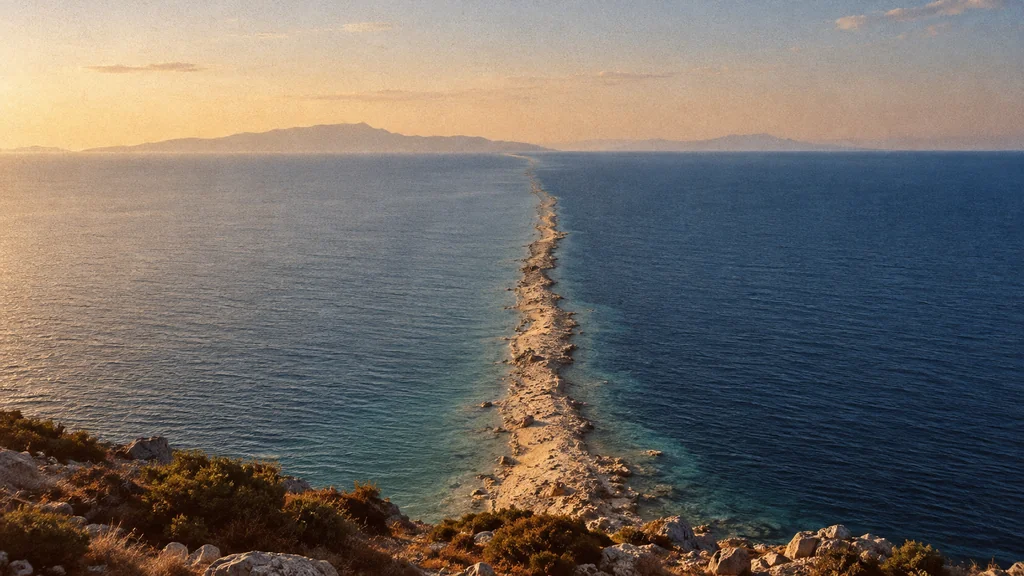
Political support grows on both shores; the boundary remains unsettled.
Image composition · tobriefLibya's eastern parliament approved its 2019 maritime deal with Turkey on 20 October, reversing its 2020 rejection, and the rival Tripoli government's foreign ministry welcomed the vote (Reuters, LANA). On 26 October Greece answered at the United Nations with Egypt, Cyprus, Bahrain, the United Arab Emirates and the EU, declaring the deal "null and void" (Greek Foreign Ministry). Both sides now have more political backing. The boundary south of Crete is exactly as contested as before.
The quarrel is over who may exploit the sea and seabed between Crete and the Libyan coast. A maritime boundary divides rights to resources such as gas and fish. It does not transfer territory. The memorandum draws a single segment of about 18 nautical miles southeast of Crete, and the UN treaty registry lists it as in force since 8 December 2019 (UN memorandum text, UN Treaty Collection). Registration makes a text public. It does not validate the text against anyone else's claim.
Libya's two camps agree on one thing
Libya has two rival centres of power, and Turkey signed the deal with the Tripoli side. The eastern parliament's 2020 refusal let critics argue that the memorandum lacked Libya's full backing. With both camps now on record in favour, that argument is harder to make.
Ankara reads the vote as vindication. President Recep Tayyip Erdoğan said on 26 October that objections to it, especially the EU's, lacked a legitimate basis, and called the vote an expression of "one Libya, one state" (Turkish Presidency).
What the coalition adds, and what it cannot do
Only two of the six have sea claims at stake near the line. Greece argues the line ignores the sea rights of its islands. Egypt says it cuts into its exclusive economic zone, the area where a coastal state controls fishing and seabed resources (Egyptian State Information Service).
Bahrain, the UAE and the EU have no claim there. They add political weight, and their presence shows that Athens can line up Arab partners alongside Brussels. The EU had already said on 21 October that the deal infringes the rights of third countries (Council of the EU). Cyprus took its own objections to the UN days earlier (To Brief).
The statement carries no legal force. It was read to the press in New York, with no signatures and no Security Council or General Assembly decision behind it. Treaty law gives Greece and Egypt one firm protection: a deal between two countries cannot impose obligations on a third without its consent (Vienna Convention on the Law of Treaties). Athens and Cairo are therefore not bound by the Turkey–Libya line.
That protection has limits. Their objection does not void the deal between Ankara and Libya. Nor does it decide whose overlapping sea rights win.
Turkey argues that a fair boundary should give weight to long mainland coastlines, and that small Greek islands should not automatically box in a country with Turkey's coast. International judges have at times given islands reduced weight when drawing sea boundaries. No court has ruled on this line. Turkey has also stayed outside the UN Convention on the Law of the Sea (Turkish statement to the UN). The convention's compulsory dispute procedures bind only its members, so they cannot force Ankara into court.
Where real change would come from
The joint statement says Greece is ready to continue boundary talks with Libya, but it names no date (Greek Foreign Ministry). A Greek–Libyan agreement would put a rival, negotiated line on the record. The eastern parliament's endorsement of Turkey's line makes that harder, at least for now.
A different kind of change would come if either camp licensed drilling or surveying in waters the other side claims. That would sharpen the confrontation at sea, but it would not move the line.
The vote and the Tripoli ministry's welcome strengthen Turkey's political position. The joint statement gives Greece's objection a wider set of backers. Neither answers the legal question of where the boundary lies, and that question stays open until Athens and Libya negotiate a line or the parties agree to put it before a court.
Details about this article
- Model:
- claude-opus-5-5
- Generated:
- 10/27/2026, 1:28:45 AM
- Pipeline run:
- eu_pipeline_20261027_005007
- Watermark:
- SynthID (Google's invisible watermark)
- Human review:
- None before publication