Greenland approves US access without payment
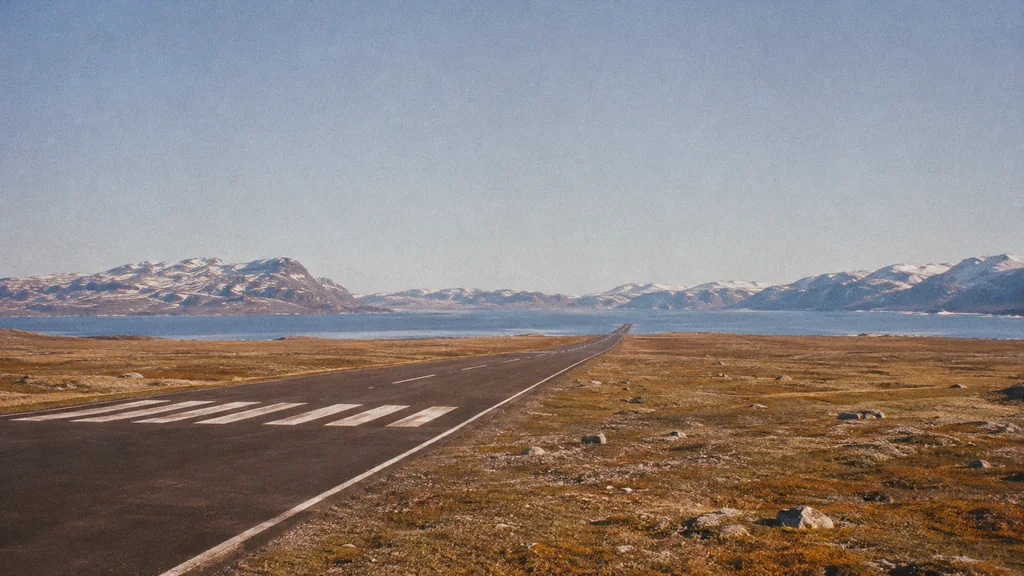
Greenland consents to wider US access without securing payment or cleanup.
Image composition · tobriefGreenland's parliament has agreed to give US forces more room on the island, and the deal guarantees Greenland no payment or cleanup in return. Inatsisartut, the Greenlandic parliament, approved the expanded defence agreement on 3 November (Inatsisartut). According to the Danish news agency Ritzau, the vote was 16 in favour, none against, with seven abstentions or blank votes (NI/Ritzau). The deal is not yet in force. Denmark's parliament still has the final legal step.
The United States, Denmark and Greenland signed the text on 22 September as an amendment to their 1951 defence pact, not a replacement (ASIL). We covered the signing at the time (To Brief). The 1951 pact was between Washington and Copenhagen alone. The new text names Greenland's government as a party, so Nuuk joins the consultations on any new site and its parliament must consent before the deal takes effect (agreement). Nuuk could accept or reject the finished text. It could not rewrite it.
What Washington gets, and what is still open
US forces already operate at agreed sites, chiefly Pituffik Space Base. The new text lets them modernise and expand there, names two additional US defence areas at Narsarsuaq and Mestersvig, and gives US personnel, aircraft and vessels broad freedom of movement across Greenland and its territorial waters (Danish foreign ministry).
For now, the new sites exist mostly on paper. The agreement sets no troop numbers, construction budget or opening date, and the three governments must still agree how each site will work (SWP).
Any further site needs a proposal covering its location, size, planned activity and steps to limit local effects, followed by consultation. If the parties disagree, the dispute goes to further talks between the governments, and Washington does not get the site by default (agreement).
One clause touches the rest of Europe directly. Article X lets Greenland, working with Denmark and consulting Washington, review incoming investment in sensitive sectors such as critical infrastructure and mining (EPRS). The review covers only investors from outside NATO, its partner countries and the EU. A European company buying into a Greenlandic port or mine falls outside it.
What Greenland did not secure
The parties that backed the deal still wanted more than it delivers. Siumut, one of Greenland's oldest parties, supported the agreement while demanding payment into the treasury for the use of land and cleanup of old military sites (Sermitsiaq). Naleraq, a pro-independence party, wanted a referendum and objected that the deal promises no direct payment (KNR). The record does not show which members cast the seven abstentions or blank votes, so these are party positions rather than the proven reasons behind those votes.
On money and cleanup, the text bears out the complaint. Greenlandic suppliers win defence contracts only "as far as possible," with no fixed revenue share and no commitment to clean up every former US site (Greenlandic government note).
Before the vote, Múte B. Egede said the government would meet the foreign affairs committee's request for an all-party group to assess the deal's economic and social effects and report at least once a year (KNR). That is a political promise. Parliament did not make it, or any other demand, a condition of its approval.
The treaty also limits Greenland's future choices. Article XI commits the current Danish and Greenlandic governments to work for an independent Greenland that stays in NATO and keeps the deal (agreement). Greenlanders keep the right to choose independence, but any future settlement would start from that pledge.
Copenhagen controls the last step because Denmark keeps constitutional responsibility for the kingdom's foreign and defence policy. The Folketing, Denmark's parliament, has scheduled its first reading for 12 November and its final vote for 19 November (Folketing). The agreement takes effect only when Denmark sends Washington a diplomatic note confirming that both parliaments have finished (agreement, Article XII).
Greenland has given its consent. The United States has gained wider access, while payment and cleanup remain unguaranteed. If Greenland wants either, its government will have to win them from Copenhagen and Washington outside the treaty text, since the treaty itself does not provide them.
Details about this article
- Model:
- claude-opus-5-5
- Generated:
- 11/4/2026, 2:13:43 AM
- Pipeline run:
- eu_pipeline_20261104_005008
- Watermark:
- SynthID (Google's invisible watermark)
- Human review:
- None before publication