Hormuz crossings now hinge on crews
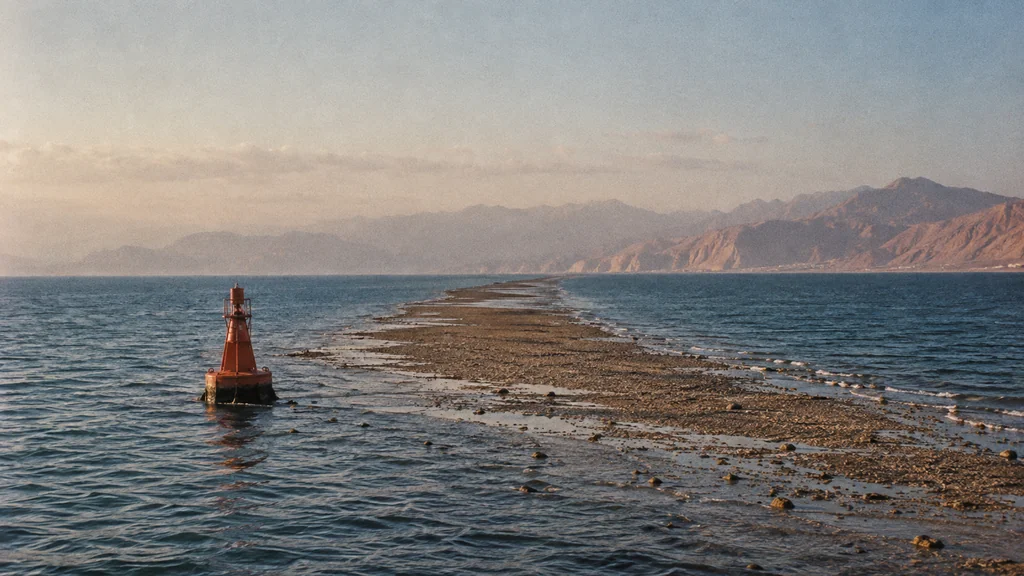
The strait stays open; every crew must choose whether to cross.
Image composition · tobriefNobody has closed the Strait of Hormuz. But after six ships were reported attacked in and around it on Sunday 11 October, each crossing now depends on a separate decision by an owner, a captain and a crew (UKMTO, Financial Times). For Europe, the exposure so far is higher shipping costs and a gas supply with no route around the strait. No European cargo has been reported cancelled because of Sunday's attacks.
The heaviest human cost fell on the tanker Petro Dolphin, which a drone struck while it was at anchor off Sohar, Oman. Nine of its 11 Indian crew were rescued, and two are still missing (Anadolu, IMO).
A count built after the fact
UK Maritime Trade Operations (UKMTO), a British service that passes on what ships report, issued two warnings on Sunday. Four more followed on Monday, and all six described Sunday incidents involving five tankers and one container ship (UKMTO).
The delay comes from how the record is built. UKMTO can only relay what vessels tell it, and a crew under attack reports when it can. Trade press covered the later notices as fresh reports of more ships hit near Hormuz, a day after the strikes (gCaptain).
The notices leave most of the ships unnamed. Most also blame an "unknown projectile" and identify no attacker (UKMTO warning 166). Iran's Revolutionary Guard has claimed strikes on tankers it says defied its routing orders, as we reported on Monday (To Brief). No public evidence yet links any single hit to a specific attacker.
Who can refuse to sail
No government order keeps ships out of the strait. UKMTO's guidance leaves the safety judgment on board to the captain. The decision to sail belongs to the shipping company, which weighs crew safety, insurance and its contracts with the cargo's charterers (UKMTO guidance).
Crews have a veto of their own. The International Bargaining Forum, which sets wage terms for much of the industry, lists the area as a "Warlike Operations Area" until 22 October (ITF). Seafarers covered by those terms can refuse to enter and be sent home at the company's expense.
Sunday's traffic was thin. According to Kpler ship-tracking data cited by the FT, 2.9 million barrels of oil passed through Hormuz that day, the lowest daily figure so far in October (Financial Times). Bloomberg found ships turning back and longer waits for cargo transfers. It found no clear immediate drop at the Gulf's major export terminals (Anadolu/Bloomberg).
Where Europe is exposed
Gas is Europe's sharpest risk. About 7% of Europe's LNG imports came through the strait in 2025, and Qatar's liquefied gas has no pipeline route around it (IEA). Every one of those cargoes has to leave by tanker.
Buyers can look for other supply, and one already has. Italy's Edison has lived with suspended Qatari deliveries since April and says it has replaced most of them (Edison). That disruption predates Sunday by months. It shows both the vulnerability and the workaround.
Shipping costs were also rising before Sunday. On 7 October the Danish carrier Maersk introduced an emergency charge of $3,000 per 40-foot container on affected Gulf services. It adds $1,000 for any container actually taken through Hormuz (Maersk). Any European importer or exporter moving goods on those routes already pays it, whatever happens next.
The record supports a narrow verdict. Sunday's attacks coincided with tankers waiting or turning back and with the month's thinnest oil flows through the strait. They have not, so far, cut a European delivery. Europe pays through surcharges and depends on Qatari gas that only moves when crews agree to sail. Off Sohar, the search continues for the two Petro Dolphin seafarers still missing (IMO).
Details about this article
- Model:
- claude-opus-5-5
- Generated:
- 10/14/2026, 1:39:05 AM
- Pipeline run:
- eu_pipeline_20261014_005006
- Watermark:
- SynthID (Google's invisible watermark)
- Human review:
- None before publication