Hormuz mine claims leave tankers unidentified
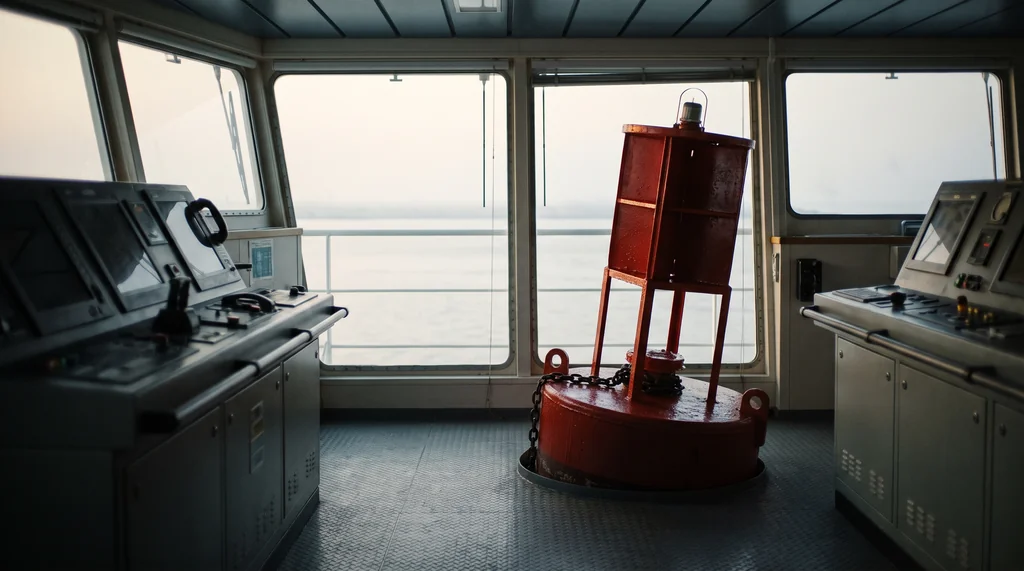
In Hormuz, ship masters must choose a passage through unverified warnings.
Image composition · tobriefIran's Revolutionary Guard said on Friday that two supertankers carrying more than 4.5 million barrels of crude struck mines in the Strait of Hormuz, caught fire and were abandoned by their crews (Tasnim). The statement names no ship and gives no way to identify one. Ship masters still have to decide whether to cross a strait where the mining threat is real, even if this particular strike cannot be shown.
The claim came from the press office of the Guard's navy and ran on Iranian state media. According to the Guard, the tankers tried a southern route it calls "unauthorised", suffered engine-room explosions and stopped near the coast. Croatia's Index.hr also reported it, but its account rests on the same Guard statement rather than any separate check (Index.hr).
A week of claims nobody can check
Friday's statement follows several others. On 17 October the Guard said a supertanker carrying more than two million barrels caught fire after taking an "unauthorised route" (Tasnim). On 22 October it claimed seven vessels had been hit, three of them by mines west of Hormuz (Reuters).
None of these statements gives an IMO number, the permanent identifier every large merchant ship carries. Without it, nobody outside the Guard can tell whether Friday's pair are new hulls or earlier ones described again.
The most direct independent check came from the Joint Maritime Information Center, a multinational maritime-security cell. It found "no substantiation" for the 17 October claim, yet still warned mariners about attempted mining (JMIC). That assessment predates Friday, and no comparable verdict on the new claim has surfaced.
A real attack did take place nearby. A tanker hit by an unknown projectile near Limah, Oman, on 22 October continued to its next port, which makes it a different event that cannot stand in for a mine strike (UKMTO).
The decision stays on the bridge
The Guard's "unauthorised" label is hard to test because it gave no coordinates. Its alleged route therefore cannot be plotted against the shipping lanes charted through the International Maritime Organization to keep traffic separated (IMO).
That leaves the judgment with ship masters, whom industry guidance gives the final safety call on each voyage (International Chamber of Shipping). Many had already stayed away. Passages in the week to 14 October numbered 254, about 70% below pre-conflict traffic (Anadolu). That slump came before Friday's claim, and our earlier report traced how attacks on vessels had already pushed up oil prices (To Brief).
Europe's exposure is concrete. The International Energy Agency estimated that roughly 7% of Europe's 2025 LNG imports crossed Hormuz (IEA). Those cargoes move on the same water where masters are now weighing mine warnings.
The EU's own naval mission does not change that calculation. On 30 September, Germany's government said Hormuz lies inside the operating area of Aspides, the EU mission created to protect Red Sea shipping, but that its mandate does not cover escorting ships through the strait (German government). A tanker bound for Europe cannot ask Aspides to take it through. Its master weighs the risk with industry guidance and advisories alone.
The Guard has asserted two mine strikes while withholding the ship identities anyone would need to check them, and the strikes remain unconfirmed. The first answer is owed by the Guard itself, in the form of names and IMO numbers. If two laden supertankers really lie abandoned near a coast, their owners and flag states would be the next to confirm it, and so far none has.
Details about this article
- Model:
- claude-opus-5-5
- Generated:
- 10/24/2026, 1:29:12 AM
- Pipeline run:
- eu_pipeline_20261024_005008
- Watermark:
- SynthID (Google's invisible watermark)
- Human review:
- None before publication