Hungary eases EU hold, keeps its veto
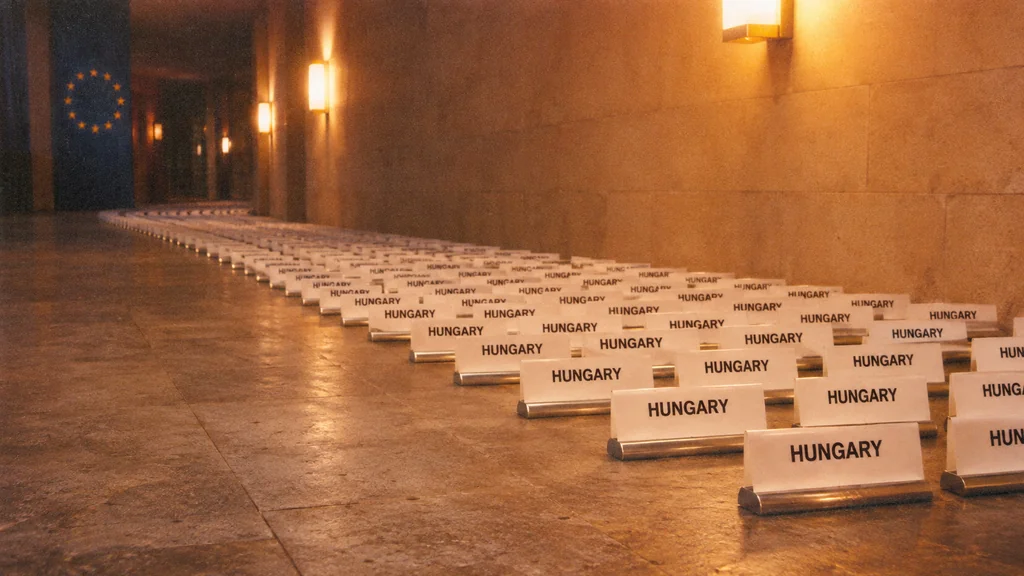
One preparatory hold may lift; Hungary’s veto awaits each decision ahead.
Image composition · tobriefHungary has stopped blocking a preparatory review that stood between Ukraine and Moldova and the last two of six groups of policy areas in their EU membership talks, diplomats told the Kyiv Independent on 18 November. No Hungarian statement or EU decision has confirmed it. Even if the report holds, Budapest keeps a veto over the decisions that would actually open those talks, and over every step after them.
A reported retreat after a November hold
Before the EU opens a group of policy areas (it calls them "clusters"), the European Commission checks how far a candidate's laws already match EU rules. This audit is called screening. National diplomats then sign off on the results in a working group that handles enlargement files.
Hungary dug in at that sign-off. On 10 November it refused to approve Ukraine's results for clusters 4 and 5, saying it needed more time with the documents, while Ukraine's deputy prime minister for European integration said Budapest had raised no new minority-rights demand (Ukrainska Pravda). Moldova was caught in the same pause. Its talks move in step with Ukraine's, so a hold on one stalled both.
On 15 November, Prime Minister Péter Magyar's government announced an agreement with Kyiv on the rights of Hungarians in Transcarpathia, the Ukrainian region where many of them live (Hungarian government). It published no terms and said nothing about the hold. Nobody in Budapest has yet put their name to a withdrawal.
Hungarian outlets that reported the release, such as Növekedés.hu, relayed the Kyiv paper's account rather than confirming it independently. The minority deal and the reported release came days apart, but no public record links one to the other.
What would change, and what would not
The Commission concluded on 4 November that both countries meet the conditions to open their remaining clusters (European Commission). Its job is to judge readiness. The decision belongs to governments.
Three steps follow, according to the Kyiv Independent. Ambassadors from all 27 member states must agree the EU's negotiating position. Ministers must then adopt it, and each candidate must sit down with the EU at a formal opening meeting, known as an intergovernmental conference.
That is how both countries opened two earlier clusters at separate conferences on 13 October (Council of the EU), a step we covered at the time (To Brief). The country holding the Council's rotating six-month presidency schedules those meetings once governments agree. It organises them; it does not decide.
The two remaining clusters reach deep into economic life. Cluster 4 covers energy, transport and climate rules, and cluster 5 covers agriculture, regional funds and budget rules (Commission report on Moldova). Opening them would still leave both countries far from membership, because any accession treaty needs ratification by every member state (Treaty on European Union, Article 49).
One government can still stop the next step
Each decision ahead requires unanimity, meaning any single government can block it. That rule shows little sign of loosening: the Dutch cabinet told its parliament on 16 November that it opposes majority voting on important accession decisions (Dutch cabinet).
November's hold showed how far one objection reaches. A single government, acting in a working group of diplomats, froze two candidates' files while citing only the need for more time with the documents. Budapest holds the same power at the ambassadors' table, at the ministers' meeting and at every later stage, up to the treaty itself.
The reported concession would remove one preparatory obstacle while leaving Hungary's veto over the formal opening and every later decision intact. Even that limited gain rests on an anonymous account until Magyar's government confirms the withdrawal in its own name.
Details about this article
- Model:
- claude-opus-5-5
- Generated:
- 11/20/2026, 1:52:36 AM
- Pipeline run:
- eu_pipeline_20261120_005008
- Watermark:
- SynthID (Google's invisible watermark)
- Human review:
- None before publication