IEA speeds diesel release, adds no barrels
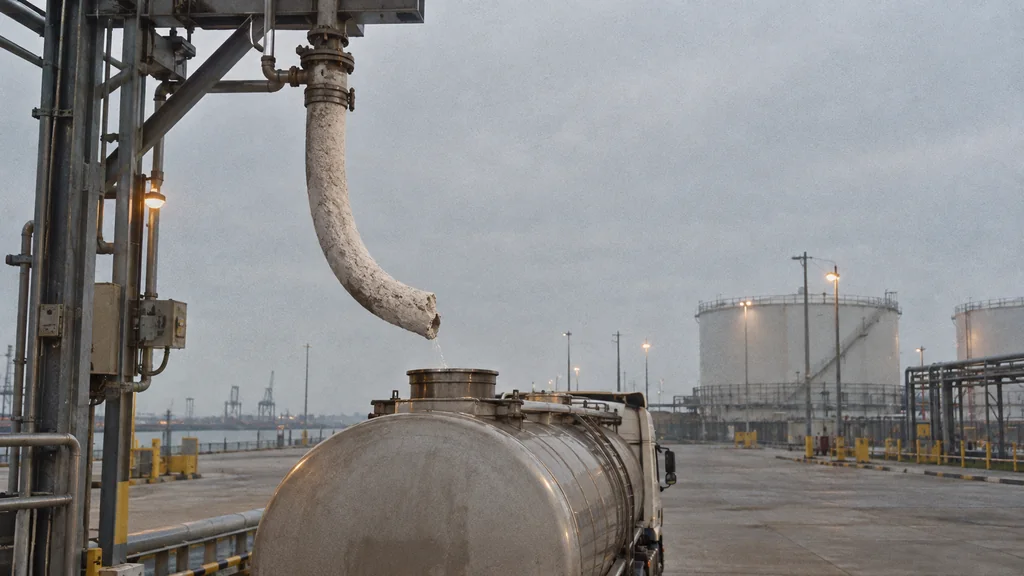
Promised diesel must still leave storage before drivers can see relief.
Image composition · tobriefMembers of the International Energy Agency, the body through which rich countries coordinate emergency oil stocks, agreed on 7 October to speed up the release they pledged in March and to put diesel first, without approving any new barrels (IEA). Drivers gain only when that diesel reaches distributors and they pass the saving on. In the Netherlands, the first new batch is not due to load until November (COVA).
Why stored diesel matters now
Europe buys much of its diesel abroad. Imports met 46% of demand in the first half of 2026, BNP Paribas estimated (BNP Paribas).
Those imports have become harder and costlier to get. The IEA's August oil market report showed the scale of the problem. Diesel exports from Russia, the Middle East and Asia had fallen by 1.3 million barrels a day, about a fifth of seaborne trade, meaning diesel shipped by sea (IEA).
Europe has not run short. The European Commission said on 2 October that EU supply was stable for the time being, but that prices stayed high because the market was tight (European Commission). Stored diesel goes straight at that problem. Crude must pass through a refinery before it can run a lorry, while diesel in storage is finished fuel, ready to sell (IEA).
A faster timetable, not more oil
G7 leaders said on 2 October they would coordinate 100 million barrels of crude and fuel over four months (G7 statement), a deal we reported as it was struck (To Brief). EU governments wanted to stay within the amount approved in March, Reuters reported (Reuters).
That is what happened. The IEA decision put the existing pledge on a faster timetable. IEA head Fatih Birol said about 325 million barrels had been released under the March action, with roughly 100 million pledged barrels still outstanding (IEA). "Released" is the agency's count of what governments have committed to the market. It does not show that all of that oil has physically reached buyers.
France's discount depends on distributors
France has set out the most detailed price plan. Prime Minister Sébastien Lecornu announced that 10 million barrels of strategic diesel will go to distributors over three months (Finance Ministry).
Distributors will pay what the stock cost before the crisis, well below today's market price. On that basis, the government estimates pump prices will fall by 12 to 18 cents a litre (French government).
That figure is a projection. It holds only if distributors hand on the cheaper cost rather than keep it as profit. Firms covering about 60% of the market have promised to pass it on in full, and consumer-protection officials will publish weekly checks on their margins (Finance Ministry). Because the saving is per litre, heavy users such as hauliers, farmers and builders stand to gain most.
Not everyone expects a visible cut. Energy economist Thierry Bros told Franceinfo the release might at best stabilise prices (Franceinfo).
Italy is taking a different route. Prime Minister Giorgia Meloni said her government was weighing a "floating excise": extra value-added tax (the sales tax charged as a share of the price) collected when prices rise would fund a temporary cut in excise, the fixed tax per litre (ANSA). That would lower the tax bill, but it would add no diesel.
When the fuel actually moves
The Dutch schedule shows how long delivery takes. The Dutch stock agency, COVA, offered 59,500 cubic metres of diesel stored at Eemshaven, with bids due on 8 October and loading set for 1 to 30 November (COVA). Other countries are still working out their schedules. Details of the October programme are expected at an IEA meeting on 14-15 October, Reuters reported (Reuters).
Every barrel drawn now must also be replaced. The G7 has asked the IEA for advice on refilling stocks (G7 statement). France's Finance Ministry has not said who will pay to rebuild its reserve.
The October decision brought forward diesel that governments had already promised. It added none. For now, France's 12 to 18 cent cut is still a government estimate (French government). It becomes a fact only once the fuel is delivered and the weekly margin checks show the saving reached the people buying diesel.
How was this article?
Help us get better
Help us get better
Details about this article
- Model:
- claude-opus-5-5
- Generated:
- 10/8/2026, 1:34:37 AM
- Pipeline run:
- eu_pipeline_20261008_005007
- Watermark:
- SynthID (Google's invisible watermark)
- Human review:
- None before publication