US and Venezuela restore military cooperation after 20 years
AI Daily Synthesis
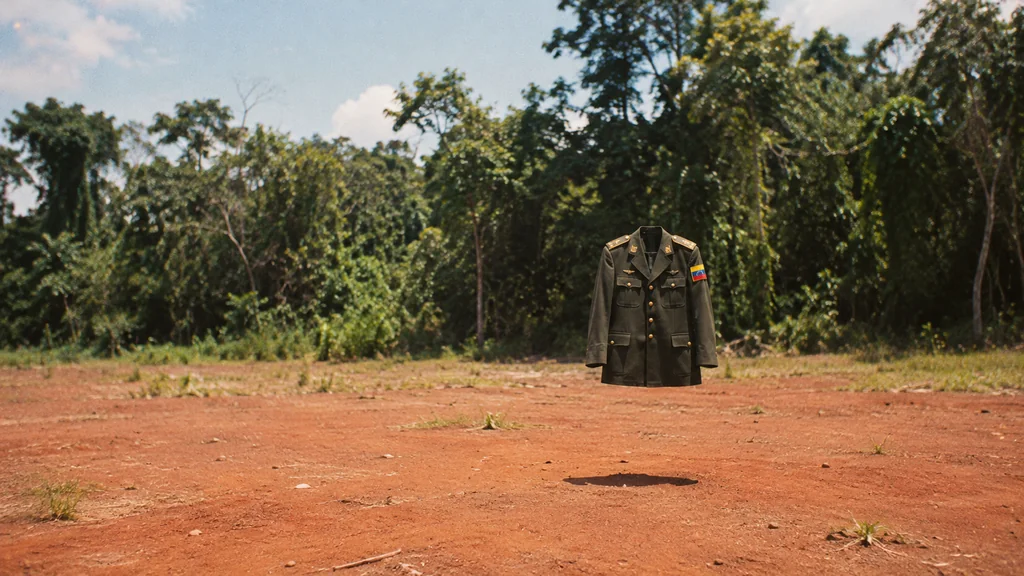
Image composition · tobriefUS Defence Secretary Pete Hegseth arrived unannounced in Caracas on Wednesday 18 November and signed a "defence cooperation document" for joint military operations with his Venezuelan counterpart, Gustavo González López (Pentagon statement). The signing restores formal ties between the two armed forces that Hugo Chávez, Venezuela’s president at the time, froze in 2005 when he halted officer exchanges with the US (Infobae, 20minutos/EFE). Hegseth is also the man US President Donald Trump appointed to coordinate the transition after the capture of Nicolás Maduro, Venezuela’s former president: Washington is becoming a trainer and supplier to the military of a country whose transition it oversees (UK House of Commons Library).
The signing took place at the Miraflores presidential palace in the presence of interim President Delcy Rodríguez. Venezuelan state television described it as an agreement on military cooperation and border security (RTVE). Hegseth summed up the shift in one sentence: Venezuela, he said, had gone from "the most aggressive regional threat" to a security partner against "narco-terrorists" (AP).
It took ten months to reach this point. A US operation captured Maduro on 3 January, and two days later Trump put Hegseth and Marco Rubio, the US secretary of state, in charge of coordinating the transition. In March, Washington recognised Rodríguez, Maduro’s former vice-president, as head of state, restored diplomatic relations and lifted sanctions against her and Venezuela’s central bank (UK House of Commons Library).
From Chávez to Hegseth
The 2005 freeze had a specific scope. In April that year, Chávez suspended officer exchanges "until further notice" and asked US military officials to leave, accusing them of political interference in the armed forces (20minutos/EFE). Until then, the relationship included training for Venezuelans in the US, US instructors in Venezuela and joint exercises (Clarín). The US embargo on arms sales came separately, in May 2006 (El Desenlace). The 18 November signing alone does not show that this restriction has changed.
What have they promised now? Hegseth spoke of joint training, intelligence sharing and defence equipment (CNN via Yahoo). Rodríguez promised training, operational resources and new technology to the National Bolivarian Armed Forces (FANB), and publicly linked the cooperation to energy development (DW, AP). For a president who was Maduro’s right-hand woman, the simplest explanation is that she needs something tangible to offer her military. These are all statements: the document, budget, units involved and timetable have not been made public (Los Angeles Times). Hegseth said the cooperation would be judged by results, rather than "arbitrary timelines" (Pentagon statement).
González López was quick to assure the public that command of the FANB would remain Venezuelan (EFE via Infobae). Article 13 of Venezuela’s constitution prohibits foreign military bases (La Patilla). According to former prosecutor Rolnar Sanabria, any foreign military mission needs approval from Venezuela’s National Assembly (Correo del Caroní).
Washington places the agreement within its campaign against drug cartels. Venezuela, however, is mainly a transit country for cocaine produced largely in Colombia, and much of the cocaine shipped to the US travels through the eastern Pacific and Mexico (BBC Mundo, InSight Crime). After September 2025, when the campaign came to include strikes on boats the Trump administration said were carrying drugs, boat traffic in the Caribbean fell by 30%. Seizures at the border stayed the same or even rose, according to the Congressional Research Service. Fewer boats in one sea do not mean less cocaine on the market.
The signing probably does not mark the start of cooperation. El País reports, without independent confirmation, that at least two operations in Venezuela had already used US equipment and intelligence. It also reported that Alejandro Betancourt, a central figure in NABEP, attended the visit (El País). NABEP is an oil venture in which the US is acquiring a 35% stake and a preferential right to buy its output (El Tiempo), under the oil deal Trump announced in the summer. Defence and oil are moving forward in parallel; no public clause linking them as an exchange has been identified.
Military affairs specialist Rocío San Miguel, head of an organisation that monitors the armed forces, called the agreement historic but asked for it to be made public. She pointed out that earlier agreements with Russia were never made public either (El Pitazo).
The military that Chávez kept at a distance from Washington in 2005 is formally moving into the orbit of the government that captured its commander-in-chief, under terms Venezuelans cannot read, just as they could not read those of the Russian agreements.
Details about this article
- Model:
- claude-opus-5-5
- Generated:
- 11/19/2026, 4:26:47 AM
- Pipeline run:
- incremental_20261119_033012
- Watermark:
- SynthID (Google's invisible watermark)
- Human review:
- None before publication