Iran claims control of Hormuz lanes
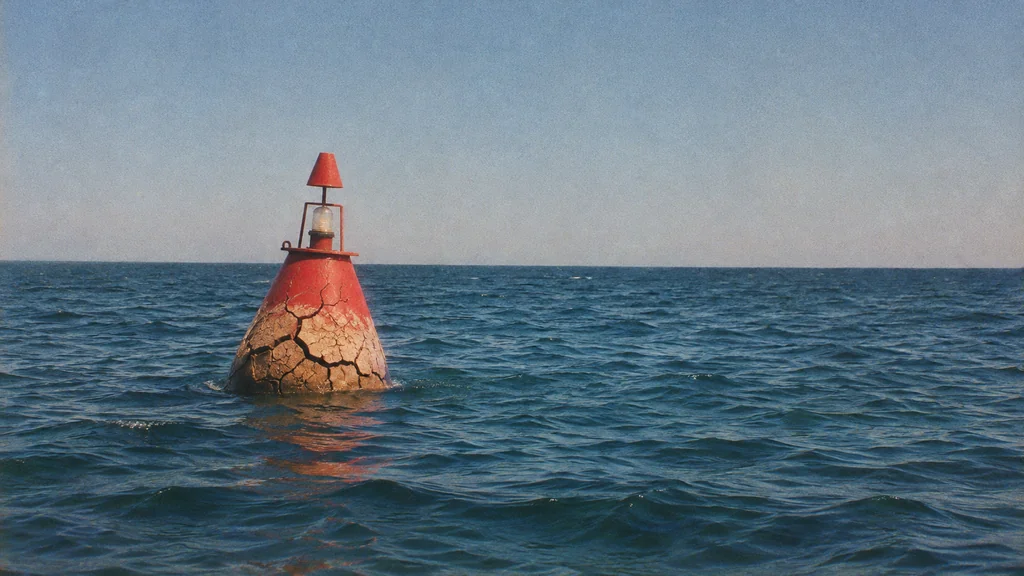
Tankers await a verifiable route through the Strait of Hormuz.
Image composition · tobriefIran's parliamentary speaker and chief negotiator, Mohammad Bagher Ghalibaf, said on 11 November that the Strait of Hormuz would never return to its pre-war status. He claimed Iran and Oman had agreed to run its shipping lanes under their own laws (Al Jazeera). Oman has not confirmed any finished scheme, and European gas buyers and shipping lines are already paying for the disruption.
What Oman has actually said
Ghalibaf framed the strait's future as part of Iran's proposal for ending the war and said the next move belonged to Washington (IRIB). He also argued that Hormuz has no "free waters." In his view, the UN Convention on the Law of the Sea, the treaty that sets rules for passage through international straits, does not apply there.
Oman's own record is thinner. Its foreign ministry said on 25 August that the two countries were negotiating a temporary corridor, a mine-clearing project and a permanent route (Oman Foreign Ministry). That statement describes talks, not an agreement.
Muscat has not publicly said the deal Ghalibaf described is finished. It has not accepted any fee or permission system either. Until Oman speaks, the "understanding" remains Tehran's account of a joint project.
Who decides whether a ship sails
A shipowner needs one thing before sending a tanker through: a route it can verify and insure. Ghalibaf's interview offered no map, no fee schedule, no start date and no instructions for vessels.
Several parties hold separate pieces of that answer. Iran's threats cover passage itself, whatever a ship's destination. The US blockade is narrower. Central Command says it covers ships entering or leaving Iranian ports, while vessels heading to other Gulf destinations fall outside it (CENTCOM).
That blockade is staying. On 9 November, after meeting Qatar's prime minister, who is mediating, Donald Trump said further strikes did not seem necessary but kept the blockade in place (Reuters). The decision matters for trade with Iranian ports. It does not decide whether a tanker loading in Qatar can leave.
For that tanker, the rest of the chain runs through Oman as co-negotiator of any lanes, through whoever clears the mines, and through the insurers and carriers who must agree to sail. Iran can claim authority. It cannot make an underwriter write cover.
European governments have stated a principle. Meeting in Paris on 9–10 November, G7 foreign ministers rejected tolls, fees and discriminatory limits on transit, and said a defensive France–UK initiative "can play an important role" in restoring traffic (G7 declaration). That puts them against any Iranian toll regime, which is a different thing from endorsing Washington's blockade. The declaration names no ships and no timetable.
Europe pays while it waits
The costs are already landing. Italy's Edison said on 27 October that QatarEnergy had extended force majeure through December on 38 cargoes, about 5 billion cubic metres of gas, and that it had replaced 27 of them (Edison). Force majeure is the contractual notice that exceptional circumstances prevent delivery.
Shipping lines are pricing the risk too. Maersk charges $1,000 per container for a Hormuz crossing to cover insurance and crew risk, and it has suspended some bookings to Gulf ports (Maersk).
Few owners accept those terms. One ship-tracking monitor counted four visible commercial crossings on 11 November, against a pre-crisis average of 84.8 a day, though it misses ships that switch off their identification signals (hormuz.now). The International Maritime Organization's register listed 134 incidents and 25 seafarer deaths in the region as of 11 November (IMO).
Tehran is already behaving as if its rules apply. Iran's Revolutionary Guards have claimed that tankers struck mines on routes they called unauthorised (To Brief), even though no authorised route has been published.
The record supports one firm conclusion. Ghalibaf has announced an ambition, not passage rules a ship can use. Tehran and Muscat would need to publish joint, navigable terms, and the mines would need to be verifiably cleared. Until then, Hormuz stays open only to the few owners willing to pay the surcharge and carry the risk, and Europe's gas buyers keep paying for cargoes that do not arrive.
Details about this article
- Model:
- claude-opus-5-5
- Generated:
- 11/12/2026, 1:58:18 AM
- Pipeline run:
- eu_pipeline_20261112_005010
- Watermark:
- SynthID (Google's invisible watermark)
- Human review:
- None before publication