Iran names no ships in Hormuz mine claims
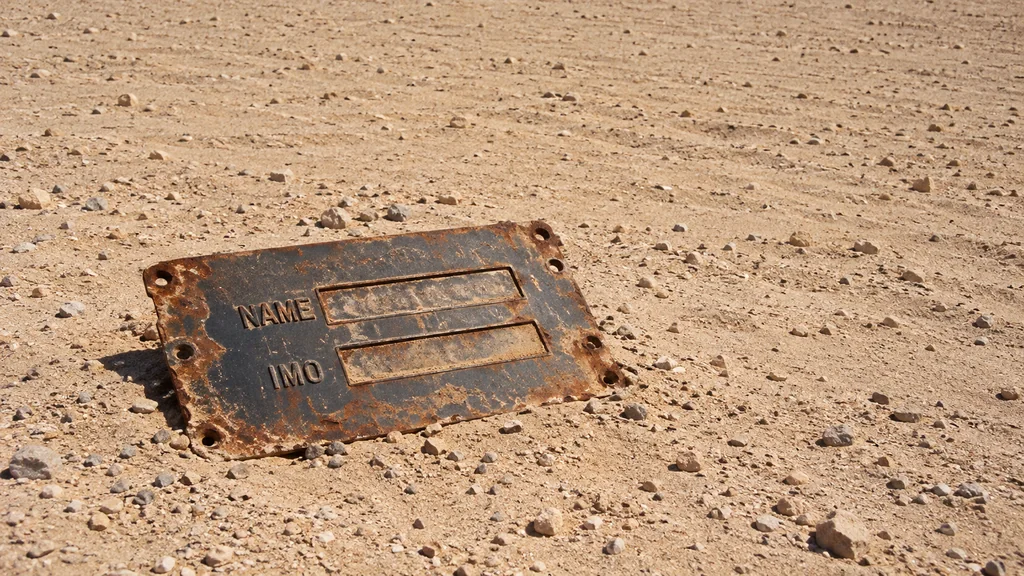
Iran reports two mine strikes without naming either tanker.
Image composition · tobriefIran's Revolutionary Guard said on 17 October that two tankers hit mines in the Strait of Hormuz, and Reuters, in a report carried by the shipping site gCaptain, said the claims had not been independently confirmed (gCaptain). Tehran has named neither ship. The attacks that British naval monitors did record that week were different incidents, in a different place, on a shipping route Europe already depends on for part of its gas.
Two claims, no ships
The first Guard statement described a supertanker carrying more than two million barrels of crude that caught fire after taking what Tehran calls an "unauthorised route" (Tasnim). The phrase expresses Iran's claim to decide who may use the strait. The statement offers no legal basis for that rule.
The second statement said an engine-room explosion stopped another supertanker of similar size (Tasnim). Neither gave an IMO number, the permanent identifier that ties a hull to its owner and tracking history. Neither gave a position or any account from a crew.
What the British alerts show
UK Maritime Trade Operations (UKMTO), a British naval service that passes incident reports between ships and navies, logged a tanker hit by an unknown projectile on 16 October off Saudi Arabia's Gulf coast, far from Hormuz (UKMTO). Its crew evacuated safely.
That evening, a ship's master reported a rocket-propelled grenade fired from a small boat at a tanker off the same Saudi port, Al Jubayl (UKMTO). Neither warning names a ship or mentions a mine.
The one tanker named that week is easy to confuse with Iran's supertankers. India's shipping minister said the MT ST 3, with 15 Indian sailors aboard, was struck by a projectile on 16 October and that all were safe (The National). A projectile is not a mine, and no source connects that ship to the Guard's claims.
Mines in the strait are not hypothetical. A navigation warning from Pakistan's navy hydrography office, issued in June and still listed in force on 17 October, reports a "confirmed mine" near the approach to the eastbound shipping lane (Pakistan Navy). That notice records an official hazard. It does not show the mine is still there, or that it struck either tanker.
Where Europe is exposed
Traffic was already thin before Saturday. UKMTO counted 254 passages in the week to 14 October, about 70% below pre-war levels (Anadolu). Iran's declared closure does not move ships by itself; owners, captains and insurers decide whether to sail.
European buyers are exposed mainly through liquefied natural gas (LNG). The International Energy Agency estimated that about 7% of Europe's LNG imports in 2025 came through Hormuz, and noted that Qatari LNG has no pipeline route around the strait (IEA).
Italy's Edison said it had missed 35 Qatari cargoes by 28 September and replaced 23 of them (Edison). Those losses predate the new claims, as do the cargo-ship sinkings we reported on 15 October (To Brief). Nothing reported so far shows a European buyer, insurer or shipowner changing plans because of the two alleged mine strikes.
Europe's navies are not yet in a position to test the mine claims. According to a Dutch government letter of 2 October, the Franco-British defensive mission for Hormuz had not been activated, and the Dutch frigate heading east is a command ship rather than a minehunter (Tweede Kamer). A command ship coordinates other vessels. A minehunter is the specialised ship that finds and clears mines, and escorts alone cannot clear a route.
As things stand, the Guard has offered no ship names, identifiers or positions that anyone can check. The two British alerts describe a projectile and a grenade attack off Saudi Arabia, not mine strikes in Hormuz, so they do not confirm Iran's account. They do not rule out separate incidents either. Tehran could settle the question by naming the ships. Otherwise, the answer has to come from an owner or a flag state (the country where a ship is registered) reporting a damaged hull. Until one of them does, the mine claims are a warning aimed at shipping and not evidence of attacks.
Details about this article
- Model:
- claude-opus-5-5
- Generated:
- 10/18/2026, 1:33:28 AM
- Pipeline run:
- eu_pipeline_20261018_005006
- Watermark:
- SynthID (Google's invisible watermark)
- Human review:
- None before publication