Iran puts Hormuz reopening on day two
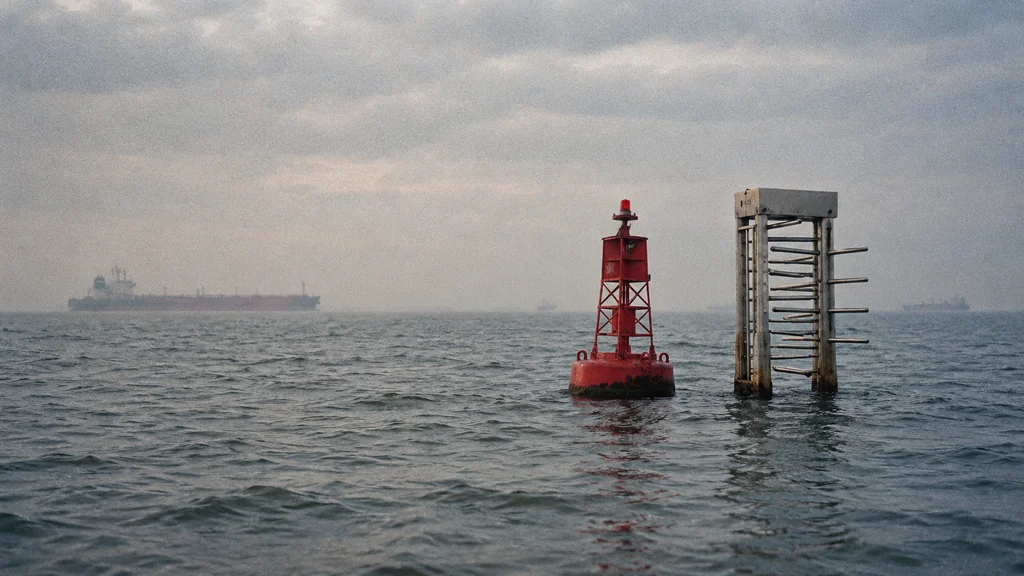
A deal may open Hormuz before ships can safely pass.
Image composition · tobriefIran's foreign minister, Abbas Araghchi, says the Strait of Hormuz could reopen on the second day after a deal, provided the United States acts on the first (Middle East Eye). Iranian negotiators and Qatari mediators worked out the sequence in Doha, and it still awaits an American answer (Reuters). Even a yes would leave mines, insurance and suspended Qatari gas contracts, including Italy's, to be dealt with.
What Iran wants from Washington on day one
The offer is faster than the last one. In late September, Araghchi proposed a seven-day exchange, and President Donald Trump rejected it (AP). Qatar then pushed both sides toward a two-day version. Araghchi says there is still no definitive result and no planned direct meeting with American officials.
By Iran's own account, its day-one demands fall into two groups (Al Jazeera). The military group asks Washington to end its naval blockade of Iranian trade and reduce its forces in the region. The financial group asks it to lift recent sanctions and release frozen Iranian money, some of it held in Qatar.
Tehran also wants oil-export waivers restored. These are exemptions that let selected buyers purchase Iranian oil without facing US penalties. No published draft confirms any of these terms or the order in which they would happen.
The two groups require different decisions. Ending a blockade is an order to American warships. Sanctions relief means unwinding financial restrictions, which is a separate step, so one does not automatically bring the other. Qatar hosts the talks and holds some of the funds, but the demands are addressed to Washington, not to the mediator.
Washington has not accepted. US officials say diplomacy remains possible and that Trump has not decided on further strikes (CBS News). That keeps talks alive without committing to Iran's sequence.
The offer is also narrower than it sounds. Araghchi presents reopening the strait as a first step toward talks on the remaining disputes, including nuclear questions. It would not be a ceasefire, and it would not end the war within the 48 hours of the proposed sequence (Middle East Eye).
Open water is not safe water
A political announcement does not clear mines. On 30 October, magnetic charges disabled a tanker inside the strait, and Reuters could not establish who placed them (Reuters). The attack followed a fresh round of strikes on tankers (To Brief). The International Maritime Organization, the UN shipping agency, still advises ships to avoid the established traffic lane because mines have been reported (IMO).
Insurers will want proof before prices fall. The Dutch insurers' association says underwriters look for confirmed mine clearance and passages without incidents. It also published a dated snapshot of the cost, not today's price: war-risk premiums (cover against attack) were about 0.25% of a ship's value before the war and 3–8% in late August (Verbond van Verzekeraars).
What Europe can and cannot change
Italy shows how slowly gas follows ships. The Italian energy company Edison says QatarEnergy has extended its force majeure, a contractual suspension of deliveries, through 31 December 2026. According to Edison, the suspension has affected 38 cargoes, about 5 billion cubic metres of gas, since early April (Edison). A navigable corridor would not cancel that notice or put a single cargo on a ship.
Europe's own tools are limited. In February, EU governments extended Aspides, the bloc's naval mission, until February 2027. The mission protects Red Sea shipping and only monitors Hormuz (Council of the EU). EU capitals could approve a new mission or adjust their own sanctions. They cannot waive American sanctions or give orders to Iranian forces.
Washington has yet to accept Iran's sequence, and no agreed draft has been published. Even if Trump says yes, a reopened strait would not by itself restore safe, insured gas deliveries. Europe will have its answer when insured tankers pass without incident and the suspended cargoes start loading in Qatar again.
Details about this article
- Model:
- claude-opus-5-5
- Generated:
- 11/2/2026, 1:36:44 AM
- Pipeline run:
- eu_pipeline_20261102_005008
- Watermark:
- SynthID (Google's invisible watermark)
- Human review:
- None before publication