Iran’s Hormuz talks leave tankers exposed
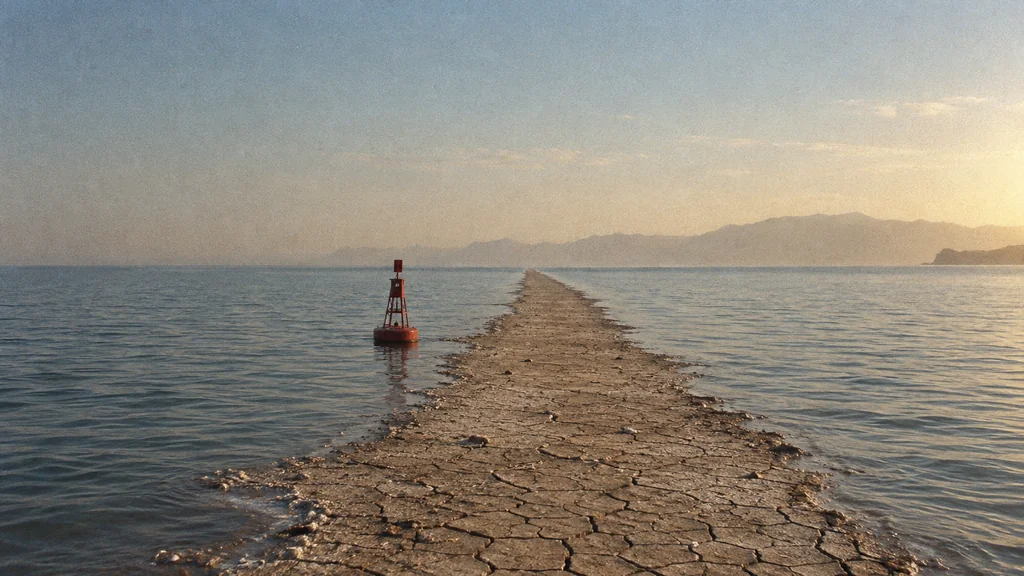
Hormuz remains a passage in name while captains wait for safe water.
Image composition · tobriefIran says Washington has accepted some of its seven conditions for reopening the Strait of Hormuz and left the rest unclear, and that nothing more will happen until the US clarifies them (IRNA, Reuters). The claim has not made the route safer. On Saturday an outbound tanker reported a projectile strike (UKMTO), and on Sunday a second reported damage of uncertain cause. Gulf oil and gas still reach Europe only on a few expensive voyages, and nobody has set a date for ordinary shipping to return.
Who moves first
Mohsen Rezaei, secretary of Iran's Supreme National Security Council, made the claim in an interview carried by the state agency on 11 October (IRNA). He did not say which conditions were accepted or which were "ambiguous." No US text has been published, so the partial agreement rests on his account alone.
Rezaei's seven conditions are not public. The clearest picture of what Tehran wants comes from a separate plan that Foreign Minister Abbas Araghchi set out at the UN in late September. Under that plan the US acts first, Iran reopens the strait afterwards, and talks begin only after that (AP). Iran wants the US naval blockade of its ports lifted and its oil sales and frozen funds released. It has not been established whether this plan and Rezaei's list are the same set of demands.
Washington wants the reverse order. US officials argue that real nuclear progress must come first, because Iranian promises proved unreliable after a June interim arrangement collapsed (AP). The order matters because control over the shipping lane is Iran's main leverage. Under Araghchi's sequence, Tehran would get its relief before giving that leverage up.
Why a captain would still wait
The Saturday incident is the best documented. UK Maritime Trade Operations (UKMTO), a British service that passes ships' reports on to other vessels, logged an unnamed outbound tanker hit on its port side by an unknown projectile at 19:20 UTC. The tanker caught fire, and its crew was reported safe (UKMTO).
Sunday's damage is less clear. UKMTO reported port-side damage to a second outbound tanker without naming the ship or the cause. India's shipping minister separately identified a vessel struck that day as the VALTHERA and said its 11 Indian crew were safe (UKMTO, Sonowal). Iran's Revolutionary Guard said a supertanker on what it called an unauthorised route switched off its navigation equipment and hit a sea mine (Tasnim). The Guard gave no name or position, UKMTO identified no mine, and the Guard has made unverified strike claims before (To Brief).
For a ship's master, the cause matters less than the risk. The International Maritime Organization still tells ships to avoid the recognised lanes where mines have been reported (IMO). No published version of Iran's plan explains how anyone would check that the water is safe once a reopening is announced.
The voyages that still happen
Some cargo still moves, but very little. The data firm Kpler counted seven commodity-vessel passages on 6 October, the lowest daily figure since July (Reuters).
Much of it travels on what brokers call a "shuttle run." A large tanker enters the Gulf, loads and leaves, often handing its cargo to another ship waiting outside. Brokers quoted by the Greek outlet OT estimate the charge at $30–40 million per run, or $15–20 a barrel, before insurance (OT). Whoever hires the tanker pays that charge. How much of it reaches European fuel bills has not been measured.
Gas buyers face a different problem: some cargoes do not come at all. Italy's Edison said Qatari deliveries will stay suspended into early December under force majeure, a supplier's declaration that events beyond its control prevent delivery (Edison). The company counts 35 affected LNG cargoes since April, equal to 4.6 billion cubic metres. It says it has replaced 23 of them at its Adriatic terminal and can keep supplying customers. That is resilience under strain. Edison has not said what the replacement cargoes cost, and Qatari deliveries have not resumed.
Hormuz remains a scarce, costly route despite Rezaei's claim of partial agreement, and the contents of the US reply are still unverified. Shipping will return when the attacks stop and cleared lanes are published, not when Tehran or Washington announces a deal.
Details about this article
- Model:
- claude-opus-5-5
- Generated:
- 10/12/2026, 1:35:52 AM
- Pipeline run:
- eu_pipeline_20261012_005007
- Watermark:
- SynthID (Google's invisible watermark)
- Human review:
- None before publication