Ireland’s €141 billion EU budget cut splits priorities
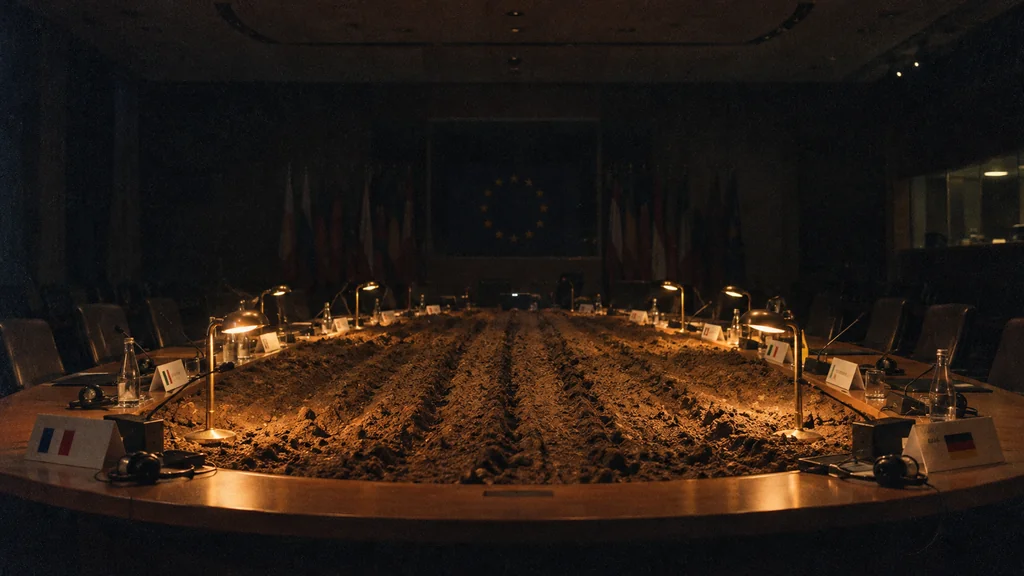
Farm funding holds firm as leaders confront a smaller EU budget.
Image composition · tobriefIreland has proposed that the EU spend at most €1.622 trillion over 2028–2034, in 2025 prices. That is about €141 billion, or 8%, less than the European Commission requested (Council negotiating box, CAP Reform). The draft guards farm and regional funding and cuts harder into research, security and spending outside the EU. Leaders take it up at their 15–16 October summit, which opens today (Irish presidency).
Ireland wrote the draft because it currently chairs the Council, where national governments negotiate. The chair can put figures on the table, but governments decide. Headlines quote different totals because some include projected inflation. Counted that way, Ireland's ceiling comes to about €1.826 trillion (Brussels Signal).
Farms win, security and research lose
Every major area shrinks against the Commission plan, but not equally. The pot for farms and poorer regions loses 3.4%, the pot for competitiveness and security loses 12.8%, and spending beyond the EU's borders loses the most (Euronews). At programme level, farm income support holds at about €261 billion, while Horizon Europe, the EU's research fund, falls from €154.882 billion to €140 billion (Council table).
That shape matches what 17 leaders demanded in a 2 October letter: keep farm money and cohesion funding, the transfers to poorer regions. Italy's Giorgia Meloni and Romania's Nicușor Dan led the push (Politico). Resistance to cuts has widened since, as we reported this week (To Brief).
Germany's two demands pull apart
Germany wants a smaller total. On 10 October Chancellor Friedrich Merz said the proposal's size offered no basis for agreement, and Germany and five other governments want cuts of several hundred billion euros (German government, six-government declaration).
Merz also wants security and competitiveness put first. Those are the areas Ireland squeezed hardest in order to spare farms. A smaller total with more for security would mean reopening the farm and regional money that 17 governments have organised to defend.
Finland shows the same bind. Prime Minister Petteri Orpo wants a smaller budget and objects to cuts in defence and research (Finnish government).
The European Parliament pulls the other way, and it counts because the budget needs its consent. The ceiling already includes €149.296 billion to repay the EU's pandemic recovery borrowing, money that funds no new project (Council negotiating box). Parliament's lead negotiators argue that after that repayment and inflation, the plan buys less than today's budget (European Parliament).
Every capital holds a veto
All 27 governments must approve the budget, and MEPs can reject it but not rewrite it. New EU revenue sources need unanimity plus ratification in every member state (Article 312, Article 311).
Revenue shapes who pays. Ireland keeps five proposed EU levies, including on tobacco and carbon-intensive imports, worth about €55 billion a year (Irish presidency). Whatever they raise, national treasuries do not have to pay in. France's Europe minister Benjamin Haddad says Paris will back no budget without a substantial revenue package (BFMTV). Berlin's spokesman said in August that cuts were needed whatever happened on revenue (German government briefing).
The draft also reserves up to €88.869 billion for Ukraine's accession and reconstruction, outside the normal ceilings and still marked undecided (Council negotiating box). A separate decision shows how vetoes travel. On 14 October Slovakia's Robert Fico said his country would seek to stay out of any further EU loan to Kyiv, and objected to making participation a condition for support of Slovakia's budget demands (TASR). That loan has no amount or legal form yet, so nothing formally ties it to the budget. Fico is using it as leverage all the same.
Ireland and António Costa, who chairs leaders' summits, want a political deal by the end of 2026 (Irish presidency). The Irish draft shows what a tighter budget that protects farms and regions looks like: security and research absorb the cuts. Germany wants a smaller budget still and security protected, but it has not said publicly where the extra cuts should fall. On Ireland's numbers, those two demands cannot both be met unless Berlin is prepared to take money from farms and regions.
Details about this article
- Model:
- claude-opus-5-5
- Generated:
- 10/15/2026, 1:36:51 AM
- Pipeline run:
- eu_pipeline_20261015_005006
- Watermark:
- SynthID (Google's invisible watermark)
- Human review:
- None before publication